The US, Iran, Turkey and Israel are playing dangerous games in Syria
Unlike in Ukraine, few actually want a new war in Syria to break out, or for any of the smouldering conflicts to expand. But as shown repeatedly throughout history, wars begin even when no side wants one, writes Borzou Daragahi

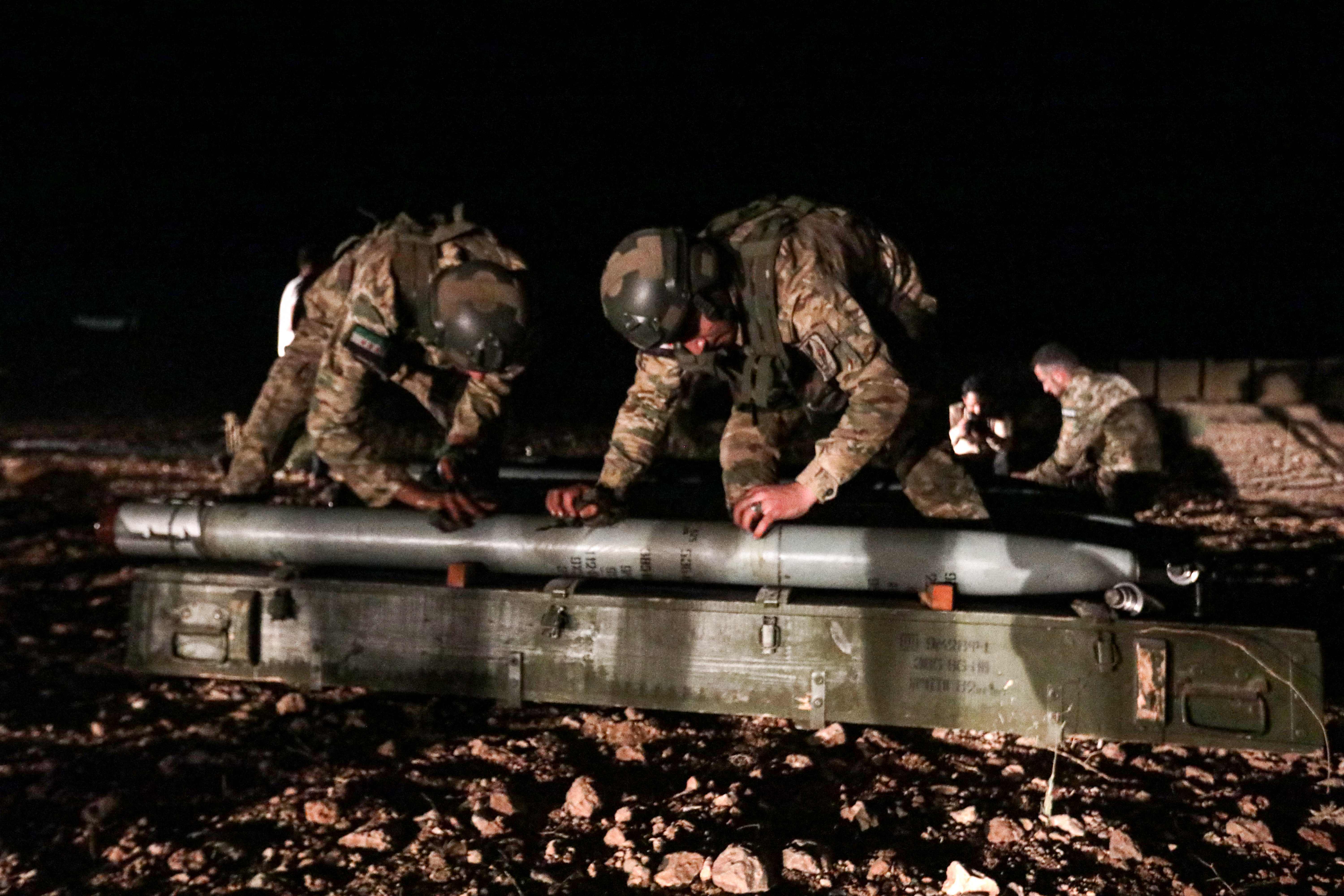
The scene was a remote corner of northeast Syria contested by American troops, Iranian-backed militias, Syrian regime forces and Isis remnants. The American helicopter gunships and air attacks came on Wednesday in response to an earlier attack by Iranian-backed militias, which was itself in response to an attack on Tuesday by US forces, which was in retaliation for an alleged attack by Iranian-affilate groups on Americans on 15 August, which came in response to an Israeli airstrike elsewhere.
Then, on Saturday, an Israeli airstrike on an arms depot in western Syria reportedly destroyed hundreds of alleged Iranian-made missiles stored at the facility, according to the Syrian Observatory for Human Rights, leaving at least one person dead. The ensuing fire burned for hours.
All that comes on top of continuing boisterous threats by Turkey to launch a fresh ground invasion of northern Syria on America’s Kurdish-led partners in the fight against Isis.
With war raging in Ukraine and causing vast human misery and global economic turmoil, the last thing the world needs right now is yet another armed conflict in the heart of Eurasia. World and regional powers need to stop playing dangerous games in Syria, which, along with neighbouring Iraq, remains a smouldering tinderbox and potential flashpoint.


Unlike in Ukraine, where President Vladimir Putin launched an aggressive 19th century-style war of imperial conquest, few actually want a new war in Syria to break out, or for any of the smouldering conflicts to expand. But as shown repeatedly throughout history, wars begin even when no side wants one.
In the case of the Middle East, the situation is even worse than that. Powerful factions within governments in the US, Iran, Turkey, Israel and elsewhere would welcome war. The reasons are manifold. An armed conflict could help drag America into fighting their war, distract the West from Ukraine, collapse any hope of a return to the Iran nuclear deal, or rally discontented publics around the flag.
When it comes to Syria, there are few if any laudable players in a contested playing field that includes Bashar al-Assad’s cruel dictatorship and its corrupt patrons in Moscow, as well as persistently disruptive belligerents such as Turkey, Israel and Iran.
But some nations can be called upon to behave more responsibly than others. The latest round of US airstrikes were carried out by Doha-based Centcom at a curious time. The US, Iran and other world powers are in sensitive negotiations over a possible restoration of the Joint Comprehensive Plan of Action (JCPOA), the 2015 deal that put limits on Tehran’s nuclear ambitions in exchange for a reduction of American sanctions.
America has ignored militia attacks on its 900 or so troops in Syria in the past. But some speculate that, with a possible restoration of the JCPOA approaching, the administration of president Joe Biden wants to shield itself from hawkish critics in the Beltway by avoiding any impression that it is becoming dovish on Iran.
However, nothing short of a policy of aggressive regime change in Tehran will ever mollify much of the anti-Iran clique in Washington, so the logic is misguided at best, and dangerous at worst. “The Centcom strikes in Syria are now part of a cycle of escalation that is endangering US troops,” wrote Erik Sperling, executive director of Just Foreign Policy, a left-leaning think tank.
Although US officials and former security officials have described the targets of the attacks as Iranian-backed forces, Tehran has denied any connection to the groups. That’s disingenuous. Iran has for more than a decade trained, armed and organised such militias and, even if it does not exercise direct day-to-day control over them, it undoubtedly has influence and can establish clear red lines – such as demanding they stop attacking the small garrisons of American forces.
To keep up to speed with all the latest opinions and comment, sign up to our free weekly Voices Dispatches newsletter by clicking here
Undoubtedly, Iran doesn’t mind its militia allies keeping American forces on their toes in Syria so it can continue to use the country to transport and position missiles around Israel, which is responding with regular air raids on suspected military sites. But Israel is also playing a dangerous game, adding fuel to the escalatory dynamic at a time when Russia, the main guarantor of the Damascus regime, is increasingly hinting that it won’t tolerate continued Israeli incursions.
Then there is Turkey, which has been lobbying Washington, Moscow and Tehran for months to green-light its audacious plan to launch a military operation to dislodge Syrian Kurds affiliated with the Kurdistan Workers’ Party (PKK) from their autonomous region in the country’s northeast.
A Turkish move on to such cities as Manbij and Kobane would displace hundreds of thousands and potentially allow Isis to rejuvenate, because the pro-PKK Kurds are about the only force on the ground continuing to challenge the jihadi group. On Friday, Syrian Kurdish forces announced the capture of 27 Isis members in the country’s northeast, underscoring their importance in efforts to wipe out the militants.
America and its Western allies seek to extricate themselves from decades of Middle East wars. The very real possibility of a further unravelling of Syria could suck them back in.
Join our commenting forum
Join thought-provoking conversations, follow other Independent readers and see their replies
Comments
Bookmark popover
Removed from bookmarks