Is aircon right wing? How cooling systems got caught in a culture war
As our summers heat up, it is predicted that by 2050 up to a third of British homes will have air conditioning. But at what cost to the environment? Jonathan Margolis looks at the battle over how cool, or uncool, getting aircon really is
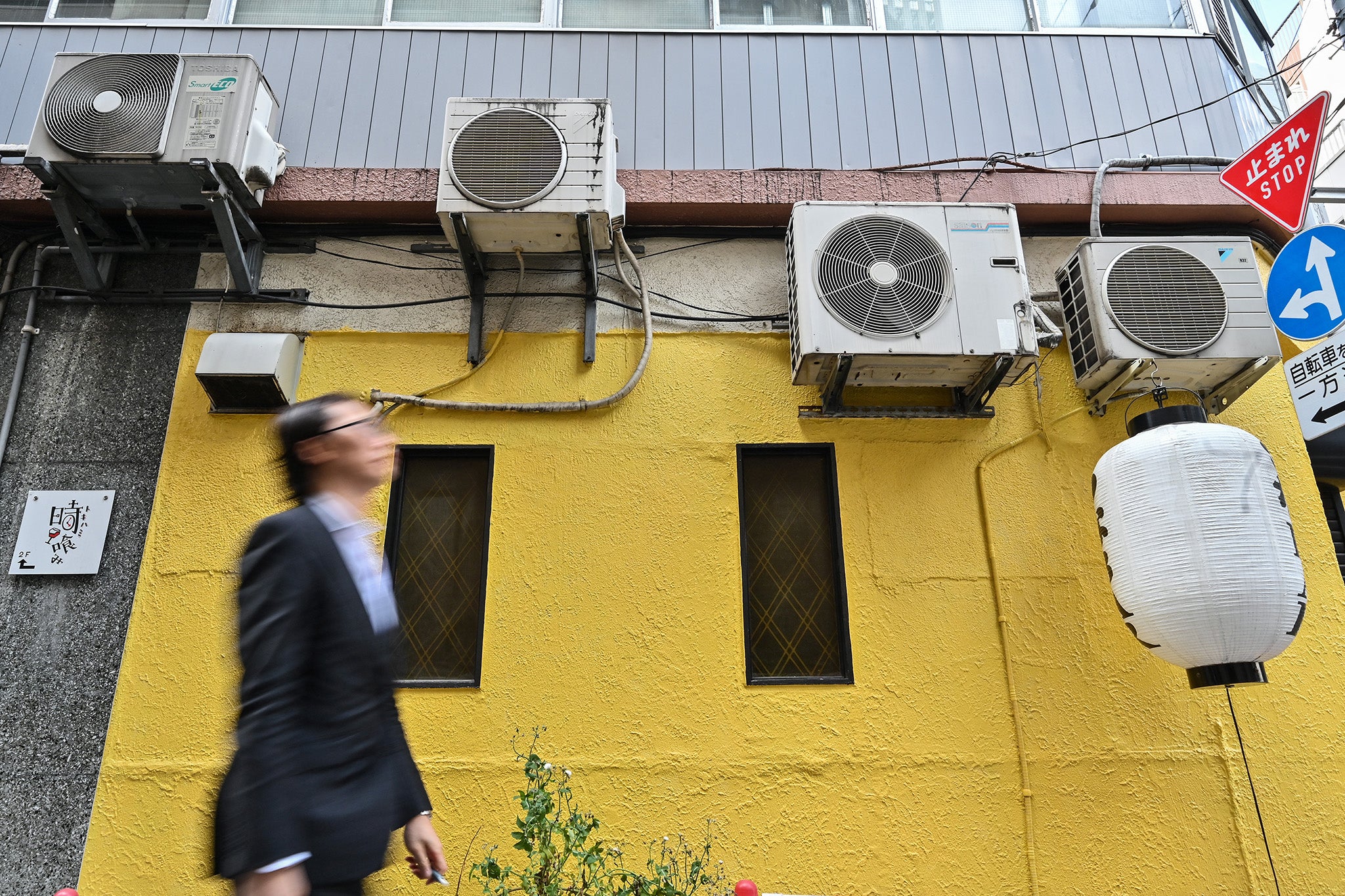
The weather in most of Britain is back – for now – to a pleasant summer normal, and it’s easy to forget the stifling, sticky-limbed nights of the recent heatwaves we have endured (four this year so far). But is this milder period the perfect time to coolly plan for the inevitable future baking spells and get some home air conditioning?
Like it or not, UK summer temperatures are now regularly exceeding 30C. A decade from now, it’s predicted that it will hit 26C or above for 50 nights a year.
Even though the UK has nowhere near the 90 per cent of homes in the US with air conditioning, demand for some kind of relief from the heat is reportedly soaring, with a 64 per cent increase in AC unit sales between 2023 and 2024. The UK Energy Research Centre (UKERC) estimates that up to a third of British homes will have aircon by 2050.
This is a fundamental change in the way we live. For decades, anything over 25 in the UK has been proclaimed “a scorcher” by the newspapers. Puzzled American tourists complaining about the lack of AC in Britain would be told wryly that the country is naturally air-conditioned most of the year round.
However, across ever-hotter Europe, when it comes to turning your house into a fridge, there is a large, sweaty elephant in the room.


Attacking the climate crisis head-on using technology, with the accompanying summer surge in electricity usage – an extra 7 gigawatts of it, according to the UKERC – is becoming deeply political.
People broadly on the right are prepared to put comfort ahead of environmental concerns. People broadly on the left tend to say that aircon is distinctly uncool, almost as if sweating through the summer is our moral comeuppance for humanity’s longstanding profligacy.
Earlier this summer, the far-right leader Marine Le Pen announced that she would implement a “major air-conditioning equipment plan” for public buildings across France if she came to power. Marine Tondelier, meanwhile, head of the Green party, scorned the idea, saying France needed to focus on “greening” cities and making buildings more energy efficient.
A recent leader in the conservative Le Figaro supported air conditioning, as did one in The Times here this month. But the left-wing Libération newspaper, in response, called AC “an environmental aberration” and, here, climate activists frequently argue against home air conditioning.

Environmentalists in France have warned that going from an air-conditioned building to the heat of the street could cause thermal shock, nausea, loss of consciousness, and even respiratory arrest.
Flanked by a visibly sweating prime minister, François Bayrou, the French energy minister, Agnès Pannier-Runacher, put the case against AC succinctly, saying that large-scale air conditioning would heat up the streets, making heatwaves even worse. "It’s a bad solution," she told the media during a recent heatwave which closed thousands of schools.
There are natural alternatives like using water evaporation to lower air temperature thanks to devices like air coolers, which is used in some parts of Spain and requires less energy than conventional AC. Or district cooling networks, already used in Paris and Stockholm, where chilled water – sometimes from lakes, seas or waste heat recovery – is piped into buildings instead of each building running its own AC system. Other alternatives to AC – apart from the usual fans – are to concentrate on cool roof technologies or triple shading and other insulation systems to keep extreme heat out of buildings.
However, Conservatives here have urged the London mayor, Sadiq Khan, to remove “ridiculous” planning regulations limiting the installation of air conditioning in new homes. “We must move away from this poverty mindset on reducing energy usage,” said Andrew Bowie, the Tory MP for West Aberdeenshire and Kincardine.

Political supporters of AC come armed with evidence from studies – possibly rather cherry-picked – that it benefits such diverse areas of life as students’ exam performance, GDP, A&E visits, behaviour of prisoners and even mortality. A Texas-based study by researchers at Stanford University is even quoted as saying that the lack of AC makes the police lazier and less effective, and judges grumpier and more inclined to impose severe sentences.
It may well be that more air conditioning is an expensive, environmentally damaging and increasingly serious part of the ongoing environmental apocalypse. It’s hard indeed to get away from seeing it as a classic “self-reinforcing negative feedback” loop: human activity heats up our homes, we use technology to pull the temperature down, which in turn causes more warming to heat up our homes even further.
There is the added factor that AC at home isn’t inclusive; it’s a solution for the well-to-do only. The cost for a multiple-room system can range between £3,000 and £6,500, depending on size and number of units, but research by The Big Issue has reported that around a quarter of the poorest families live in homes that frequently overheat, compared to 1 in 20 of the richest households.
But could the anti-AC stance of the environmentally conscientious among us be viewed as little more than the latest episode in a long history of household conveniences that were initially scorned by “right-thinking” people?
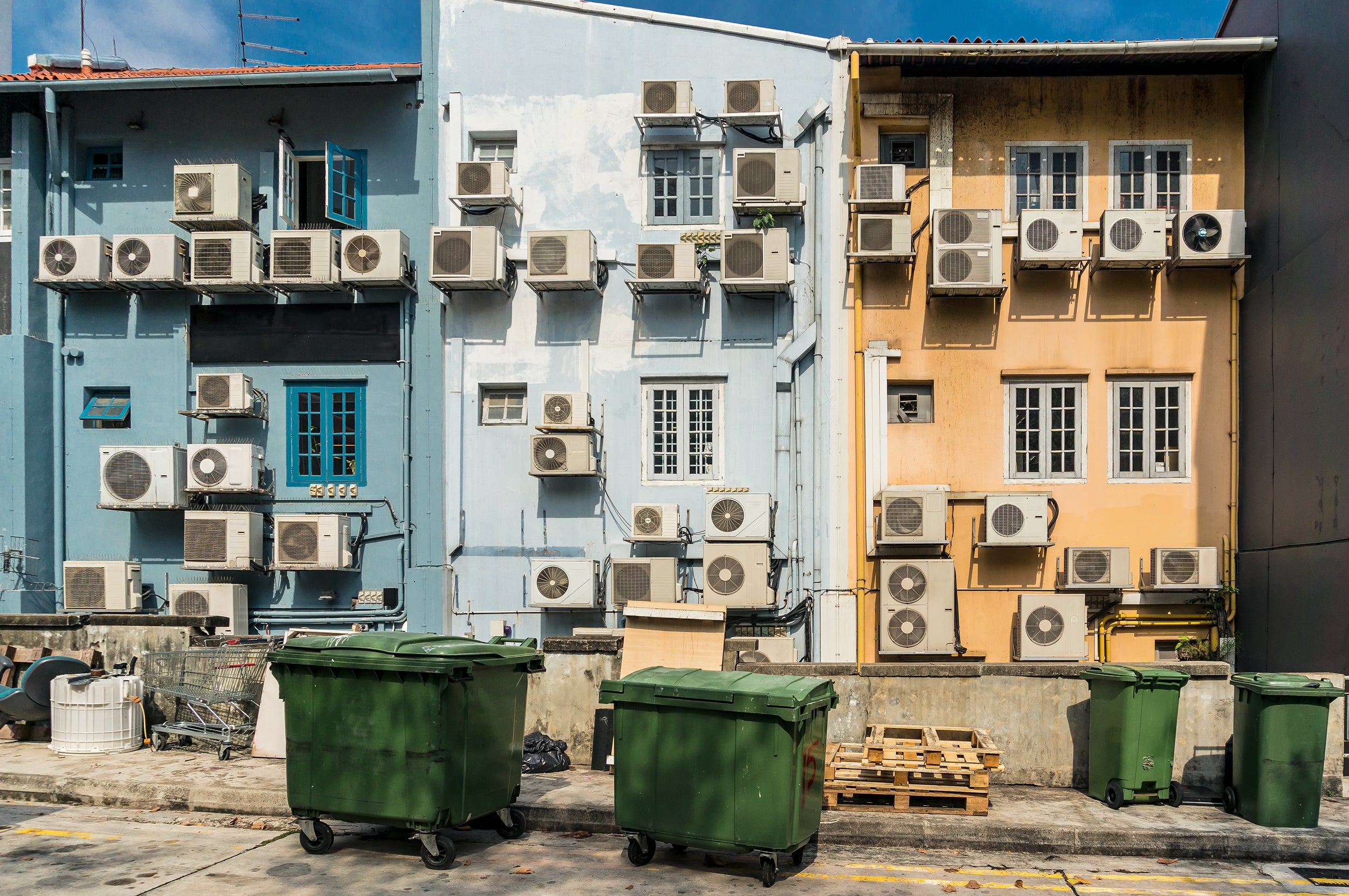
While very few Americans, for example, have any reservations about hitting the AC when it’s hot, when air conditioning first became available, some US intellectuals regarded it as the epitome of idle, consumerist, altogether reprehensible convenience culture.
Henry Miller, for example, wrote The Air-Conditioned Nightmare, a book about a road trip he made in 1940 across the US. While very little of the book is actually about air conditioning, he wrote about entering buildings where “stale refrigerated air” was oppressive and dehumanising compared to the natural breeze.
He saw AC in terms of being part of a “fear of discomfort” which strips away vitality and spontaneity by cutting people off from the natural world, replacing creativity and spirituality with rampant materialism.
At that time, people on both sides of the Atlantic had been widely scornful of refrigeration in any form as an American obsession. Chilling food was thought by some to be “cheating nature”. A “cold-storage banquet” organised in Chicago in 1911 as a PR stunt for the newfangled refrigeration backfired, with newspapers calling it “terrifying”, arguing that being presented with food that should have long been rotten was almost like being asked to eat the dead.

Electricity, similarly, was once regarded as an unwelcome modernity. The British Medical Journal published an article headlined The Electric Light and its Effects upon the Eyes, and newspapers invented something they called “urban myopia”.
As a child in the 1960s, I remember snootiness about later examples of convenience culture, such as washing machines, central heating and telephones. Central heating was especially egregious, blamed by my grandparents for colds and the new fad for salads. A junior school teacher inveighed against the telephone as an inferior, Americanised alternative to letters.
Advertisers of washing machines needed to subtly make it clear that, rather than make “housewives” lazy, they allowed women to get on with more interesting pursuits. The brilliant Swedish scientist and thinker Hans Rosling would much later describe the washing machine as “the greatest invention of the industrial revolution” for its impact on women’s liberation. A University of Montreal study later showed that the washing machine and fridge together reduced women’s work burden in the home from 58 hours a week in 1900 to 18 hours in 1975.
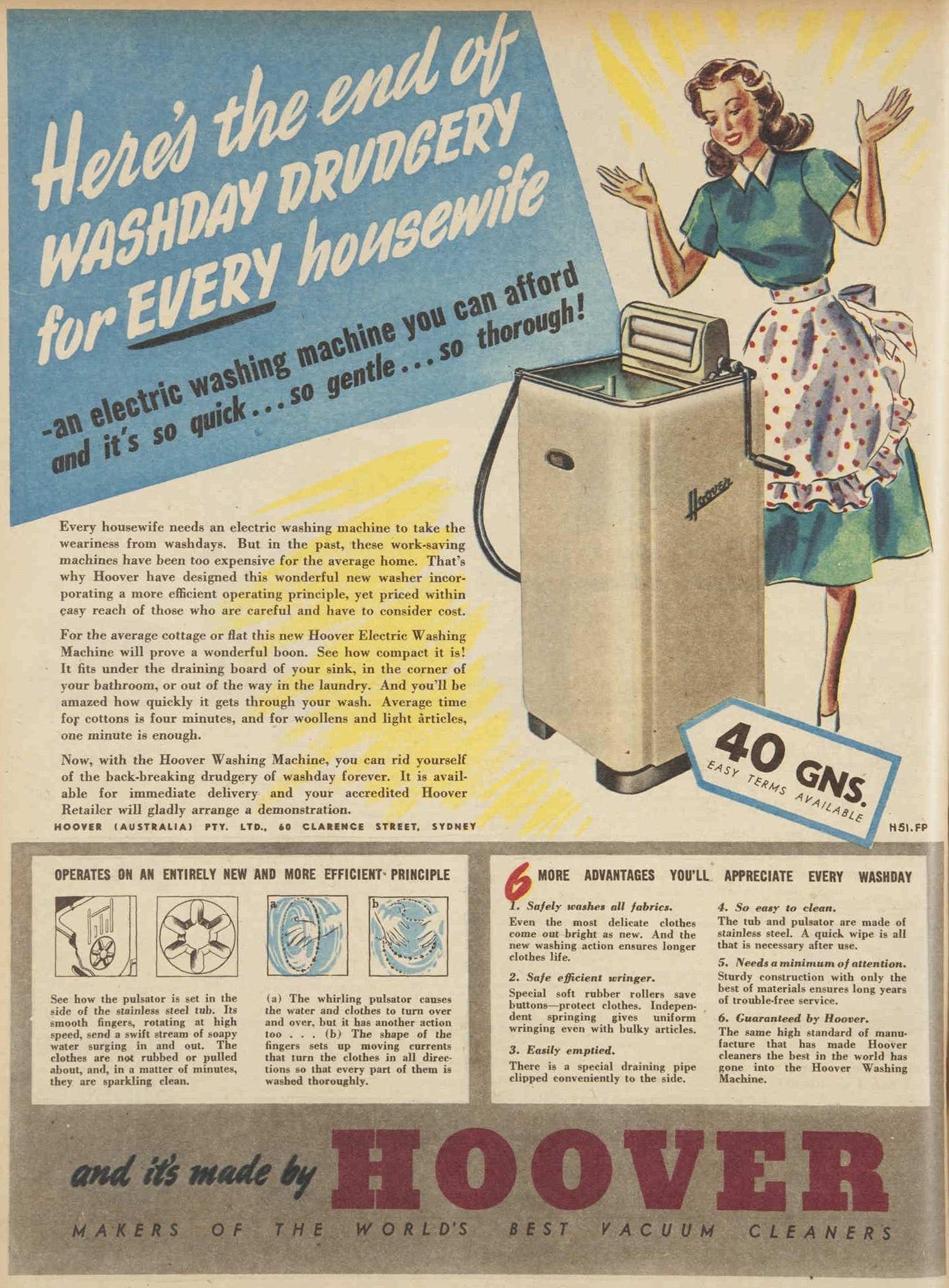
This reduction coincided, the study noted, with a rise in married women’s participation in the workforce from 5 per cent in 1900 to 51 per cent by 1980. The research explicitly concluded that these appliances “liberated” women by enabling them to pursue paid work.
For many, the problem with more widespread domestic air conditioning is that even knowing that it does seem rather indulgent, perhaps even decadent, and definitely not great for the planet, it’s so damned comfortable.
The car has been the first experience for many of us of air conditioning. I first felt its effects in a taxi in Cyprus in 1982, before I had ever been to the United States. It was 45C outside and getting into the Mercedes was an indescribable joy.
Next summer, I will very likely buy two of the portable machines from IndyBest’s guide for best portable air conditioners – one for the garden shed where I work and one for our bedroom. I have my eye on Lidl’s £170 Silvercrest machine. At around £2 of electricity for a full night’s or day’s use, it seems reasonable.
What remains to be seen, to sort the out-and-out puritans from those of us happy to buy comfort if it’s ethical to do so, is how air conditioning is seen once energy is 100 per cent sustainable. Air conditioning, I suspect, will always be seen in British culture, at least, as an unhealthy indulgence bordering on moral turpitude.
Are you thinking about getting aircon? Let us know below...
Join our commenting forum
Join thought-provoking conversations, follow other Independent readers and see their replies
Comments
Bookmark popover
Removed from bookmarks