Scientists confirm ‘sharktober’ is real as decades of data reveal month when attacks spike
The pattern appears to be driven by tiger shark biology, not by more people being in the water, marine biologists say
Tiger shark attacks in Hawaiian waters spike every October, with the month accounting for as much as a fifth of all recorded bites, a new analysis of decades of data reveals.
This pronounced pattern, informally known as "Sharktober”, has been suspected based on anecdotal information, but conclusive evidence has been sparse.
Now, researchers have confirmed this pattern by analysing data on tiger shark bites in Hawaii from 1995 to 2024.
The findings confirm that the spike in bite incidents during October is mainly driven by the seasonal movements and biological needs of tiger sharks, which account for at least two-thirds of shark attacks during this month.
"The October spike is real and statistically significant, but the overall risk remains very low," said Carl G Meyer, an author of the study published in the journal Frontiers in Marine Science.
"This pattern appears to be driven by tiger shark biology, not by more people being in the water,” explained Dr Meyer, a marine biologist from the University of Hawaii at Manoa.
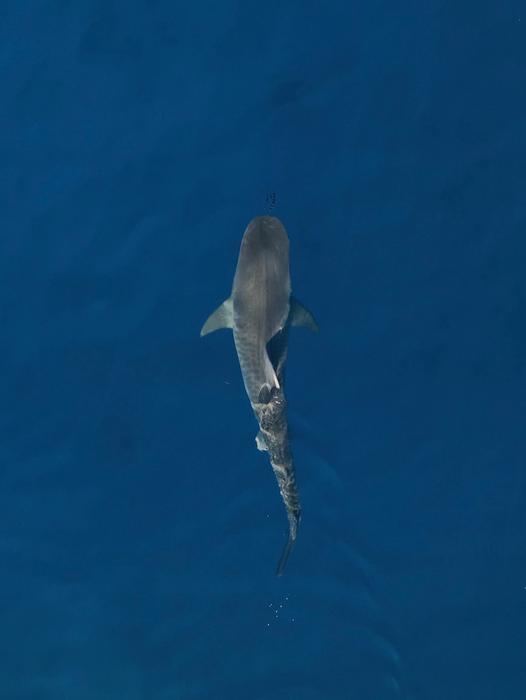
Tiger sharks are more likely to be present in the nearshore waters of the main Hawaiian Islands during October, scientists said. The October spike is linked to the tiger shark's reproductive cycle, according to the study.
Tiger sharks give birth to large litters in September and October, when adult females are abundant in nearshore habitats, researchers said.
These months also see a partial migration of mature females from the Northwestern Hawaiian Islands to the main Hawaiian Islands.
Giving birth to such a large litter can be energetically taxing to the sharks, leaving postpartum females with greater motivation to forage actively.
“This seasonal trend aligns with peak tiger shark sightings at ecotourism sites and the partial migration of mature females from the Northwestern Hawaiian Islands,” scientists wrote in the study.
“The temporary influx of late-term females into the main Hawaiian Island insular shelf waters during the pupping season could heighten the likelihood of human encounters and bite incidents, particularly if these individuals exhibit heightened foraging activity,” they wrote.
Researchers call for further studies to investigate the main drivers of this phenomenon to refine risk mitigation strategies.
To further test if reproductive state is a driver of seasonal bite patterns, they propose using non-invasive ultrasound techniques to determine the pregnancy status of nearshore sharks.
“These findings provide ecological insight into seasonal shark bite risk and highlight potential biological drivers warranting further investigation,” scientists wrote.
Researchers hope the findings help visitors to Hawaii’s shores make informed decisions, supporting awareness and coexistence.
They advise visitors to be more cautious during this month. "Understanding when risk is slightly elevated helps people make informed choices, not fearful ones," Dr Meyer said.
Join our commenting forum
Join thought-provoking conversations, follow other Independent readers and see their replies
Comments
Bookmark popover
Removed from bookmarks