From ageing infrastructure to a rise in violent assaults – how safe are our trains really?
Stations feel dangerous, infrastructure is getting old, staff have been cut and the debate around female-only carriages is back. As the nation reels from the Huntingdon attack on Saturday night and a derailment on Monday, Helen Coffey looks into the risk of rail travel in modern Britain today

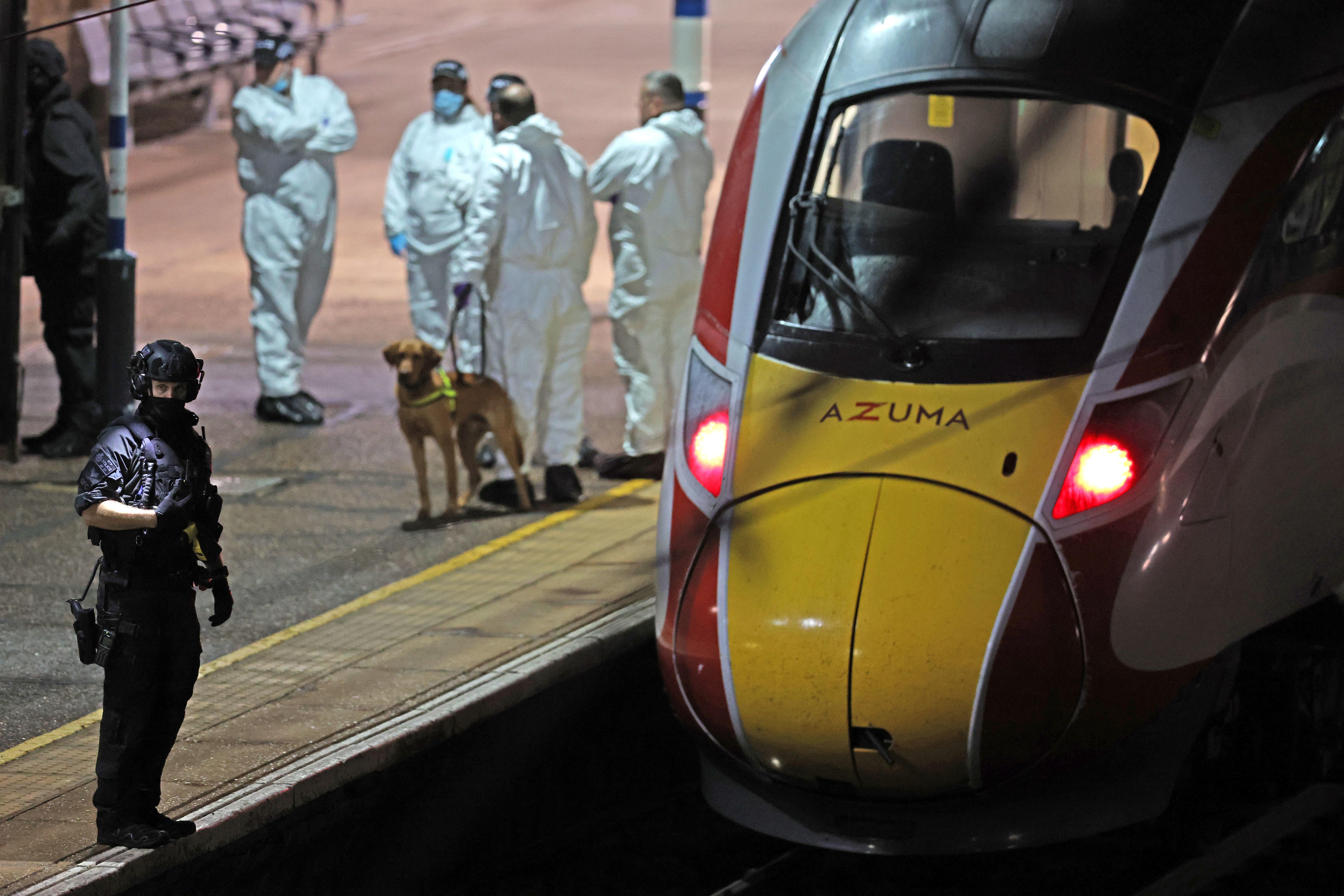
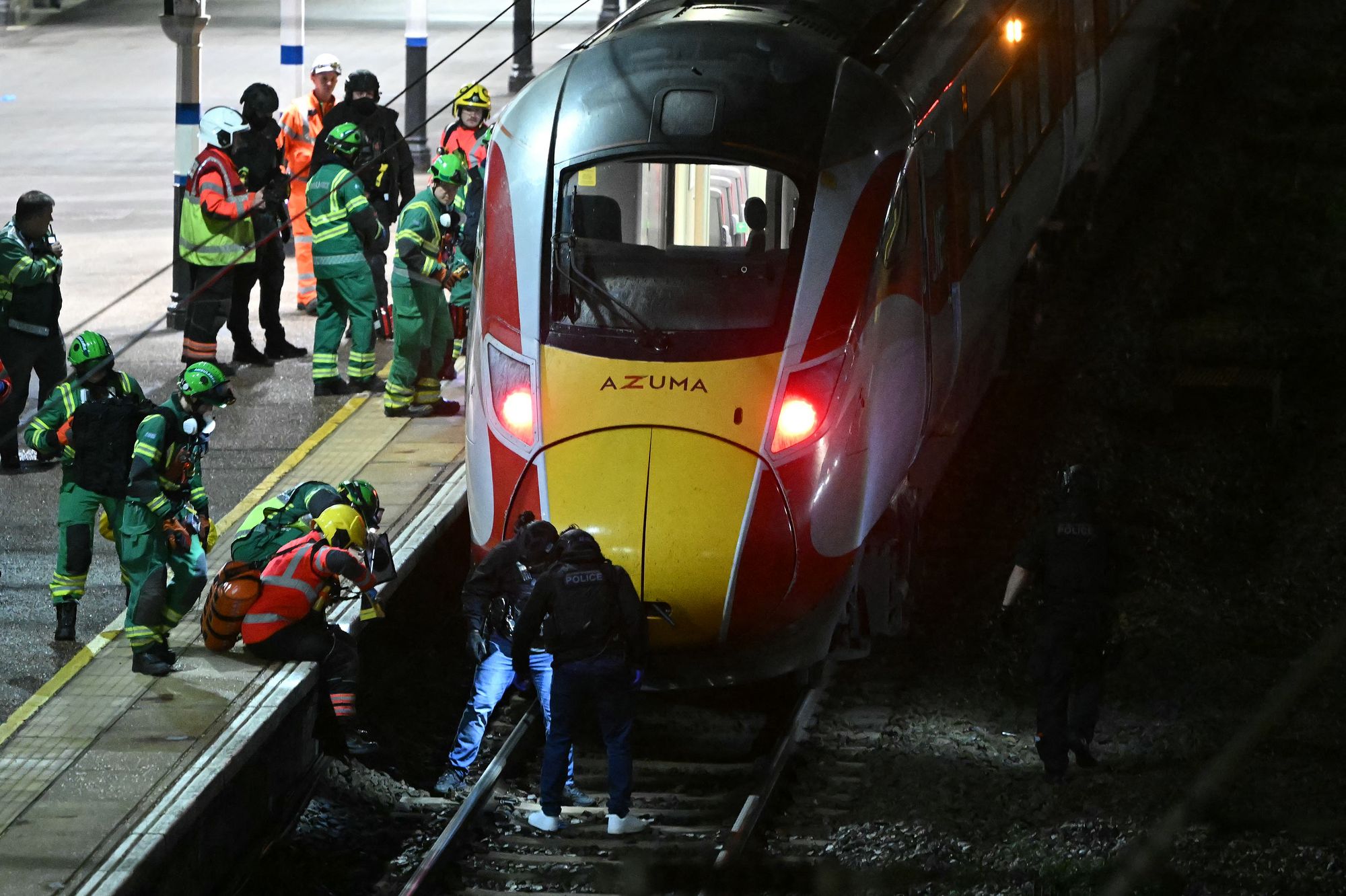
Some thought it was a Halloween prank at first. When bloodied, terrified passengers ran down the carriages on board the LNER service from Doncaster to London on Saturday night, warning of a man attacking fellow travellers with a knife, it sounded like a tasteless joke. But the horror was all too real. Shortly after the train left Peterborough at 7.30pm, the rampage began, with the suspect, now named as 32-year-old Anthony Williams, accused of indiscriminately stabbing all those in his path. It is one of Britain’s largest mass stabbings, with 11 people injured and one member of LNER rail staff in a critical condition.
Horrific though the incident was, the feedback seems to be unanimous: it was exceptionally well handled. Train driver Andrew Johnson, a Royal Navy and Iraq war veteran, made the swift decision to divert the train to Huntingdon. The courageous member of train staff who tried to intervene was “nothing short of heroic and undoubtedly saved people’s lives”, according to the British Transport Police. Within eight minutes of the first 999 call at 7.42pm, the alleged perpetrator had been arrested.
Emergency planning may have played a vital part in ensuring Saturday’s response was quick off the mark. Police had rehearsed an eerily similar knife attack scenario on a moving train in March this year, reports Sky News. In the drill, the train stopped immediately between stations when the emergency cord was pulled; it took police 25 minutes to reach it. When the real attack took place, the decision to stop at a station enabled armed officers to get to the scene far faster.
An attack of this scale and the anticipation of train passengers being a future target can’t help but call into question the safety of Britain’s trains. Unlike air travel, there is little to no security in place when travelling by rail. And, unlike attacks that are carried out in public spaces, those initiated on trains leave victims trapped – the epitome of sitting ducks. As one passenger on the LNER train told the BBC: “The thing that was in my mind was, ‘We’re running through this train now, but what if we run out of carriages to run through? What if we reach the end of the train?’”
There are already calls for greater action to enhance security and protect travellers. The shadow home secretary, Chris Philp, has said “tough and radical action” is needed to tackle knife crime, including an increase in the use of stop and search and live facial recognition technology at train stations. A review of rail security in the UK has since been promised by the transport secretary, Heidi Alexander.
It’s not even the only major rail incident to have occurred in the last few days. On Monday morning, a high-speed Avanti West Coast service from Glasgow to Euston derailed in Cumbria after it struck a landslide at 80mph, injuring four of the 87 people on board.
So, is safety truly a concern – and what measures could feasibly be taken to decrease risk on our rail network?
First off, it’s worth noting that Britain’s railway remains one of the safest in Europe, according to the most recent analysis from the Office of Rail and Road (ORR). Its 2025 report found that Britain ranked best in Europe for “whole society” safety risk, combining the overall average number of fatalities and serious injuries across five risk categories. For passenger safety risk alone, Britain ranked eighth in Europe but performed favourably compared to countries with similarly large railway networks.
However, over the past decade, the number of reported passenger assaults has more than tripled, and the numbers continue to climb: some 10,231 assaults were reported between April 2024 and March 2025, a jump of 7 per cent from the previous year. This year, Network Rail announced that accidental deaths on the rail network had risen by 26 per cent year on year and hit a five-year high.
While correlation is not causation, all this has gone hand in hand with huge slashes to the number of rail staff. Office for National Statistics (ONS) data shows a reduction of 100,000 workers across the industry between 2019 and 2023. A 2023 RMT survey revealed that more than 90 per cent of Network Rail workers thought a major railway incident was likely to happen in the next two years because of cuts to spending on infrastructure and the axing of highly skilled roles.
An attack of this scale can’t help but call into question the safety of Britain’s trains
Earlier this year, The Times reported that thousands more jobs could be on the chopping block as part of the government’s huge plans to overhaul the British rail industry. Even the Rail Accident Investigation Branch (RAIB), a government body set up specifically to investigate accidents to improve railway safety, has had its headcount decreased by 8 per cent.
Rail travellers’ perception of safety onboard public transport has simultaneously been impacted. In the Department for Transport’s latest National Travel Attitudes Survey, more than a quarter of people who said they avoided travelling by train (29 per cent) did so because the behaviour of other passengers made them feel unsafe.
Unsurprisingly, women feel less safe when using public transport than men. Having adequate staffing plays a crucial role in this; women were more likely to feel unsafe because they felt “isolated”, and put greater emphasis on the importance of transport staff being able to deal with incidents.
Lucy Easthope, a professor at the University of Bath and emergency planning specialist, points out that women and girls “have been actively thinking about safety on trains whenever we use them for a long time”. An adviser on nearly every major disaster of the past two decades, from the 7/7 bombings to the Covid pandemic, Easthope has long been warning that Britain’s rail network is in crisis.
-copy.jpeg)
“There are profound safety concerns, both in terms of ageing infrastructure, and in terms of what the Huntingdon attack has illustrated,” she says. “In a similar way to an aeroplane, a train on the tracks is its own little jurisdiction. Sometimes there are transport police on board, sometimes there aren’t. At the same time, we’re getting rid of guards and minimising the importance of drivers.”
At a time when there should be increased investment in resourcing our railways, we’re seeing a consistent decline across the board, she claims. One example of this is care teams (or lack thereof) provided by train operating companies. Since Saturday’s attack, Easthope’s inbox has been filled with survivors who were simply put in a taxi home, with no further contact or psychological support offered.
“If I was minister for transport, I’d say our rail network needs looking at from beginning to end – stations aren’t safe, infrastructure is getting old, front of house staff have been cut and the importance of drivers has been minimised,” she adds. “Cutting transport policing and emergency planning really concerns me. People think you only need it when things go wrong, but we need safety on the railways at all times.”
If I was minister for transport, I’d say our rail network needs looking at from beginning to end
Other mooted solutions have included enhanced security infrastructure, though the transport secretary has made clear that she does not think airport-style scanning “is the right solution for stations in the UK”. The resource required would be huge, as would the impact on travellers if they had to allow an extra hour for a domestic journey just to get through security.
Greater police presence on public transport has also been called for; writing in a newspaper, former Metropolitan Police superintendent Kevin Hurley explained how a tacit arrangement used to exist between officers and British Rail “whereby serving police were able to travel for free, on the understanding that if trouble broke out we would intervene. That helped to prevent countless incidents, and may well have saved more lives than anyone can guess.”
Focusing on female safety in particular, 21-year-old student Camille Brown started a petition in September calling for women-only Tube carriages. She cited statistics that sexual offences on London’s transport network rose by 10.5 per cent in 2024, with over a third of women in London having experienced harassment on public transport. Whenever similar proposals have been floated in the past, however, they’ve been met with backlash. Writing for The Independent in 2017, Everyday Sexism founder and feminist activist Laura Bates called the idea “gravely insulting to both women and men”.
It doesn’t seem like a simple solution to rail’s safety problems exists; anything meaningful will require significant investment in both staffing and infrastructure. At the very least, these latest tragedies might just force the issue up the political agenda, hopes Easthope. “Train incidents are incredibly impactful,” she says. “It’s not enough for a minister to lay a wreath in a few months’ time; this attack has unlocked something.”
Join our commenting forum
Join thought-provoking conversations, follow other Independent readers and see their replies
Comments
Bookmark popover
Removed from bookmarks