Is going to the USA embarrassing now?
As Donald Trump posts racist memes, masked ICE agents attack civilians, and Team USA skiers admit to mixed feelings about representing their country, does the America we thought we knew still exist? Anna Hart, whose sister lives in California, examines the ethics of travelling to the US during these turbulent times
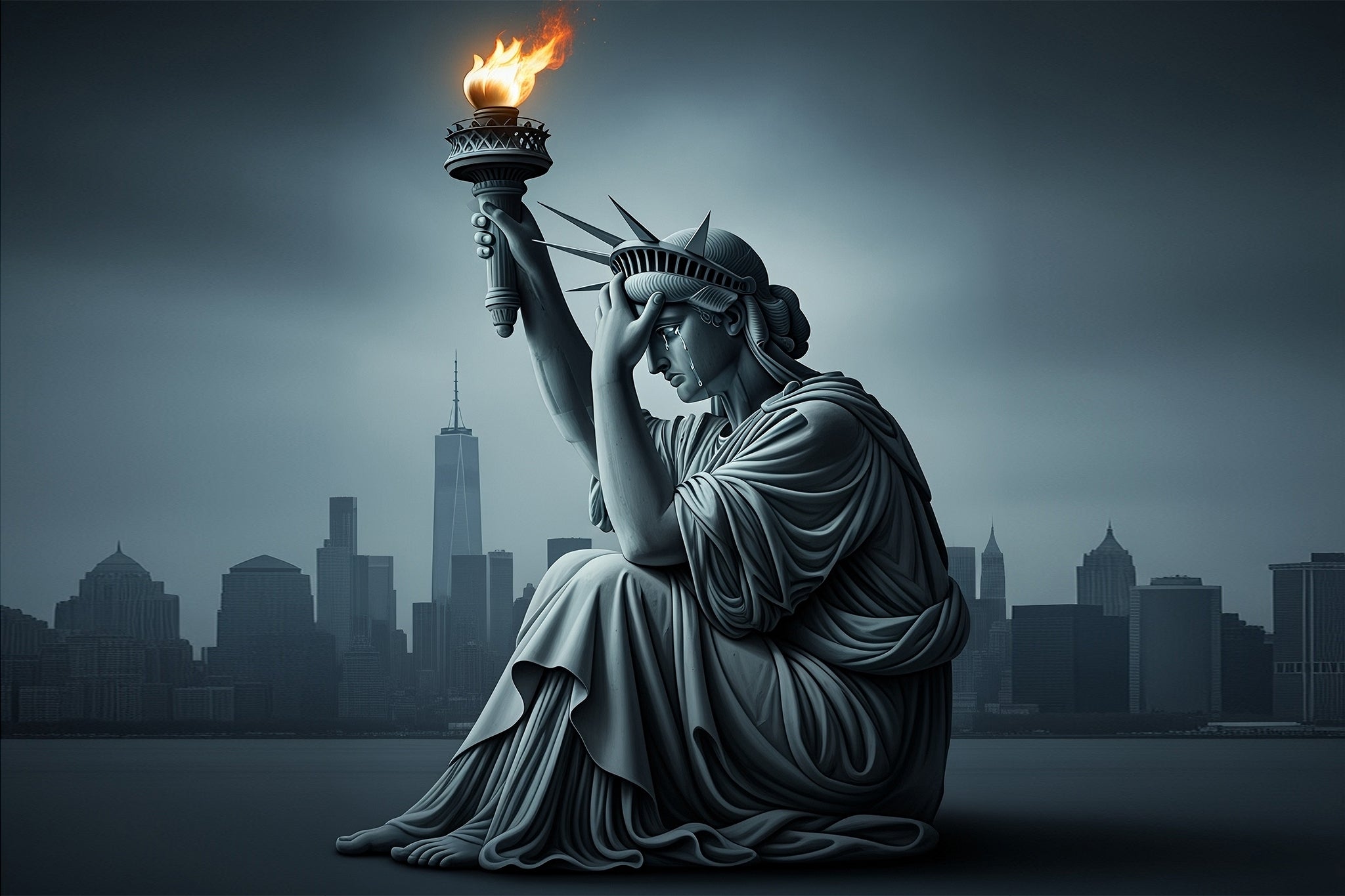
As a travel writer, I’m accustomed to being asked about the ethics and the viability of visiting certain international destinations. I just never expected the US to be the country that travellers are avoiding.
But in the past 12 months, the Trump administration has turned the US into an unwelcoming, unsettling and dangerous place. I’m saddened, if not surprised, to learn that an Independent reader survey conducted by Simon Calder last week revealed that 80 per cent of respondents intend to avoid travelling to the US; only 11 per cent would still go. Of those with holidays already booked, one in seven are considering cancelling. Many travellers have already decided it’s not okay to visit the US right now. Others are asking people like me.
Speaking from the heart, yes, I will still visit the US. My sister and her family live in California, so giving up on the country is not an option for me. I know so many wonderful people – many working in the travel, hospitality and arts industries – who are ardently opposed to the current regime and doing everything in their power to make other people feel welcome and safe.
Turning away from them doesn’t feel right, especially as a journalist with the ability to amplify resistant voices. I grew up in Belfast in the 1980s and 1990s, when nobody wanted to visit Belfast, and we all felt the chill. I believe that travel, done right, is a force for good, and that there are positive stories and experiences to be found in every place. So for reasons both personal and professional, I’m still a yes.
But I understand and support every traveller who refuses to go there. There are increasingly widespread calls for an international boycott of the US for violating international law, and, more specifically, a boycott of this summer’s Fifa World Cup similar to the US-led boycott of the 1980 Moscow Olympics after the Soviet invasion of Afghanistan.
The US is co-hosting the World Cup with Mexico and Canada, neighbours with whom it has a significantly sourer relationship than when the World Cup co-hosting arrangement was cooked up. French MP Eric Coquerel, representing the left-wing La France Insoumise party, said: “Can we seriously imagine playing the World Cup in a country that attacks its neighbours, threatens to invade Greenland, disregards international law, wants to undermine the UN [and] establishes a fascist and racist militia in its own country?”
There are also a growing number of high-profile figures, from international touring musicians and artists to social media influencers, who are refusing to travel to the US right now. In some cases, this is in solidarity with other people – notably theatre groups and the performing arts sector – who are from the 19 nations now on the Trump administration’s travel ban list. History has taught us that sanctions and boycotts are effective at penalising authoritarian regimes, and I understand the travellers who have resolved not put a penny in American pockets during Donald Trump’s presidency.

I am also being asked how safe it is to go there. I know that my experience as a white Irish citizen visiting the US is a hugely privileged one. I have Black and minority ethnic friends and colleagues who have always been wary of American law enforcement, and are now more fearful than ever. They are more fearful than I, as a white person, needs to be. And I’m pretty fearful. We’ve all seen the video footage of civilian protestors Renee Good and Alex Pretti being shot to death by ICE agents in Minneapolis while sticking up for their neighbours.
Last March, in New York City, I took part in anti-ICE protests and felt safe, but I did not predict that one year later, more than 40 people would have been killed by federal agents or died in custody. I’ve been forced to accept that, however unsafe the US seems now, it might get worse.
The other big question I’m being asked is this: will we even make it past immigration? US immigration has long been accused of being heavy-handed or downright hostile, often depending on your nationality or race. But the new proposed requirements by the Electronic System for Travel Authorisation (Esta) mandate the submission of social media identifiers from the past five years; personal and business phone numbers used during the previous five years; personal and business email addresses going back 10 years; IP addresses from photos and metadata; and family member names, birthplaces and contact addresses. This is terrifying, as well as an almighty hassle.
The World Travel and Tourism Council (WTTC) has predicted that the new Esta requirements will result in 4.7 million fewer international arrivals, a reduction of 23.7 per cent from Esta countries in 2026, equating to a loss in visitor spending of up to $15.7bn, with wider travel and tourism GDP losses of $21.5bn.
As a member of the press, I enter the US on an I-Visa, and I’ve written plenty of pieces (including this one!) that have been critical of the current government. Travellers are right to be extremely concerned about what they’ll face at immigration.
And what rights do travellers have with tour operators and travel insurance if we have difficulties? “There’s a very clear line in the sand,” says Sean Tipton, the spokesperson for Abta (the Association of British Travel Agents), “which is that when the Foreign Office advises against all but essential travel, our members will not send travellers there. And when holidaymakers travel against Foreign Office advice, standard travel insurance does not cover you.” For many travellers, the risks are just too great.

This year was meant to be a good one for the American tourism industry. It’s the 250th anniversary of American independence, and the 100th anniversary of Route 66. Major new museums are opening: a revamped Motown Museum in Detroit, the Lucas Museum of Narrative Art in LA, and the Obama Presidential Centre in Chicago. And the World Cup was predicted to bring in between one and six million additional international visitors, according to various sources.

I wouldn’t judge any traveller for sticking to their US travel plans, for going to New Orleans for Mardi Gras, for road-tripping the national parks of Utah, for going surfing in Santa Cruz. The US is a big country, with a lot to love, however much we detest the current political situation. After France and Spain, it is the third most-visited country in the world, so a slump is a disaster for tourism-oriented communities. And we all can travel more responsibly, taking care to financially support the right local businesses and community groups.
There are good reasons to visit the US right now, and good reasons to refuse to visit. But the decision to travel there is more difficult than I ever imagined it could be. And the one thing we can’t do is pretend that things are normal.
Join our commenting forum
Join thought-provoking conversations, follow other Independent readers and see their replies
Comments
Bookmark popover
Removed from bookmarks