The unseen letters to Epstein from the man who published Lolita
As more Epstein files are released showing photos of a woman’s body scrawled with quotes from Vladimir Nabokov’s notorious novel Lolita, biographer Thomas Harding explains how he stumbled across a cache of intriguing correspondence between the novel’s publisher and the sex offender whose private jet was dubbed the “Lolita Express”.
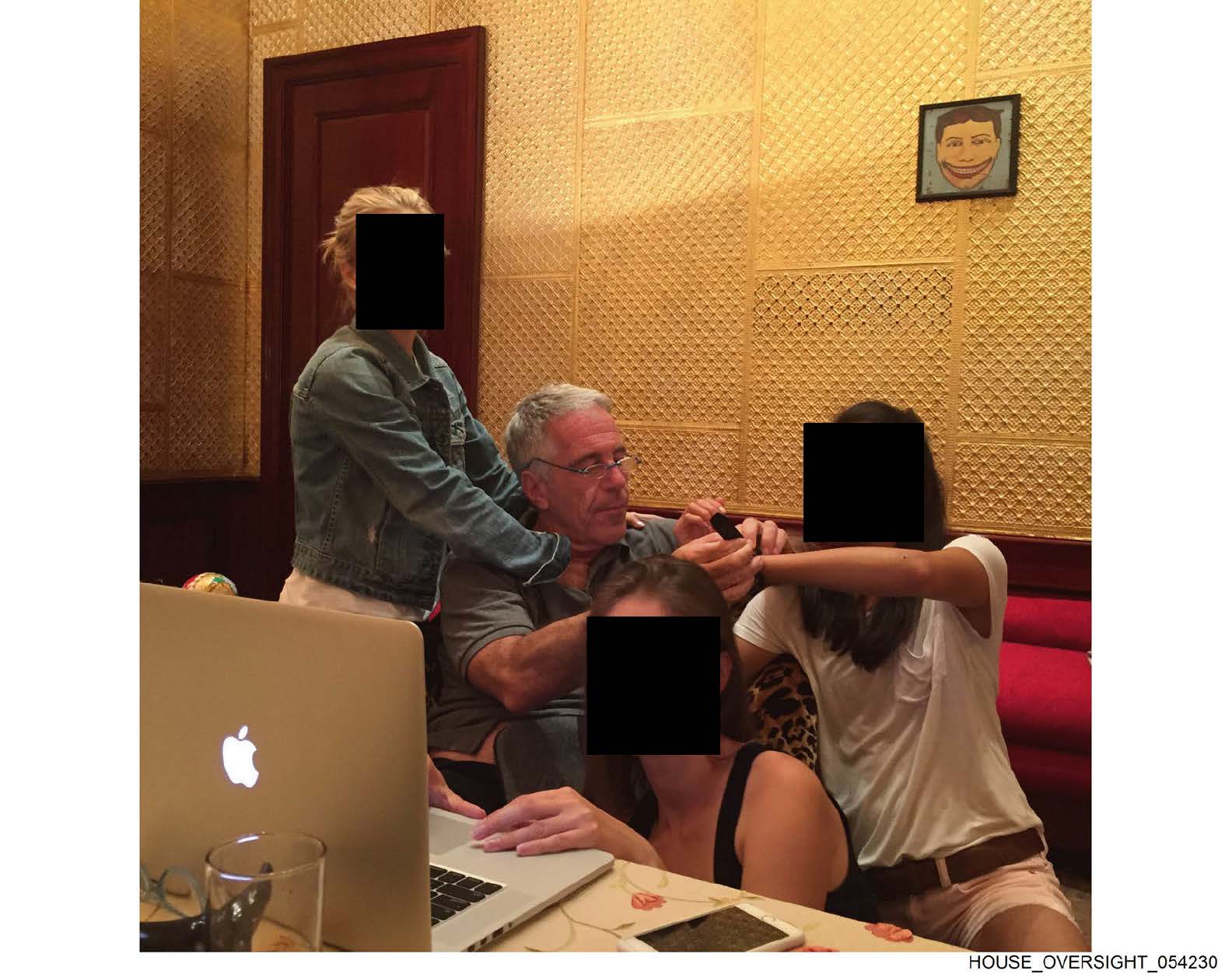
With each release of files related to Jeffrey Epstein, it becomes increasingly clear that he operated within an extensive network of high-powered and highly-connected people. What one writer calls the ‘Epstein class’. But how did the network work? What did they know? And did their proximity to the sexual abuser matter? A cache of letters that I discovered buried in a storage locker in east London sheds some light on these questions.
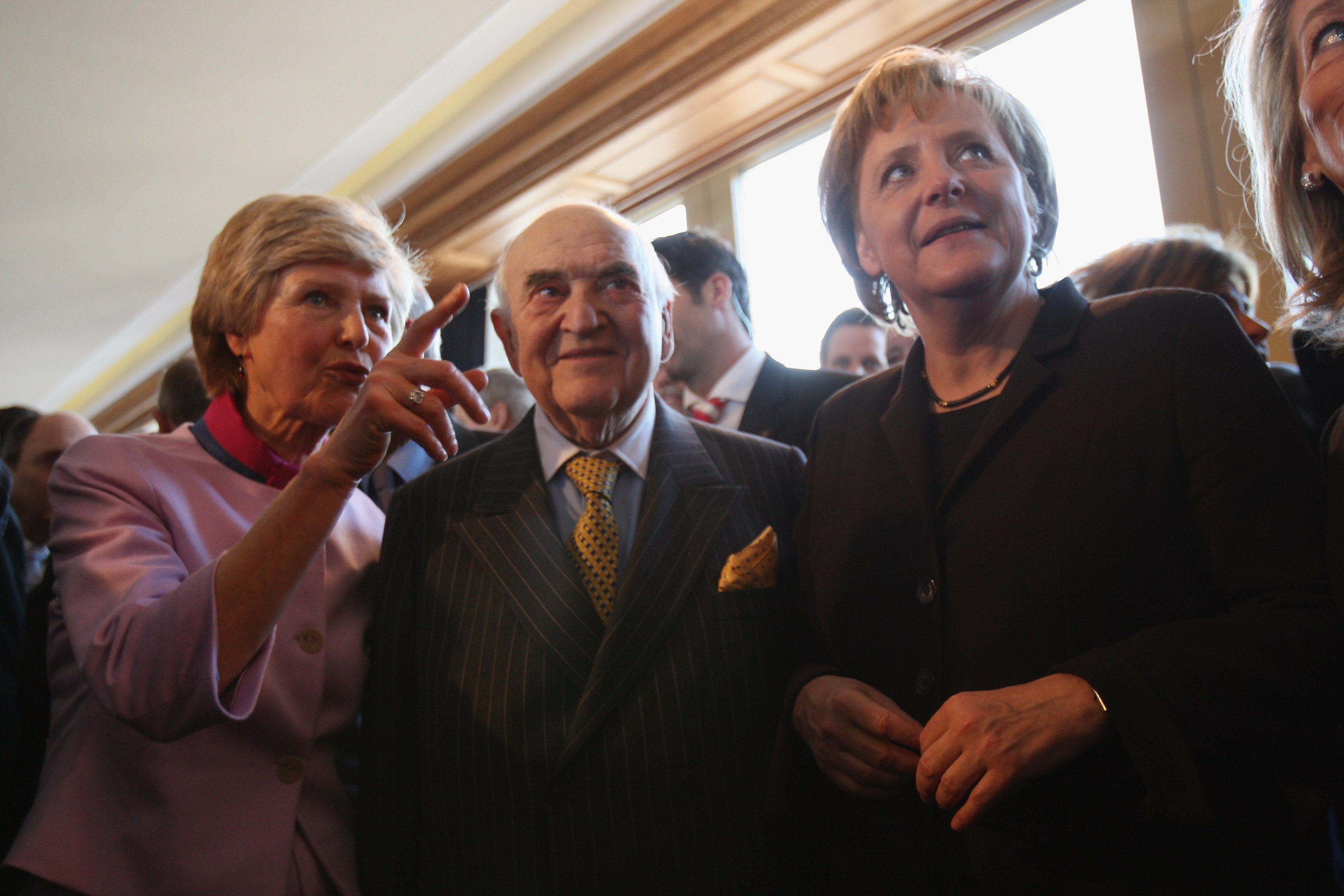
I came across them during my research for my biography of the British publisher George Weidenfeld. These letters are not part of the files released by the US Congress or Department of Justice, but were included in Weidenfeld’s private archive.
I was already aware of a connection between Epstein and George Weidenfeld. The Boeing 757 that Epstein used to traffic underage girls to his Caribbean island was nicknamed by the locals as the “Lolita Express”. It was a reference to the novel by Vladimir Nabokov about a professor who minimises the repeated rape and sexual assault of a 12-year-old girl. In 1959, this book, Lolita, was famously published in the UK – overturning a government ban in the process – by George Weidenfeld.
The first letters I found in George’s archives involved Ghislaine Maxwell, who is currently serving 20 years in prison for helping sex offender and billionaire financier Jeffrey Epstein abuse teenage girls.


In March 1991, the then 29-year-old Ghislaine was planning to spend a few months in New York. But she needed help to gain entry to society. Through her father, Robert Maxwell, she met George Weidenfeld, who offered some letters of introduction. The first he wrote to the legendary American television journalist Barbara Walters.
“If I have asked Ghislaine Maxwell, daughter of the legendary Robert Maxwell, to telephone you,” Weidenfeld wrote on 27 March 1991, “it is because I think you will find her a most amusing and charming person.”
That same day, he issued a second missive to Lally Weymouth, the daughter of the Washington Post owner Katharine Graham. “I cannot remember when I last sent you someone with a ‘letter of introduction’,” he wrote, then turning to Ghislaine, “She is full of ideas and I’m sure you can benefit from it.” A third letter went out to the fashion magnate Oscar de la Renta.
We know that Ghislaine Maxwell travelled to New York a few days after receiving George’s letters. “In April 15 of 1991, I came to New York,” she told the FBI earlier this year, “but I can’t remember for what reason,” adding, “something to do with my dad at that time.” Ghislaine explained that she would meet the financier Jeffrey Epstein in New York sometime that year.

On 22 April 1991, soon after landing back in England, she wrote to George, “My trip to New York was slightly briefer than expected… I just wanted to say thank you so much for sending the letter of introduction (to Lally Weymouth) as we had a really wonderful dinner.” She said she was looking forward to seeing George in two weeks’ time.
And why wouldn’t she? George Weidenfeld was renowned as one of the world’s great networkers, a go-between, a bridge-builder, someone who brought people together from different fields at his luxurious apartment overlooking the Chelsea Embankment, in private dining rooms, at conferences and house parties.
George established his reputation as the founder of the publishing house Weidenfeld & Nicolson, which released some of the most significant titles of the last hundred years. In addition to Lolita, they published The Double Helix by James Watson and The Group by Mary McCarthy. His list of authors was astonishing: Truman Capote, Joan Didion, Henry Miller, Edna O’Brien, Clare Tomalin, Gore Vidal, Antonia Fraser, Martin Gilbert, Norman Mailer, Margaret Drabble, Lyndon B Johnson, Moshe Dayan, Henry Kissinger and Carlos Ruiz Zafón, to name just a few.

During his long career, George became known for his perspicacity, his ability to see around corners, someone of superior intellect who could spot the next important thing. And he provided an important entrée to Ghislaine Maxwell into New York high society, a woman whose conduct would one day be described by the sentencing judge as “heinous and predatory”.
There were others in Epstein’s orbit that George helped, too, including Andrew Mountbatten-Windsor. On 11 May 2001, Andrew penned a note on a red Buckingham Palace letterhead starting with “Dear George”. At the time, he was winding down his military career.
“Now that I have a fleeting moment of quiet I want to thank you so much for lunch last week,” the then prince wrote, “I have, as yet, not made any decision on a book, but I get back from another trip at the end of the month and I will then write to let you know.”
The proposal was for a book about the Falklands, adding that “the rather larger book on 22 years is more problematic”, presumably a reference to the 22 years he had by that point served in the military.
Andrew’s letter to George Weidenfeld was written just a few weeks after a photo was taken with him standing next to Virginia Giuffre – the outspoken survivor of Jeffrey Epstein’s sexual abuse, who died by suicide earlier this year, at the age of 41.
Also in the files were a series of letters from Sarah Ferguson, Duchess of York, who would later say that Jeffrey Epstein was a “steadfast, generous and supreme friend”.
“Dear George,” she started on 2 December 1991, “Thank you so much for all you have done for me.” She wrote in neat black ink on Sunninghill Park letterhead with a green crown printed in the top left corner, below which hovered an ‘S’.
Sarah went on to say that she was “so tired and overloaded”, before complaining about spending a “whole day up North in England” doing engagements, adding, “It was just the most ridiculous programme.”
.jpeg)
Fergie kept up her correspondence with George, including a letter on 3 February 1998, asking for some “good advice” about various book projects. Attached was a proposal including the line: “The Duchess of York has shown that despite the destructive times which have dogged her for the past 10 years, she has managed, with sheer willpower and determination, to overcome adversity and eventually rebuild her life.”
While Andrew and Sarah Ferguson have consistently denied any knowledge of Jeffrey Epstein's abuse, during the research, I came across a number of women who had concerns about George Weidenfeld’s behaviour, too.
“He was completely over the top with young women,” remembered Vanessa Nicolson, Vita Sackville-West’s granddaughter. “He was all over me at one point. There were these older men who were in positions of power,” she recalled. “He seems big and looming, you know? There’s a word that keeps coming into my head. It’s ‘creepy’.”
An account published by Private Eye on 22 December 1978 reported that George Weidenfeld “has been known to unzip himself and display his unappealing impedimenta. And once in a car, when being chauffeured by a young lady assistant, [he] removed her hand from the steering wheel and placed it on his organ”. I was unable to find a second source to confirm or deny the magazine’s allegation.
.jpeg)
George also corresponded directly with Jeffrey Epstein.
On 18 February 1993, George wrote directly to Epstein asking him to pass along an invitation to his client Leslie Wexner (billionaire owner of Victoria’s Secret). The letter’s objective was for Wexner to attend a private dinner with the then president of Germany, Richard von Weizsacke, and a second meeting with the German minister of interior and other leading politicians. On the agenda would be antisemitism in Europe and the fight against right-wing extremism.
George’s letter to Epstein provided reassurance by mentioning a “mutual friend”, attaching a list of guests who had “already accepted the invitation” and saying that in the past he had convened similar meetings, “notably with Chancellor Kohl”. Finally, he noted that travel and accommodation expenses would be paid by a German foundation. It is not known whether Wexner received or accepted the invitation.
While Wexner has repeatedly denied any knowledge of Epstein’s abuses, alongside George and many others – Donald Trump, Bill Clinton, Rupert Murdoch, Woody Allen, he was one of Epstein’s known contacts.
And while this association does not implicate George or any of his other contacts in Epstein’s criminal activities, this global networking, bonhomie and mutual back rubbing is not insignificant either. If nothing else, it reveals how a group of powerful people, including George Weidenfeld, provided a sheen of respectability to Jeffrey Epstein who was able to hide his crimes in plain sight.
From the emails released by the US Congress recently, it is clear that many people belonged to this network, begging the question: Who should have known better?
After those first letters of introduction, Ghislaine’s father died after falling from his yacht (the Lady Ghislaine) and George wrote again to her: “Please accept my condolence on your very sad loss. Please also accept my best wishes for your future and the undoubtedly important role that you are destined to play. In due course – whenever you feel up to it – do let us meet.”
George Weidenfeld died in 2016. We will never know if he ever had a hint of just how dark the destiny of Maxwell – and Epstein – would eventually become.
Thomas Harding is the author of ‘The Maverick: George Weidenfeld and the Golden Age of Publishing’, Weidenfeld & Nicolson. You can follow him on X: @thomasharding
Join our commenting forum
Join thought-provoking conversations, follow other Independent readers and see their replies
Comments
Bookmark popover
Removed from bookmarks