Why there are more jellyfish on US beaches this year – and what to do if you’re stung
Jellyfish sightings are on the rise in several East Coast states, including Delaware and Maryland

Labor Day beachgoers, beware: Jellyfish sightings are on the rise along the Atlantic coast this summer.
Beachgoers saw more jellyfish than usual this summer in several East Coast states, including Maryland, Delaware, Massachusetts and Maine. Experts say this year’s uptick is unprecedented.
“It’s as bad as I’ve ever seen it. To have this many for as long as we’ve had them is rare,” Jonathan Cohen, a marine science professor at the University of Delaware, told The Washington Post.
The increase was caused in part by more rain and higher temperatures in the region this year, which have created ideal conditions for jellyfish, the Post reports.
As a result, jellyfish stings have also been on the rise in some areas. Lewes Beach in Delaware reported a fourfold increase in jellyfish stings this July compared to last year, the Associated Press reports. Gisele Muller-Parker, a retired marine biologist, told the AP she saw dozens of jellyfish each day while walking along Lewes Beach this summer.
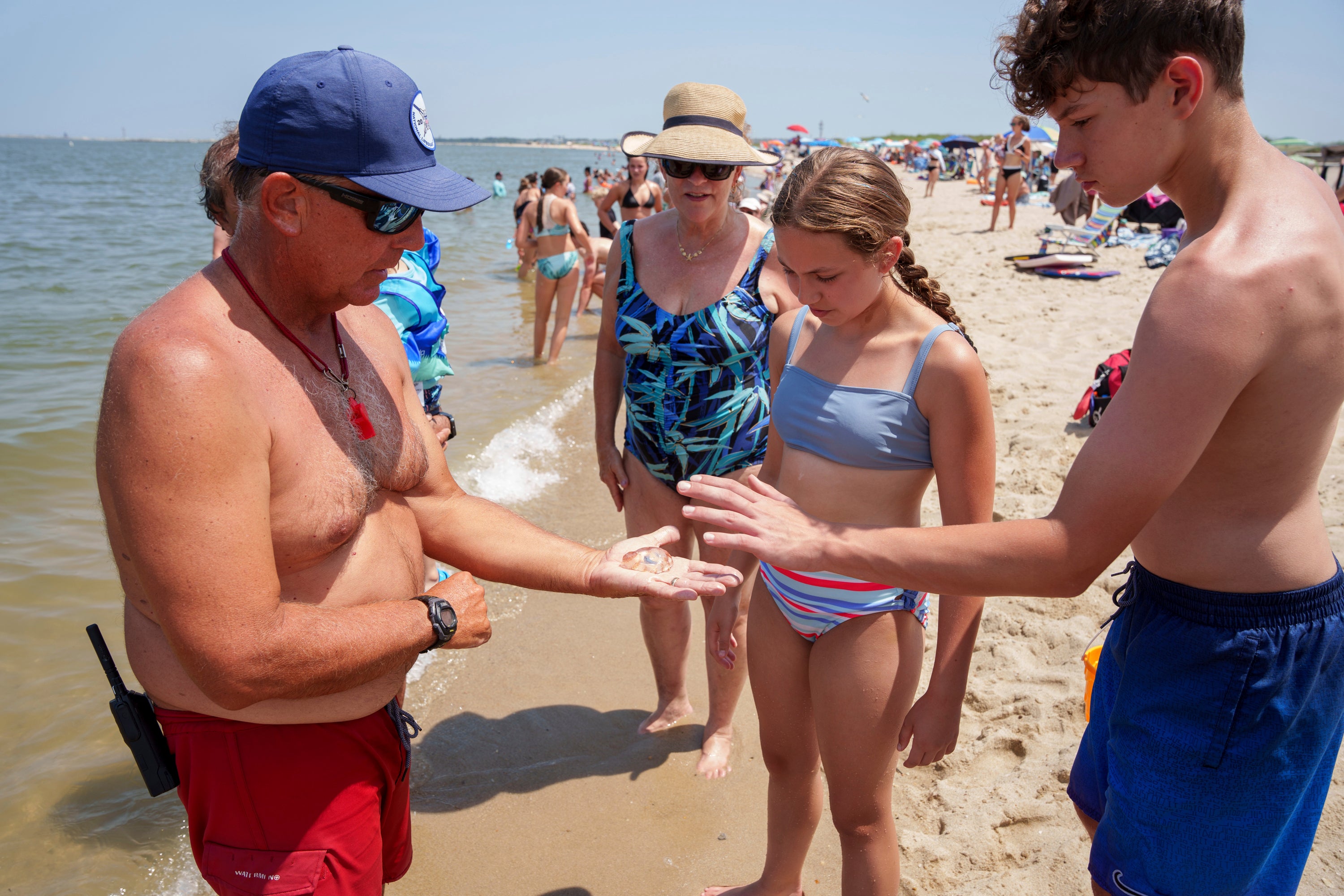


“This year, we’ve never seen anything like this,” she said.
Some jellyfish stings can be minor, but patients should still seek medical help right away by calling emergency services or the Poison Help Hotline at 1-800-222-1222, according to the Mount Sinai Health System.
It’s important to call 911 immediately if someone who was stung has trouble breathing, is wheezing, or has hives, welts or chest pain, according to the National Capital Poison Center.
To treat the sting, patients can rinse the site with large amounts of household vinegar or ocean water, according to the Mount Sinai Health System. It’s also important to protect the wound and to keep debris like sand out. To help with the itching and pain, patients can also use antihistamine or steroid creams after soaking the wound in hot tap water for 20 to 40 minutes.
If a patient goes to the emergency room, doctors may treat the sting with a medication that reverses the effects of the venom called antivenin, according to the Mount Sinai Health System. They may also order tests, including chest x-rays and ECGs.
Even with jellyfish sightings on the rise, experts and lifeguards told the Post swimmers don’t need to avoid Atlantic coast beaches this Labor Day weekend. Sightings are expected to go down as summer winds down and temperatures drop. Hurricane Erin, which battered the East Coast earlier this month, also helped to clear away some of the jellyfish, according to the Post.
Meanwhile, beachgoers weren’t the only ones impacted by this jellyfish boom this summer. A massive nuclear power station in France had to temporarily shut down earlier this month after a swarm of jellyfish swam into its cooling system. Nuclear engineer Ronan Tanguy told the BBC the sea creatures were able to slip past the first layer of filters thanks to their “gelatinous” bodies.
Join our commenting forum
Join thought-provoking conversations, follow other Independent readers and see their replies
Comments
Bookmark popover
Removed from bookmarks