A ceasefire in Ukraine would be fraught with danger for the whole of Europe
Despite Zelensky and Trump’s optimistic talk of an ongoing ‘peace process’ Putin seems only too happy to continue waging war in Ukraine. And if a ceasefire is achieved in 2026, Keir Giles asks: at what cost?


For Ukraine, there is little reason to think that 2026 will not continue the pattern set by 2025: the war will grind on, because the repeated promises that peace is near are based on little more than blind optimism and a desperate need to pander to Donald Trump’s fantasies.
Russia will continue to try to secure through diplomatic means what it has failed to conquer in 11 years of war, and its key tool for doing so will continue to be Donald Trump. Three times during 2025, Trump blindsided Europe’s leaders by attempting to coerce Ukraine into accepting Russia’s demands under the guise of a ceasefire agreement.
On each occasion, the worst danger was averted following a transatlantic diplomatic scramble, as European leaders dropped everything to try to roll back some of the damage. It may seem like a repetitive cycle, but on each occasion, Russia improves its position.
Just as Russian troops are steadily inching forward on the front line, Putin and Trump are steadily moving the window of what Ukraine and Europe are being forced to accept. Russia’s “28-point plan” of November, instead of being rejected outright, was treated as a basis for negotiation – with the result, for example, that rather than dismissing the idea of limiting the size of Ukraine’s armed forces, Europe too has now endorsed it.
Meanwhile, the patterns of actual combat in Ukraine were set months and in some cases years ago. Russia continues to abrade Ukrainian defences on the front line at enormous cost in casualties, and to murder Ukrainian civilians nightly through drone and missile strikes against its cities in critical infrastructure. But it remains the case that the war will not be decided on the front line, and probably not in Ukraine.


-1.jpeg?quality=75&width=230&crop=3%3A2%2Csmart&auto=webp)
The war continues because neither the coalition backing Ukraine nor the one backing Russia has decided to intervene decisively. For China, Iran and North Korea, there is a fine balance between the benefits of seeing Russia exhaust both itself and its Western adversaries, and the risks of overstepping their support for Moscow and triggering more widespread destabilisation.
Among Ukraine’s backers, meanwhile, the curtailing of US support was entirely predictable, as was the limited ability of European powers to make up the shortfall as a result of their refusal in previous years to prepare for it.
Similarly, European countries are ill-prepared for a mooted 2027 deadline for the United States to reduce or remove support for European defence – again, because those European countries refused over the proceeding years and decades to take an interest in their own defence.
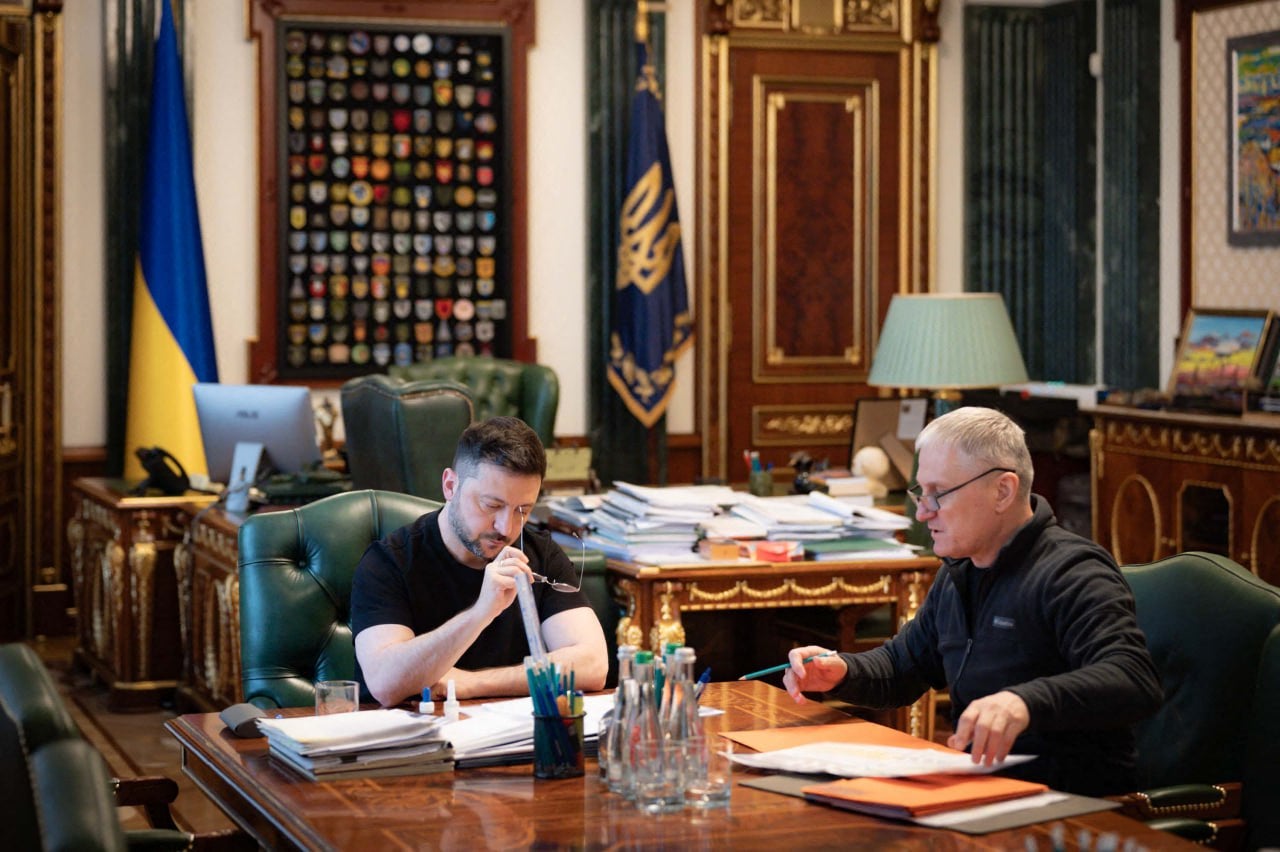
The United States’ new National Security Strategy has laid out a possible future for the distribution of American forces worldwide. If it is followed through, it is not only America’s European allies, but also those in East Asia, which will find themselves facing unfriendly regional heavyweights without the American security guarantees they have relied on for generations.
The vision of hemispheric defence laid out in the strategy, with the United States concerning itself solely with the Americas, and Europe and East Asia abandoned to their respective dominant aggressive powers, raises a prospect that until recently many would have thought would only be found in dystopian fiction.
As I predicted in my book Who Will Defend Europe, written in the middle of 2024, that may see the world’s remaining liberal democracies pitted against three assertive autocracies, Russia, China and the United States. But what is more, if the ambitions of Russia and China go unchecked, the political geography that would result would be immediately recognisable to anybody that has read George Orwell’s 1984, with the world divided between Oceania, Eastasia, and Eurasia.
For the time being, however, US forces are still in place, and US secondees are still integrated with European defence structures, including Nato. Across the continent, Americans are continuing to do their jobs – unless and until the Trump White House tells them to stop.
That unpredictability should help focus the minds of European leaders on looking to their own defence and resilience in order to make themselves less attractive targets for Russia’s next move. But it also provides a benefit. There is little doubt that Russia will not move against a Nato nation until it is absolutely convinced that there will be no retaliatory steps by the United States – and for the time being, that same unpredictability from the Trump White House will not yet give the Kremlin that certainty.
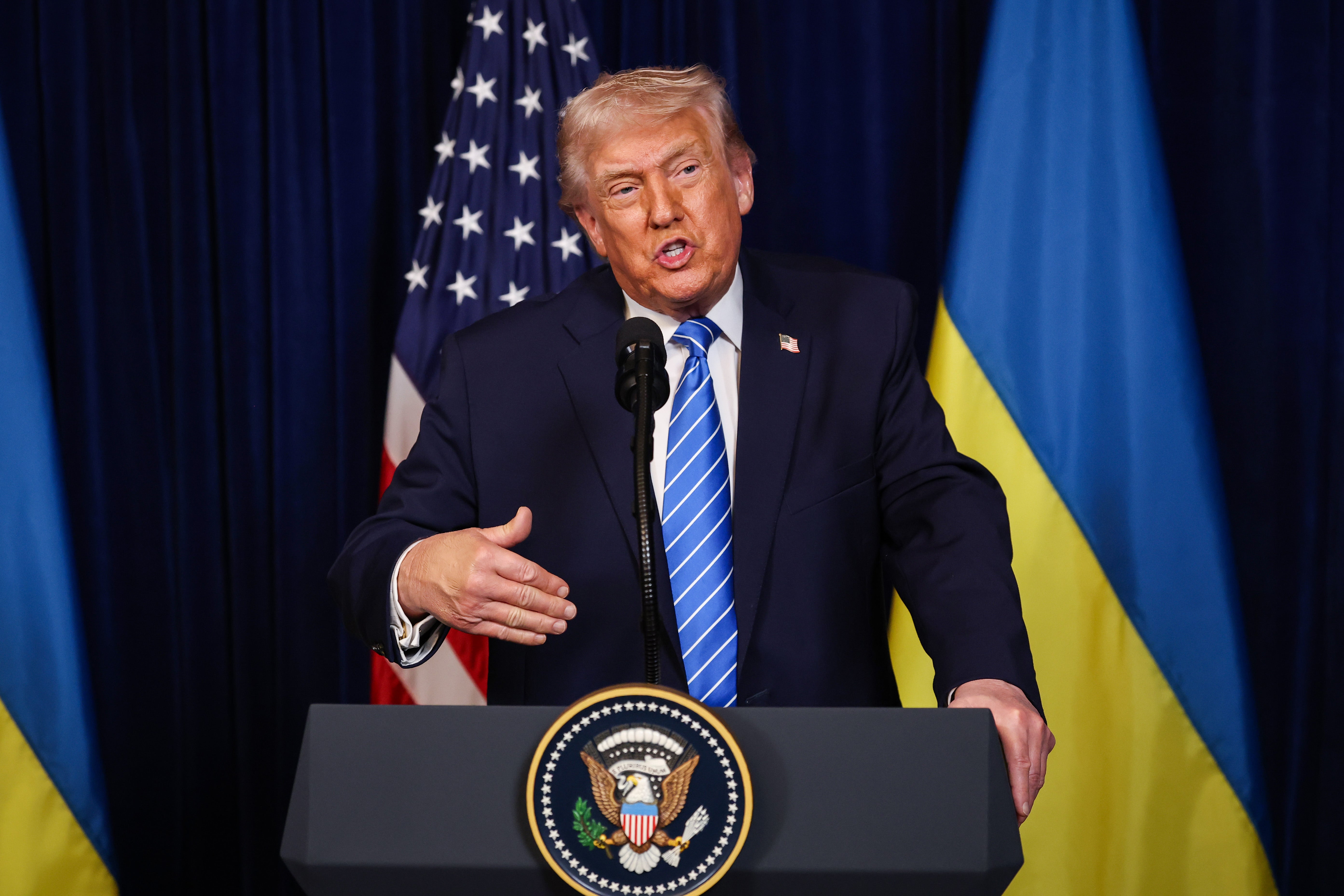
Europe’s inability to wean itself off defence dependency on the US lies behind the craven pandering to the Trump White House that was on display throughout 2025. For Ukraine, and its supporters, that includes pretending that the repeated diplomatic flailing constitutes a “peace process”, and clinging to the bizarre idea that a US security guarantee against Russia would be of any value at all under the current administration.
Presidents Trump and Zelensky might even be telling the truth when they say that they are 90 per cent of the way to an agreement on a peace settlement for Ukraine. The problem is that this is agreement between Ukraine and the United States – and they could be 0 per cent of the way to a viable agreement with Russia. The repeated offers of ceasefire terms to Moscow that met many of Russia’s original objectives, and their repeated rejection, demonstrate clearly that for the time being, Russia thinks it has more to gain by fighting on than by pocketing the gains being offered by Trump. And until that calculus changes, there is no reason to expect the war to end.
The fundamental objectives of both sides remain unchanged. Russia wants, either now or later, to eliminate Ukraine as a free and independent nation; and Ukraine wants to survive. The fact that there is no common ground between those two positions is the reason the war started in 2014, and escalated in 2022.
Even any potential ceasefire would also be fraught with danger. In previous conflicts, like Georgia and Syria, Russia has shown itself adept at co-opting Western leaders into imposing impossible terms on the victims, while allowing Moscow complete freedom of operation to violate ceasefire agreements as it wishes. There’s no reason to think that on this occasion too, Russia would sign up to a ceasefire that it was not able to violate at will, and did not position Russia well for resuming the conflict at a time of its choosing. But at the same time, any easing in the intensity of the conflict would give European leaders the excuse that too many of them are still looking for to pretend that the problem has gone away, and that the urgent need for their own rearmament is no longer there.
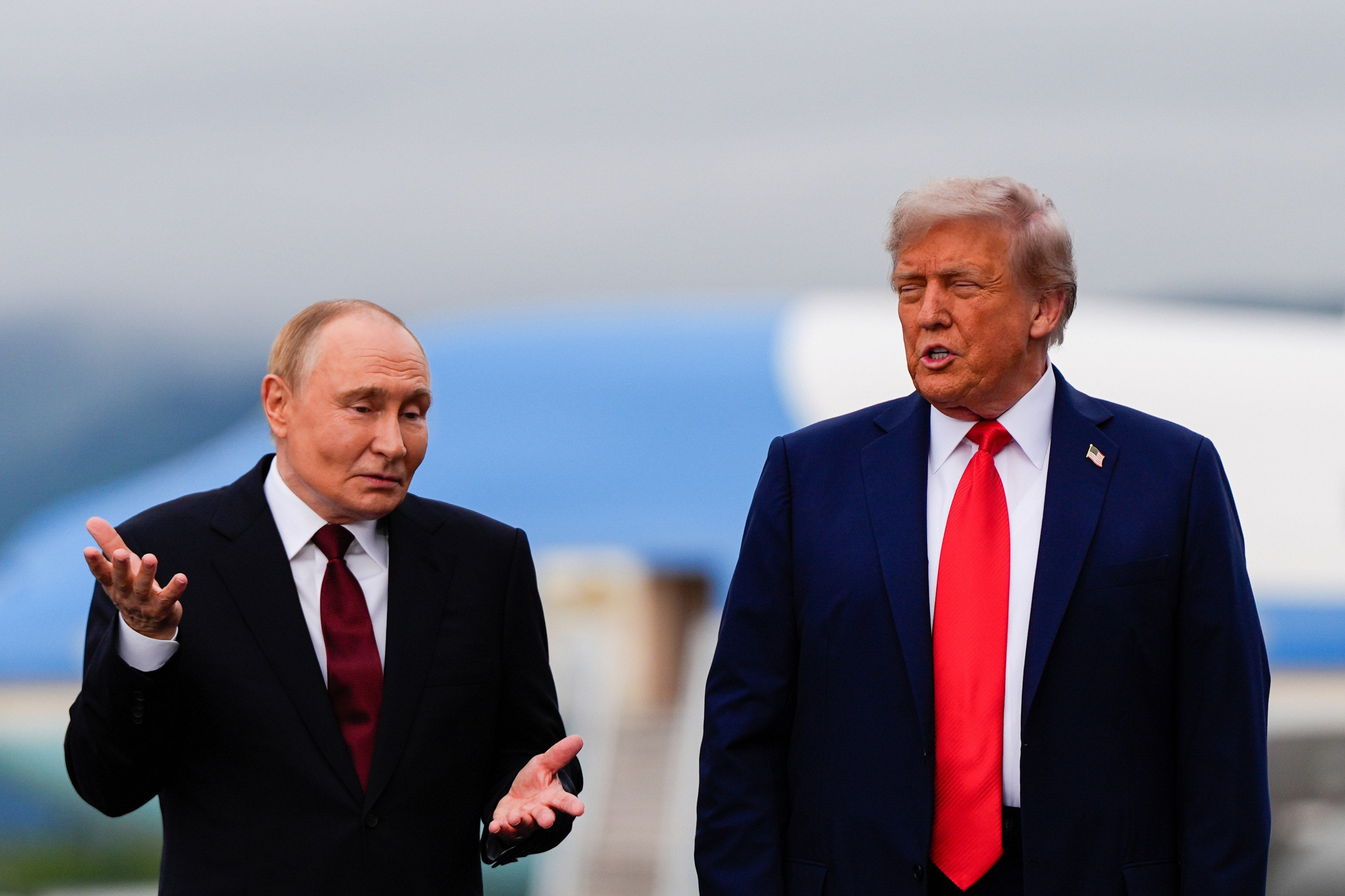
And none of this addresses the challenge of ensuring that a ceasefire is a path to a durable peace, rather than an opportunity for Russia to reconstitute its land forces for the next attack even faster, without Ukraine eliminating them almost as swiftly as they can be restored.
Russia will continue to reconnoitre for its future move on Europe, by means of sabotage and probing attacks against civilian infrastructure and key logistics points. Europe will continue to call these “hybrid” attacks, despite criticism from well-informed intelligence chiefs who point out how unhelpful the term is. The alternative, as ever, is recognising these attacks as the warlike acts they really are – and finally facing the uncomfortable political decisions that implies.
Estimates continue to vary regarding when Russia will be ready to resume open warfare, either on Ukraine or against a NATO member state. But the one thing they have in common is that they are all earlier than Europe can conceivably be ready to defend itself.
At the end of 2024, I wrote that the end of fighting in Ukraine might be closer, but the end of Russia’s broader war against the West was nowhere in sight. As we enter 2026, despite all the claims of imminent “peace”, there’s no reason to think that has changed.
Join our commenting forum
Join thought-provoking conversations, follow other Independent readers and see their replies
Comments
Bookmark popover
Removed from bookmarks