The truth behind Man City’s new ‘reality’ that Pep Guardiola has missed
Manchester City have fallen in the Premier League’s net spend table over the last five years, but Richard Jolly argues that Guardiola has missed part of the story
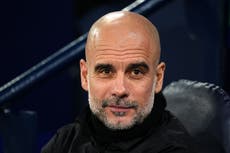
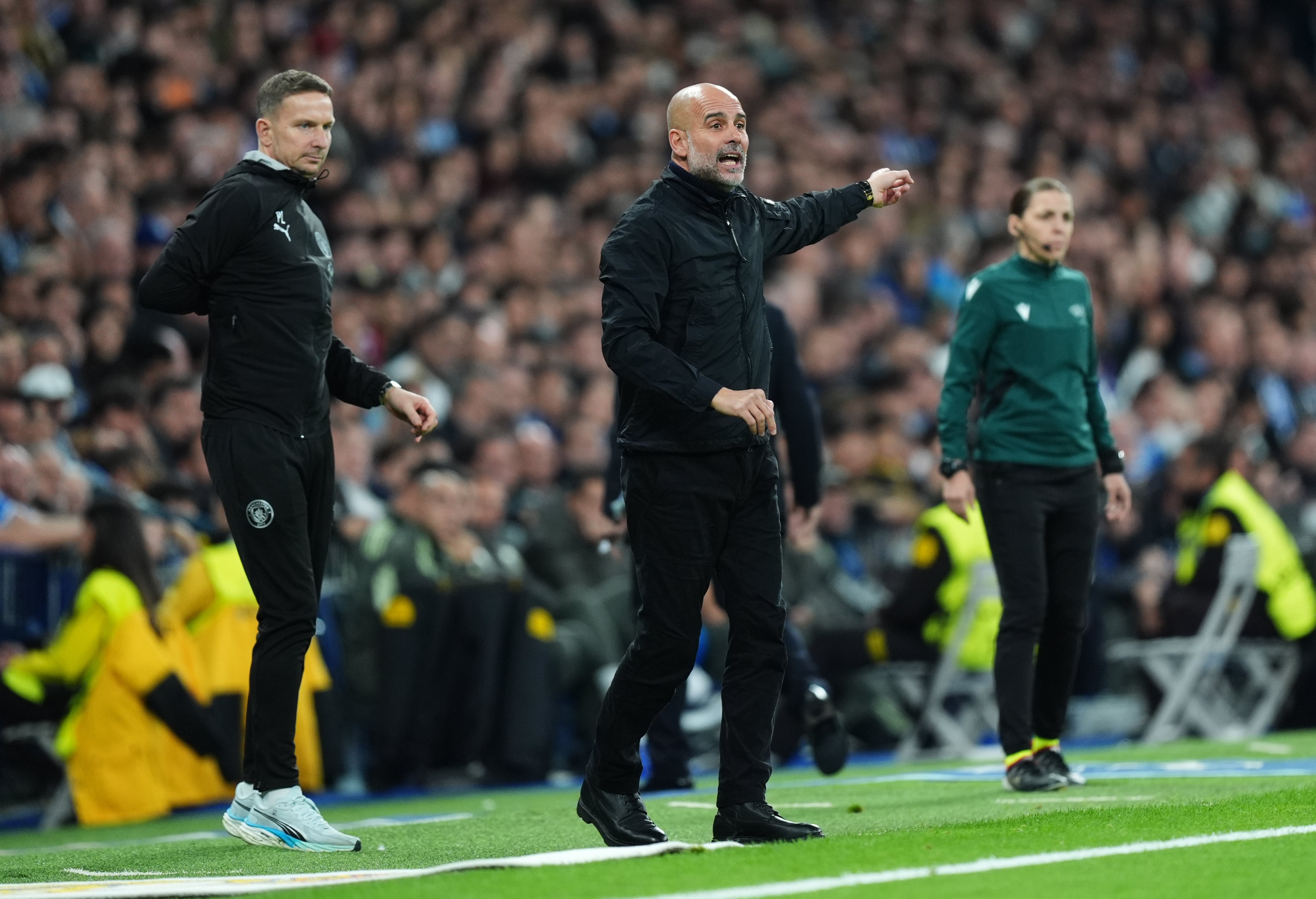
“That's a nice quote, eh?” smiled Pep Guardiola. And yet, he felt, not one that would change his club’s reputation. Manchester City were the biggest spenders in the January transfer window and, with an outlay of some £430m in the last 13 months, their expenditure since the start of 2025 has been lavish. And yet, Guardiola argued, not in the context of half a decade, or a division.
Guardiola knows City will never shed the tag of big spenders. “Never, never, never,” he said. “Always, we will live for that.” But he had looked at the league table and the net-spend charts and, with a hint of mischief, had said: “I'm a little bit sad and upset because in net spend the last five years we are seventh in the Premier League. I want to be the first, I don't understand why the club don't spend more money. I am a little bit grumpy with them.
“But like we won in the past because we spent a lot, now six teams have to win the Premier Leagues, Champions Leagues and FA Cups because they spent more in the last five years. These are facts. It's not an opinion. Good luck to the six teams who are in front of us for net spend for the last five years. Let's go. I'm waiting.”


Those six are, in descending order, Manchester United, Arsenal, Chelsea, Tottenham, Newcastle and Liverpool. Within that, there are different tales. Liverpool are the reigning champions and Arsenal their likely successors. Chelsea have won the Champions League in the last five years, but before the vast spending of the Todd Boehly and Clearlake Capital era. Newcastle United, Wednesday’s opponents for City, spent, but from a low base of a relegation-threatened team. But while Manchester United and Tottenham contested last season’s Europa League final, they also only finished 15th and 17th in the Premier League.

Guardiola may have had a selective interpretation of the facts; over the last decade, for instance, City’s net spend is the third highest. In the last year, only Liverpool, at £450m, even before Jeremy Jacquet arrives, have paid out more, while City’s net spend, of around £350m, is bigger.
But City’s financial muscle was apparent in the January arrivals of two players with admirers elsewhere. Marc Guehi looks a bargain at £20m, but Liverpool felt his wages were affordable only to one club. Antoine Semenyo came for £62.5m, the biggest fee of the winter window; at various points, Spurs, Chelsea and Liverpool had shown an interest. City had already spent around £180m last January, about a further £170m in the summer.
There are, though, some other elements that can support parts of Guardiola’s case. Guehi is not alone in arriving for a surprisingly small price: so did Gianluigi Donnarumma and Rayan Cherki last summer, Erling Haaland and Manuel Akanji before them. City’s recruitment tends to be better than most and, apart from the £100m buy of Jack Grealish, they do not always pay the biggest fees. But they only form part of the overall outlay. The net spend tables do not include salaries; City’s wage bill is often the highest, though Liverpool’s could be this season.
But City’s net spend reflects other elements. One is that they signed fewer players than most others; Chelsea’s shopaholics in particular. That can be an indication that successful signings tend to have more longevity. And a net-spend chart over five years comes from a starting point when City already possessed a champion team, some of whom, in Rodri, Ruben Dias, John Stones and Bernardo Silva, are still at the club. Nor did they need to buy Kevin de Bruyne, Ilkay Gundogan, Kyle Walker or Joao Cancelo in 2021: they already had them.
Now they are constructing another team. Their buying over the last three windows, when 13 players joined, is in part a consequence of what almost amounted to negligence before then, when they did too little.
But City have also been better sellers than most, offsetting some of their expenditure, sometimes in PSR-friendly ways. They have sold academy products – most famously, and in a deal they should regret, Cole Palmer, but also players such as Taylor Harwood-Bellis, James McAtee, Oscar Bobb and James Trafford (before buying him back). They have a lucrative sideline in selling players they owned but who barely, if ever, played for them, such as Pedro Porro and Yan Couto. They made big profits on Julian Alvarez and Ferran Torres. They brought in funds for title winners consigned to their past, whether Raheem Sterling or Riyad Mahrez, Aymeric Laporte or Oleksandr Zinchenko, Gabriel Jesus or Ederson.
They have been a well-run club in many respects, albeit one that still has an asterisk attached to their footballing and financial feats. Unsurprisingly, Guardiola did not mention City’s 115 (or 130) Premier League charges; the eventual verdict is still awaited.
In the meantime, Guardiola’s net-spend glory may not bring wider acclaim or rebrand City as the value-for-money champions. Not that a man who had stirred the pot sounded worried. “No concern, zero,” he said. “Sometimes I make a comment to make funnier these boring press conferences. After 10 seasons, the numbers are the reality.” Or, at least, part of the reality.
Join our commenting forum
Join thought-provoking conversations, follow other Independent readers and see their replies
Comments
Bookmark popover
Removed from bookmarks