With a dark history and a troubled present, is Cambodia still a good tourist destination?
With improved infrastructure, a recently signed – if shaky – peace deal and growing investment, the Southeast Asian country should be an affordable alternative to tourism big hitters Thailand and Vietnam. Global Travel Editor Annabel Grossman investigates why the country still lags behind its neighbours
A sleek new airport is welcoming travellers, luxury hotel brands like the Shangri-La and Rosewood have opened along the Mekong River, and restaurants in the BBK1 district are filled with a mix of locals and a scattering of foreigners. It is some 50 years after the Khmer Rouge marched into Phnom Penh in April 1975, heralding the start of one of the worst genocides of the 20th century. Today, Cambodia is hoping to become as popular as its neighbours as a tourist destination.
The border conflict with Thailand that has hung over the heads of the two Southeast Asian nations for the past two decades briefly appeared to be over, with Donald Trump last month presiding over a peace deal on what the Cambodian prime minister Hun Manet hailed as a “historic day”. Whether it lasts, and recent renewed flurries of fighting don’t derail the fragile detente, is currently in doubt. In the longer term, whether Cambodia finally experiences peace after hundreds of years of war, civil conflict and regional tensions, remains to be seen. If calm does finally descend, though, it seems that the country is primed for tourism – but will it come?
Despite its vast natural beauty, astoundingly rich cultural heritage, and welcoming population, Cambodia still hasn’t managed to harness tourism in the same way as Thailand and Vietnam have. It has long been a stop on the so-called “Banana Pancake Trail” – a route beloved by backpackers, gap year kids, and travellers seeking “off-the-beaten-track” experiences – but the country's arrival into the more mainstream tourism market has been somewhat sluggish.
While Thailand recorded 35.6 million international visitors last year and Vietnam welcomed 17.5 million, Cambodia’s 2024 total sits at a rather more modest 5.5 million.
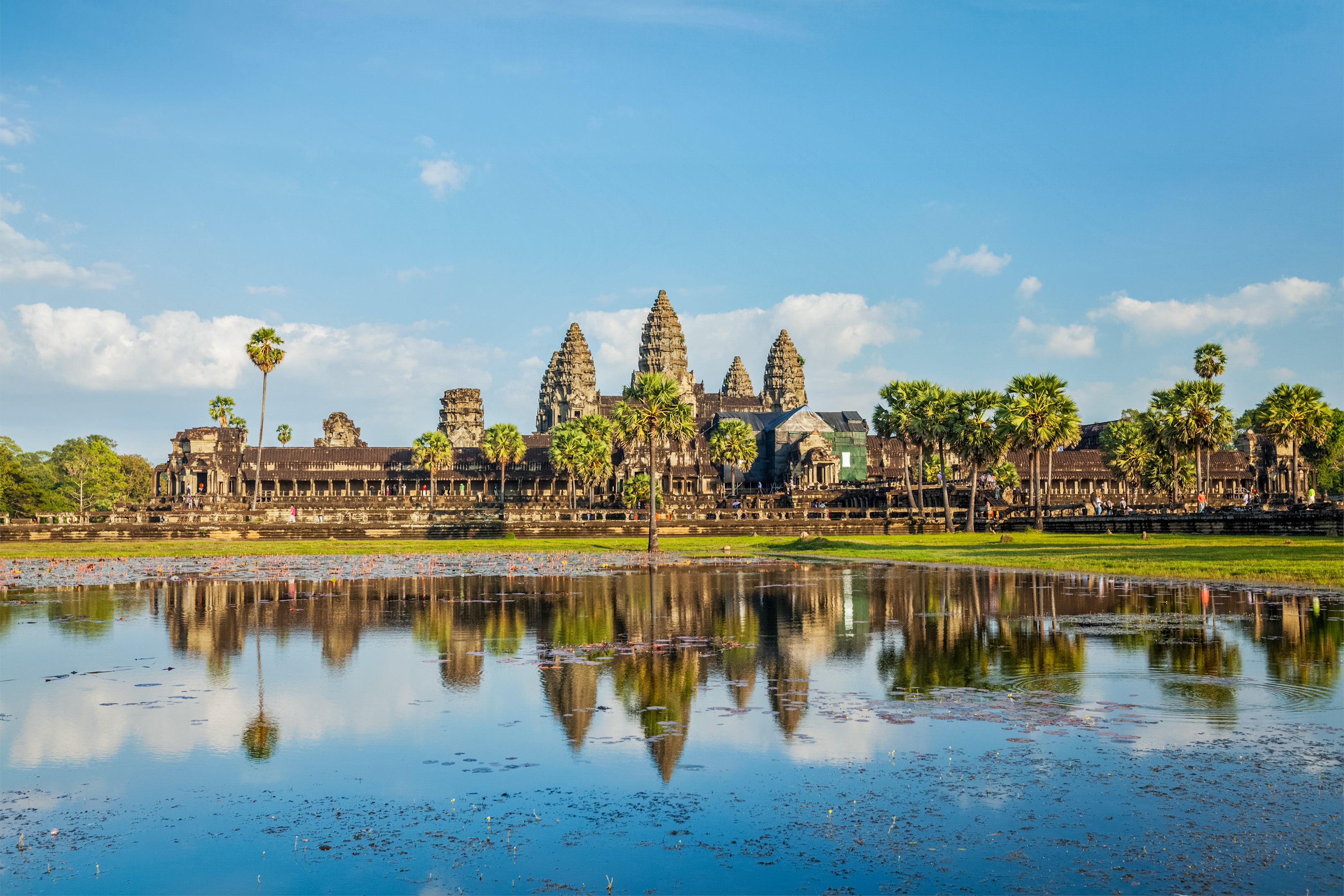
Stays are shorter too. Unesco-listed Angkor Wat in Siem Reap continues to be the main draw, but the temple is often “ticked off” as part of a wider tour through Southeast Asia, with tourists staying in the region for just a few days before heading to Bangkok or Ho Chi Minh City. Nick Pulley, founder of Selective Asia, says that Cambodia’s tourism growth has undoubtedly been far more reserved than its neighbours over the past couple of decades.
He tells The Independent: “Certainly in the early 2000s, Cambodia was more typically seen as an add-on destination to Vietnam and/or Thailand rather than as a stand-alone one.
“Whilst we always promoted it as a destination of its own right, it is fair to say that the opportunities and places of interest were significantly more limited than its bigger and more established neighbours.”
Pulley says that from 2005-2015, the company saw very high year-on-year growth for Vietnam, up to 25 to 30 per cent, but Cambodia's growth hovered around the five per cent mark.
In the last decade, Cambodia’s government has been working to increase this figure; infrastructure has steadily improved with better roads allowing visitors to comfortably travel further across the country and a string of top-end hotels emerging. Speaking to The Independent, Lim Menghour, director general of the commission on foreign affairs of the National Assembly in Cambodia, refers to the desire for a “quality tourist” – a term that has been employed by both Spain and Sri Lanka recently to describe wealthier, more refined travellers who spend money and behave well.
It’s a slightly uncomfortable term that has been slammed by budget holiday providers, but in Cambodia’s case, it’s easy to feel some sympathy; wealthier tourists who seek cultural experiences and freely spend money demand greater development and plough far more dollars into the country. Menghour says that Cambodia is in need of these types of travellers who desire an elevated experience, explore further, and are willing to spend money.
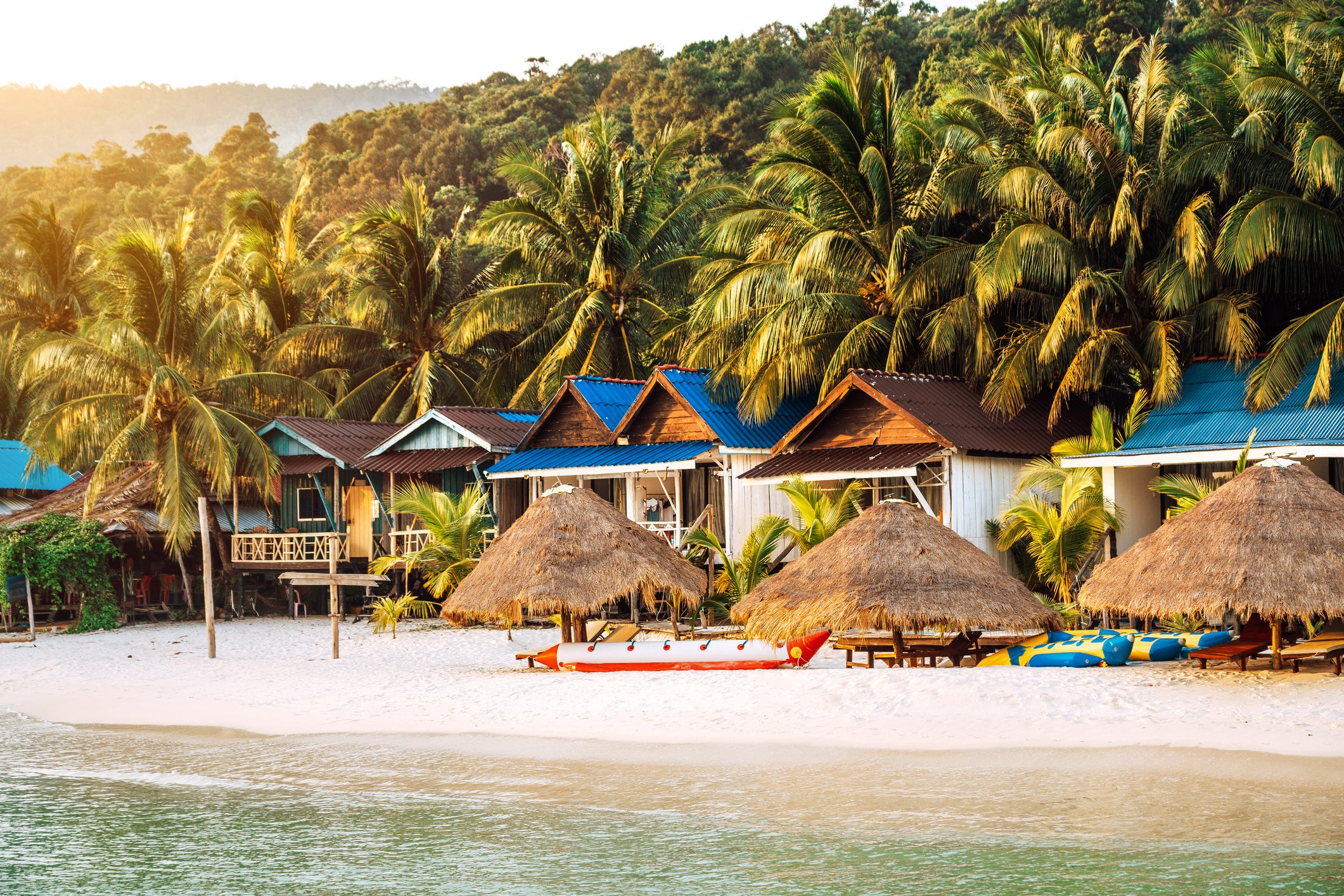
Before the pandemic decimated tourism numbers across the entire region, the Rosewood hotel group chose Phnom Penh as the site of its first city hotel in Southeast Asia, with the striking hotel opening in the 39-storey Vattanac Capital tower in 2018. Jutting up into Phnom Penh’s skyline, the opening seemed to signal Cambodia’s entry to a high-end travel market, with a luxury offering that was streets ahead of the existing hotels like Raffles and Palace Gate. In early 2019, Six Senses opened a private island resort on Koh Krabey, while hotel brands moved into the south – taking advantage of beaches that Pulley refers to as Southeast Asia’s “best kept secrets” – with Maldives-style huts springing up over the paradise-perfect white sands and turquoise waters.
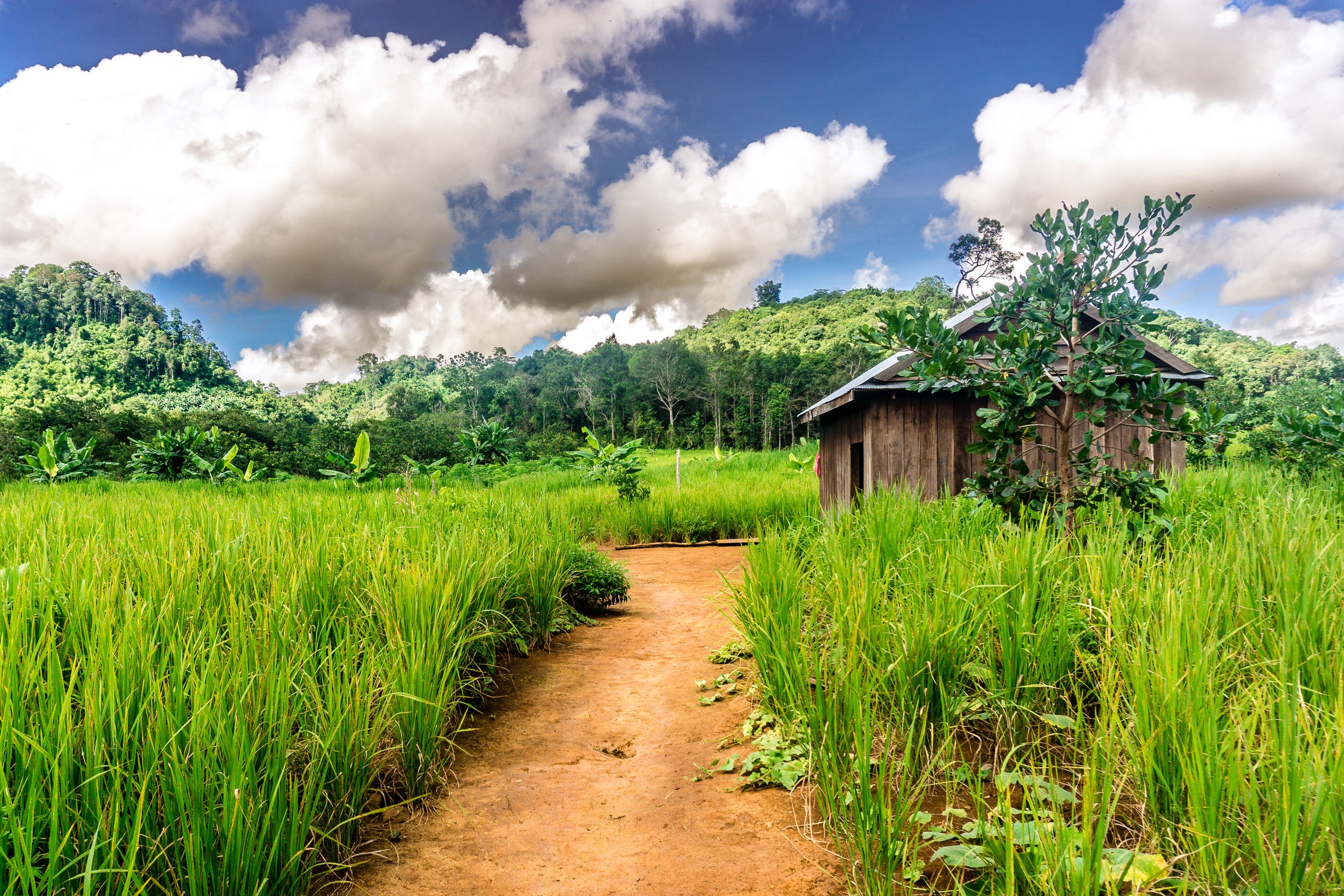
Cambodia has also recognised the value in eco-tourism, with the likes of the Cardamom Mountain Tented Camp and Shinta Mani Wild offering wildlife-focused and adventurous holidays, while the nature-filled regions of Ratanakiri and Mondulkiri are now vastly more accessible from the capital and Siem Reap.
Then there’s that jewel in the tourism crown: Phnom Penh's new Techo International Airport. This $2bn aviation hub, which follows the opening of a new airport in Siem Reap in 2023, has a capacity to accommodate 13 million passengers a year, which is expected to increase to 30 million after 2030 and up to 50 million by 2050.
Growth is coming, but slowly. Expedia data from the past year shows that the “more mature” destination of Vietnam attracts significantly higher overall search volumes, “supported by broader tourism infrastructure and stronger flight connectivity”, while searches for Bangkok and Phuket in Thailand are up 20 per cent year-on-year. Searches for Siem Reap have surged by 15 per cent, but in comparison, Vietnam's Phu Quoc is up 80 per cent, Phan Thiet up 90 per cent and Nha Trang up 130 per cent.
Christian de Boer, Managing Director of the luxury Jaya House River Park in Siem Reap, is quietly confident that this more elevated tourism will come, but says that misconceptions still prevail, starting with something as simple as the weather. Without an accurate way of assessing data, weather apps show consistent rain and thunderstorms – while the reality in November is limited showers (as neighbouring Vietnam contends with a typhoon).

On a rather darker level, Cambodia still bears the scars of the four-and-a-half years of Khmer Rouge rule when the brutal communist regime presided over by Pol Pot wiped out at least two million Cambodians (close to a third of the population). Rape, starvation, forced labour and an eradication of tradition, religion and culture were all hallmarks of a terrifying social experiment aimed at creating a utopian rural society. While Thailand is known as the Land of Smiles, some Cambodians refer to their country as the Land of Broken Smiles; a friendly, welcoming country that still carries a broken heart.
Like other countries that have suffered genocide in the 20th century, including Rwanda and Germany, Cambodia has stared its bleak history in the face and made a commitment not to forget. Much like Rwanda encourages tourists to visit the Kigali Genocide Memorial and Germany has invested heavily in the Holocaust museums and tours of concentration camps, in Phnom Penh, tourists can visit the killing fields at Choeung Ek. The notorious Tuol Sleng prison, where an estimated 18,000 Cambodians were tortured and murdered, is now a Genocide Museum that tells the story of the Khmer Rouge years in unflinching detail. Both sites were added by Unesco to its world heritage list earlier this year and have been marked as places of remembrance, reconciliation, and resilience.
While Vietnam, which had also suffered violence and brutality in the 1960s, took strides to shift its war-torn image towards the end of the 20th century, Cambodia faced an uphill battle. Cambodians refer to 1979 as Year Zero; the year they had to start again and build a nation from years of trauma and destruction.
Four-and-a-half years of Khmer Rouge terror were followed by regional tensions, conflict and an ever-present threat of the guerrilla fighters who had left the country on its knees, with the countryside strewn with landmines and other exploded remnants of war. It was not until 29 December 1998 that the country celebrated peace; from this date, Cambodians felt the country was united and looked ahead to a brighter, more peaceful future.
It has not been an easy ride since. Twice in the past 27 years of peace, the tensions at the border with Thailand have erupted into violence; firstly between 2008-2011 when a series of violent clashes erupted, and then again in July this year when 38 people were killed and more than 300,000 displaced.
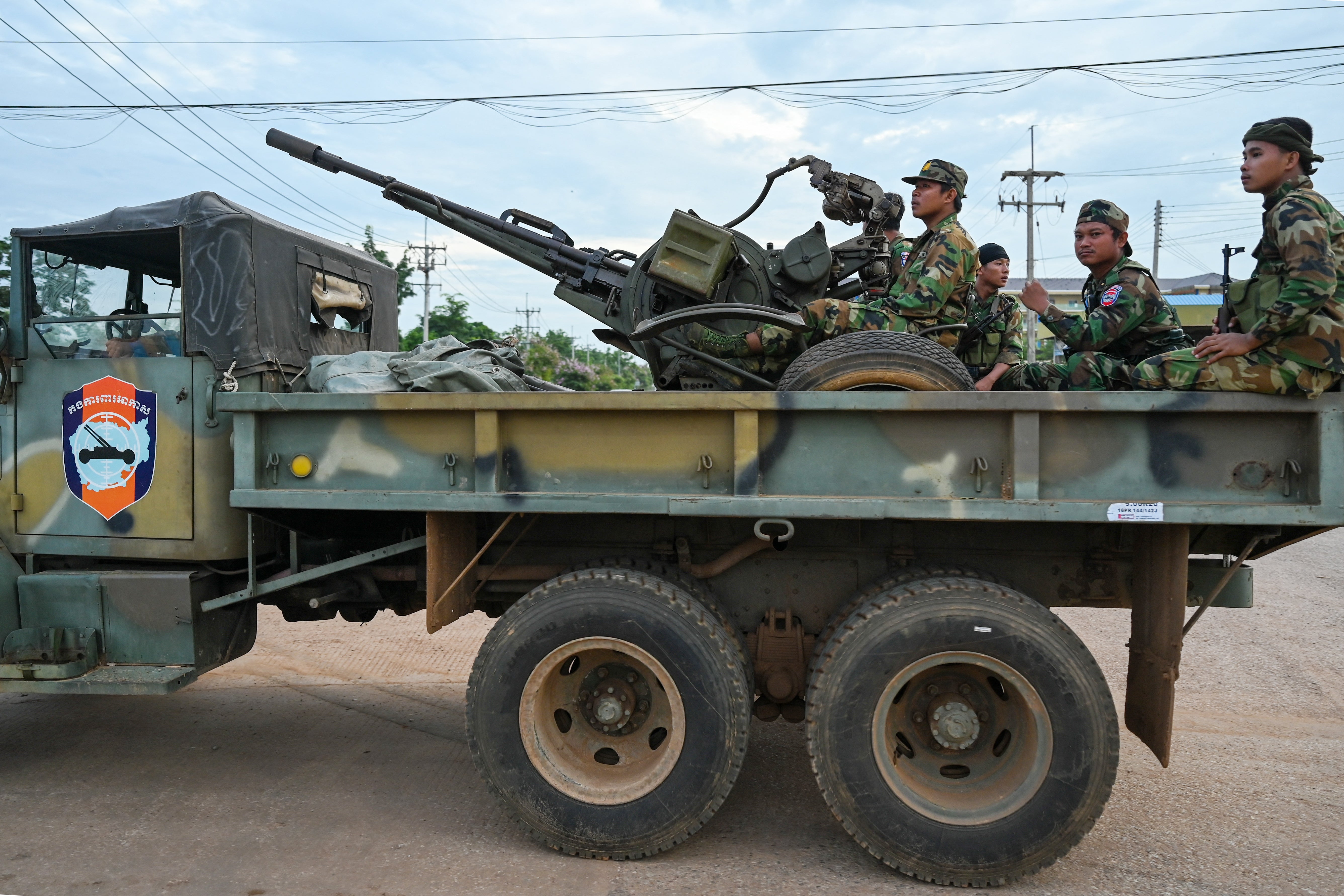
The fragile peace agreed on 26 October has already seemingly disintegrated after a Thai soldier lost a foot to a landmine explosion, with Thailand accusing Cambodia of freshly laying mines (a charge it denies) and Thailand’s prime minister Anutin Charnvirakul declaring the peace deal as over. Two days later, on Wednesday 12 November, Cambodia’s prime minister reported that a villager had been killed and three others wounded when Thai troops opened fire on civilians, adding that Cambodia still accepted the ceasefire terms.
The Cambodian government under Prime Minister Hun Manet – who came to power during the 2023 elections that were criticised for being neither fair nor free – has been under the spotlight for repressing free speech. Hun Manet’s father Hun Sen shut down Cambodia’s Voice of Democracy (VOD) newspaper in February 2023 following a story that Hun Manet had signed an aid agreement to donate $100,000 to Turkey, in what was viewed as a censure on free press. More recently, a Cambodian court jailed at least 10 environmental activists on charges of plotting against the government.
The online scam centres that have proliferated across Southeast Asia have also attracted unwelcome media attention for the government, with an estimated 100,000 trafficked labourers forced to work in these compounds in Cambodia, according to a 2023 Office of the United Nations High Commissioner for Human Rights report.
While the Cambodian government (and many Cambodians) are consumed with concerns about the Thai border, the reality is that for the tourist this is a safe, welcoming and very friendly country, where tourism could provide immense benefits. The country has made tremendous progress in making the country safe with a combination of government organisations and NGOs devoted to clearing the countryside of landmines.
Petty crime occurs but is limited, and rates of violent crime are low. Like so many other Southeast Asia tourist destinations, the greatest danger will be found on the roads, with tuk tuks, motorbikes, cyclists and people all grappling for space in the busy cities and many cars still not having seatbelts.
What has become clear is that the Ministry of Tourism hasn’t quite grasped how to market this remarkable country, with official materials rather dated and not keeping up with the demands of Western travellers in 2025. To really see the best of Cambodia, travellers are better off turning to what social media appears to be offering, with videos increasingly popping up on Instagram and TikTok showing the riches the country has to offer in a far more sleek format.
The horrific events that began just over 50 years ago on 17 April when the Khmer Rouge took control of Phnom Penh, forced the population to move to the countryside and began to systematically murder its people, left Cambodia severely depleted in terms of humans, with almost the entire educated population eradicated. Now, five decades later, the country has a young population, with around 56 per cent of the population under the age of 40. Which gives plenty of reason for optimism.
As in other Southeast Asian countries, this is a politically aware, digitally savvy, motivated Generation Z who are determined not to repeat the mistakes of the past. Aged just 26, Chhorn Chhun Ly works as a freelance English-speaking guide in Siem Reap, taking tourists beyond Angkor Wat to see temples further out in the jungle (often better reached on bike or by foot), as well as sharing the best street food in town, visiting the local markets and relaying his extensive historical knowledge. In flawless English, he describes with boundless enthusiasm the wealth of offerings his country has for tourists, with a hint of frustration that they have not yet been realised.
He says: “People know us from the worst thing [Khmer Rouge] and the best thing [Angkor Wat], but we have so much more here. And we want to show it to the world.”
Join our commenting forum
Join thought-provoking conversations, follow other Independent readers and see their replies
Comments
Bookmark popover
Removed from bookmarks