Would it be easier to fly to Charles de Gaulle or Orly for Paris?
Simon Calder answers your questions on Paris flights, visiting San Sebastian and EU visas

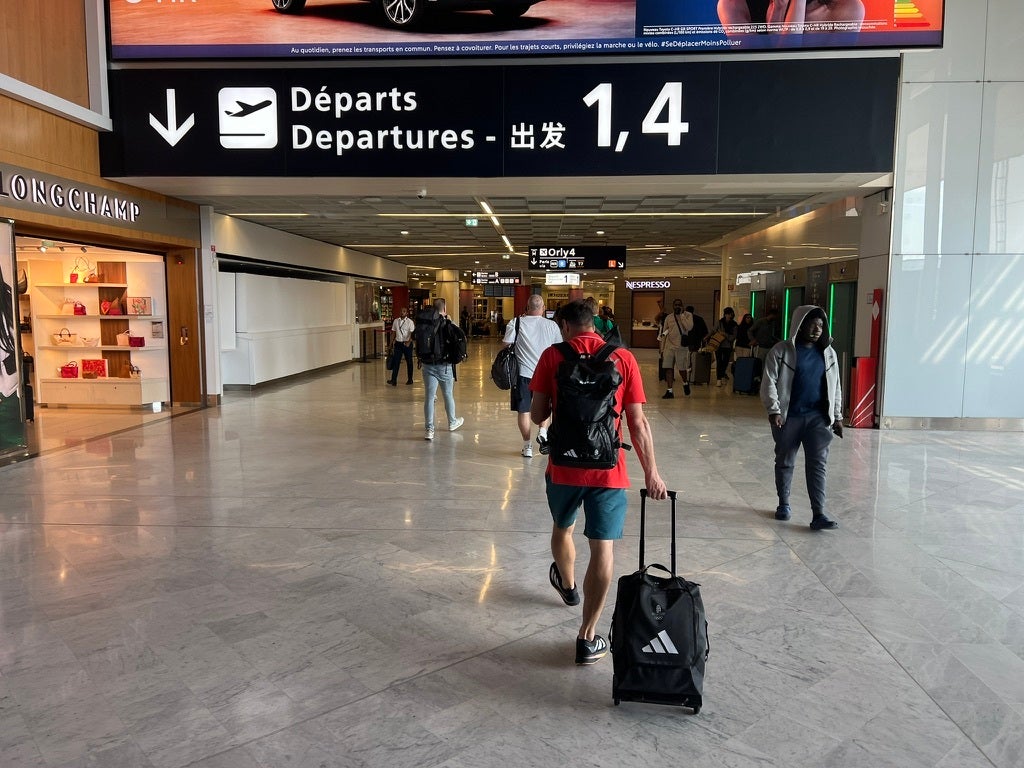
Q For a forthcoming trip to Paris, I have a choice of flying to either Charles de Gaulle or Orly airport. Do you have a view on which is best?
Patricia M
A I certainly do. Just to provide some background: the relationship between Paris CDG and Orly is roughly the same as between London Heathrow and Gatwick. Orly, like Gatwick, is older, but CDG and Heathrow have grown to become twice as large. Orly and Gatwick are much more short-haul, low-cost airports, while CDG and Heathrow are predominantly long-haul.
The vast majority of flights from the UK to Paris serve CDG, which is 14 miles northeast of the French capital. Orly, eight miles south, currently has connections only from Gatwick and Heathrow on Vueling, and from Bristol, Manchester and Southampton on easyJet. But given the choice, I would use Orly every time. Charles de Gaulle is complex and confusing, compared with relatively simple Orly.
Until the summer of 2024, Orly had dismal public transport links. But just ahead of the Olympics, line 14 of the Paris Metro was extended to the airport. You reach the central station of Chatelet-Les Halles in 25 minutes, and access pretty much any RER or Metro station in the capital with a single change – so much easier than the cumbersome and often slow RER from CDG.
Tickets from the airport are €13 to anywhere in the Paris region – an extensive area. The main drawback is when returning to the airport. While you can board the line 14 train with an ordinary €2.50 Metro ticket, the last leg of the journey to the airport requires a premium fare. You can pay on arrival at Orly, but it takes ages. So buy an airport ticket in advance. Machines at stations should dispense them.
Finally, I would take CDG any day over the French capital’s sort-of third airport, Beauvais. While Ryanair and Wizz Air describe it as “Paris”, you are a 75-minute coach journey to a remote Metro station, from which the journey to the centre takes about as long as from Orly.

Q My husband and I are heading for San Sebastian for the first time in September. We’ve heard great things about it. The main problem is getting there. Fares were much cheaper to Biarritz in France than to Bilbao in Spain, so that’s what we’ve booked. Annoyingly, there are no suitable buses from Biarritz airport to San Sebastian. Should we just book a transfer, and if so, how much do you think it might cost?
Christina F
A San Sebastian is an excellent choice. The Basque city was the first place I ever visited in Spain. I remain fond of San Sebastian’s natural good looks: wrapped around a shell-shaped bay, La Concha, with a headland guarding the entrance on either side and an island in the middle. I also adore the old town, which probably has the highest concentration of outstanding places to eat on the planet.
A transfer for the 50km/30-mile motorway journey from Biarritz airport to San Sebastian will cost a minimum of €100 (£87), possibly significantly more. Fortunately, the public transport option is fun and cheap. Bus line 3 departs from the airport every quarter-hour to the pretty French port of St-Jean-de-Luz, most of the way to the Spanish border. The journey takes 37 minutes for a fare of €1.30.
You can use the same ticket to transfer to bus 4, which continues to the frontier town of Hendaye. You can hop off at Hendaye railway station to get to San Sebastian quickly. But if you feel like breaking up the journey with a swim, stay on the bus to the end of the line and you reach Hendaye’s excellent Atlantic beach. This place happens to be the starting point for the marvellous GR10 long-distance footpath following the Pyrenees to the Mediterranean.
To complete the journey, step aboard the Euskotren. This is an international narrow-gauge train that runs from a small terminus adjacent to Hendaye railway station, over the Spanish border and parallel to the coast, through to San Sebastian. Trains leave every half-hour. The appealingly meandering journey takes 40 minutes. The fare, once again, is €1.30 – so barely £2 each for the whole trip. Spend the savings on a feast.
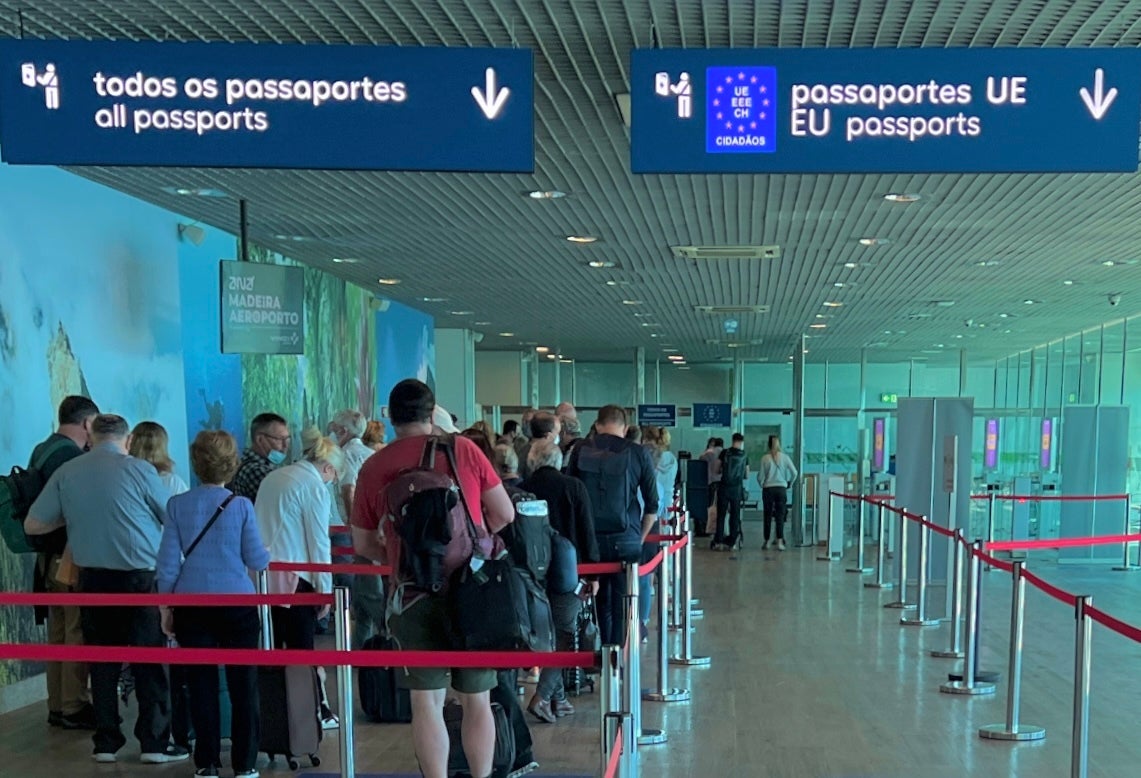
Q If the entry-exit system starts in October, when will we need visas to go into the European Union?
Di, Fishwick
A As The Independent revealed a week ago, the long-delayed EU entry-exit system (EES) is now expected to be introduced on a staggered basis from 12 October 2025. From that date a proportion of non-EU citizens entering the Schengen area will have their fingerprints and facial biometrics taken.
Every frontier is due to have the EES in service by 9 April 2026. After that, passports will cease to be stamped. During the rollout of the system, British travellers will actually encounter even more red tape.
As I tackle your question, forgive some pedantry. The EU in Brussels would like me to make clear that the proposed European travel information and authorisation system (Etias) is not a visa. It is intended for citizens of third countries (such as the UK, US and Australia) who do not require visas for the EU.
It is, if you like, a permit in lieu of a visa. But I am on your side about what we call it. To get an Etias, you must provide lots of personal data in advance and pay a €20 (£17) fee to enable you to cross a frontier. Which looks to me very much like a visa. I dare say the permit will come to be popularly known as a euro-visa.
When will Etias begin? The expectation is six months after EES is fully rolled out. That could be as early as October 2026, though the European Union is more vague and simply says sometime in the final three months of next year.
But, to continue being pedantic, you won’t need an Etias for the first six months of its existence. During this “soft” rollout, if you meet all the other conditions for entry to the Schengen area, you will be admitted.
So I calculate the earliest time you will actually need an Etias is April 2027 (assuming it starts in October 2026). But given the propensity of airlines to misunderstand the rules for British travellers to the EU, I don’t recommend treating Etias as voluntary for those first six months.
Email your question to s@hols.tv or tweet @SimonCalder
Join our commenting forum
Join thought-provoking conversations, follow other Independent readers and see their replies
Comments
Bookmark popover
Removed from bookmarks