The Independent's journalism is supported by our readers. When you purchase through links on our site, we may earn commission.
Europe’s seasonal wonders worthy of planning your weeklong vacation around
Some of Europe’s most eye-catching wonders come and go. To avoid missing out, here’s our guide to when and where to see them
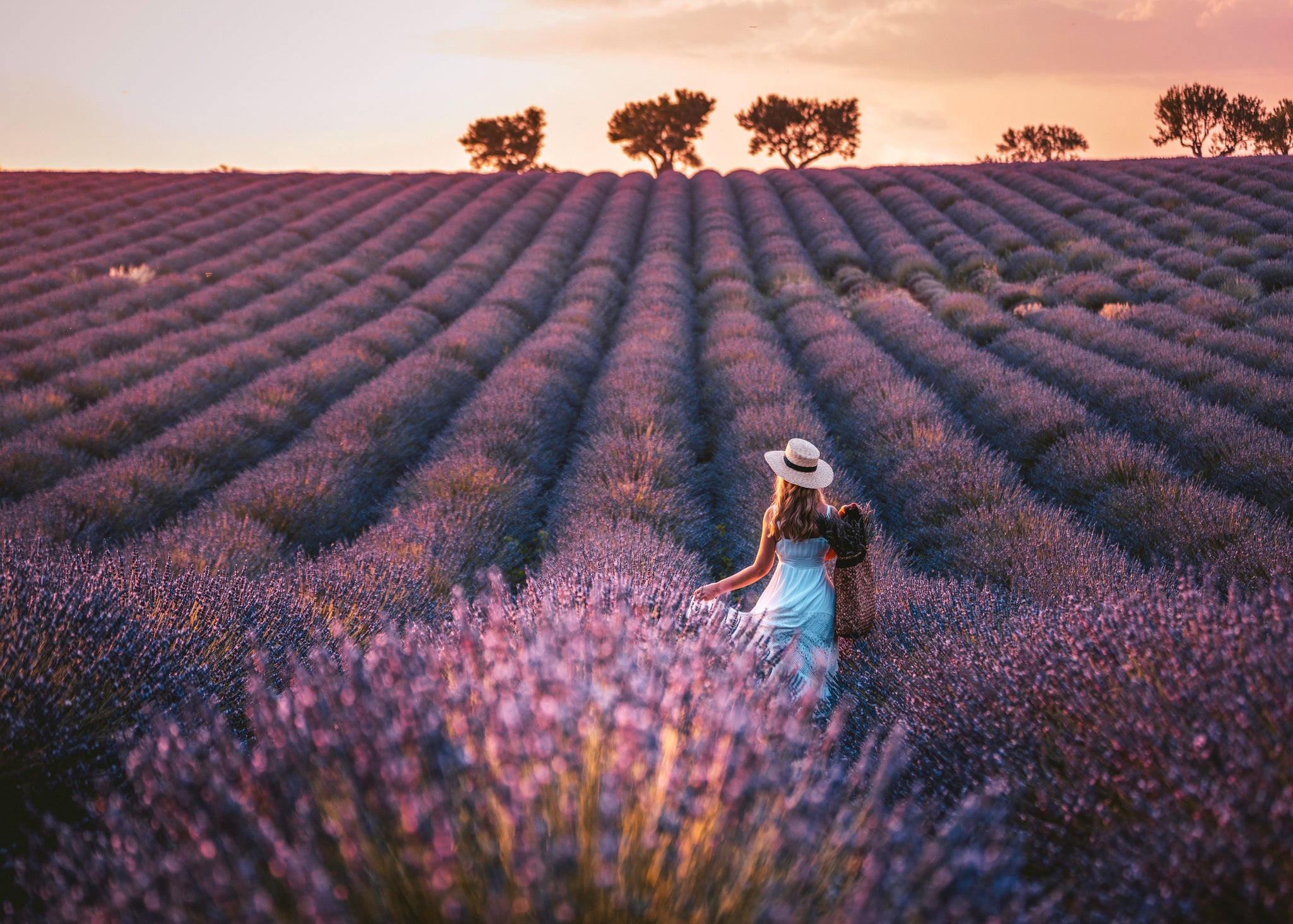
They're the natural European spectacles that appear and disappear as the year unfolds.
Time it wrong, and you could be in for a big disappointment.
To avoid that, follow this guide to the continent’s most eye-catching seasonal wonders and mark them in red on your calendar.
We dig up pertinent pointers to the unmissable flower shows that blossom annually in the Netherlands and on the lofty mountains of Switzerland; reveal top viewing spots for the surreal “midnight sun”; explain where and when to see landscapes swathed in lavender; and shepherd you to a premium location in the UK for fiery fall colors.
Our round-up also pinpoints one of the best places to see Northern Lights displays, where inky dark skies are guaranteed.
So you can build a week-long vacation around these extraordinary events, you’ll also find recommendations for extra things to see and do nearby, and hotels that make superb HQs for exploration.
1. Spring, late March to mid-May: Tulip season — the Netherlands
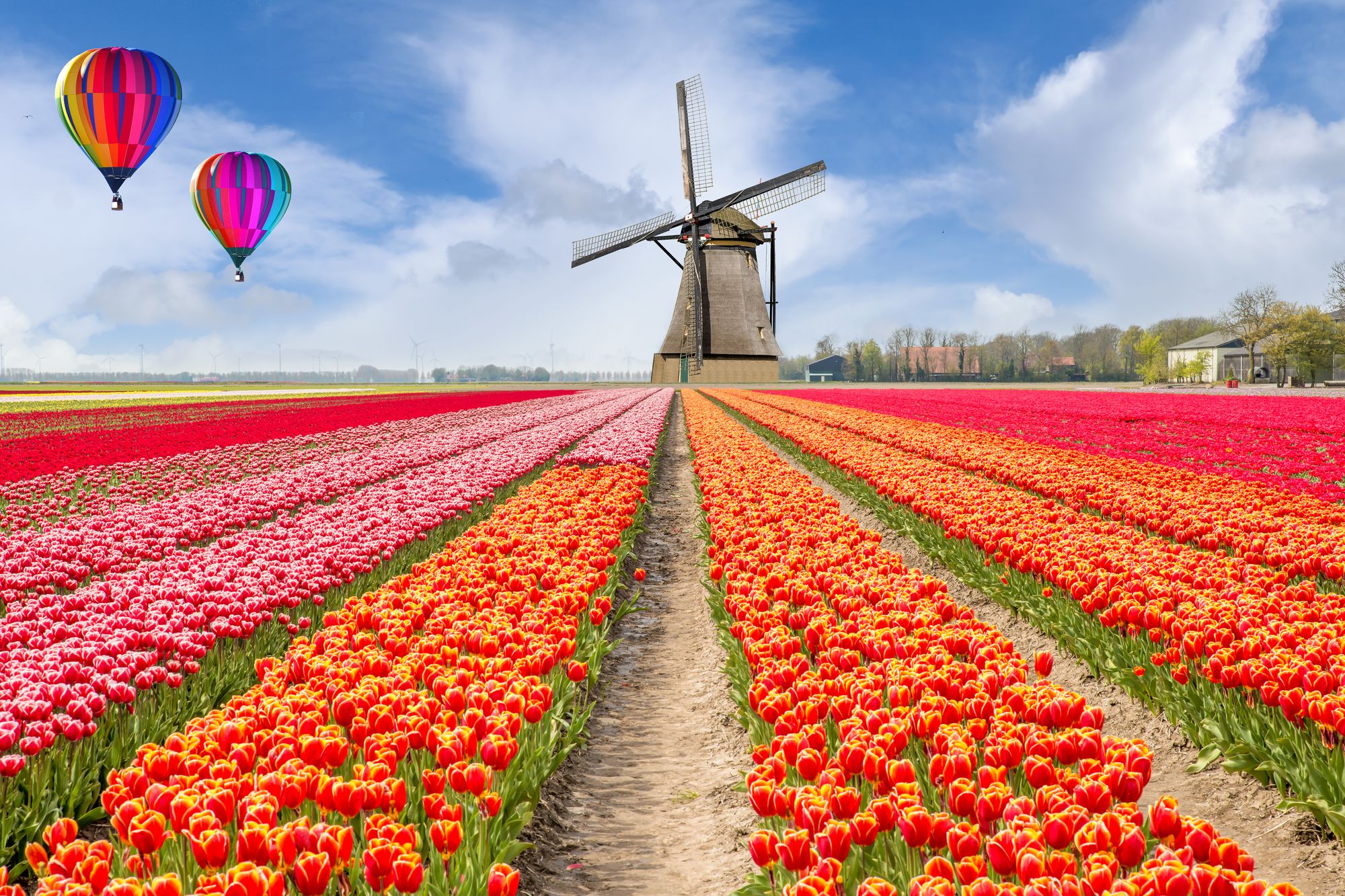
The Netherlands is the engine room of global tulip production, growing billions of bulbs annually, or around 80 percent of the global total.
One standout location to see them is the Keukenhof spring garden in Lisse (open from March 19 to May 10), around 20 miles west of Amsterdam. Here, walking paths weave around seven million bulbs arranged in gorgeous multi-hued displays.

Tour the area around Keukenhof — the Bollenstreek region — and you’ll see farmland tulips arranged in perfectly ordered rows, with some farms, such as The Tulip Barn, open to visitors.
Expand your vacation with an exploration of Amsterdam, home to major art museums such as the Rijksmuseum (for Dutch Masters such as Rembrandt) and Van Gogh Museum, Unesco-listed canals, olde-worlde higgledy-piggledy houses and the picturesque Vondelpark.
Of course, no trip to The Netherlands would be complete without viewing a few storybook windmills in Kinderdijk and Zaanse Schans, and if you venture to The Hague, the political capital, you’ll be in for a surprise, because as well as grand government buildings, there’s a vast golden beach facing the North Sea.
Great place to stay: Golden Tulip Leiden Centre (rooms from $200) is a comfortable and conveniently located base opposite the railway station in eye-catching Leiden, where trains depart regularly for Amsterdam. The Keukenhof garden lies around 10 miles away.
Read more: 8 best LGBT+ hotels in Amsterdam for luxury, budget and boutique stays
2. Late spring to summer, May–August: Alpine wildflower meadows — Switzerland
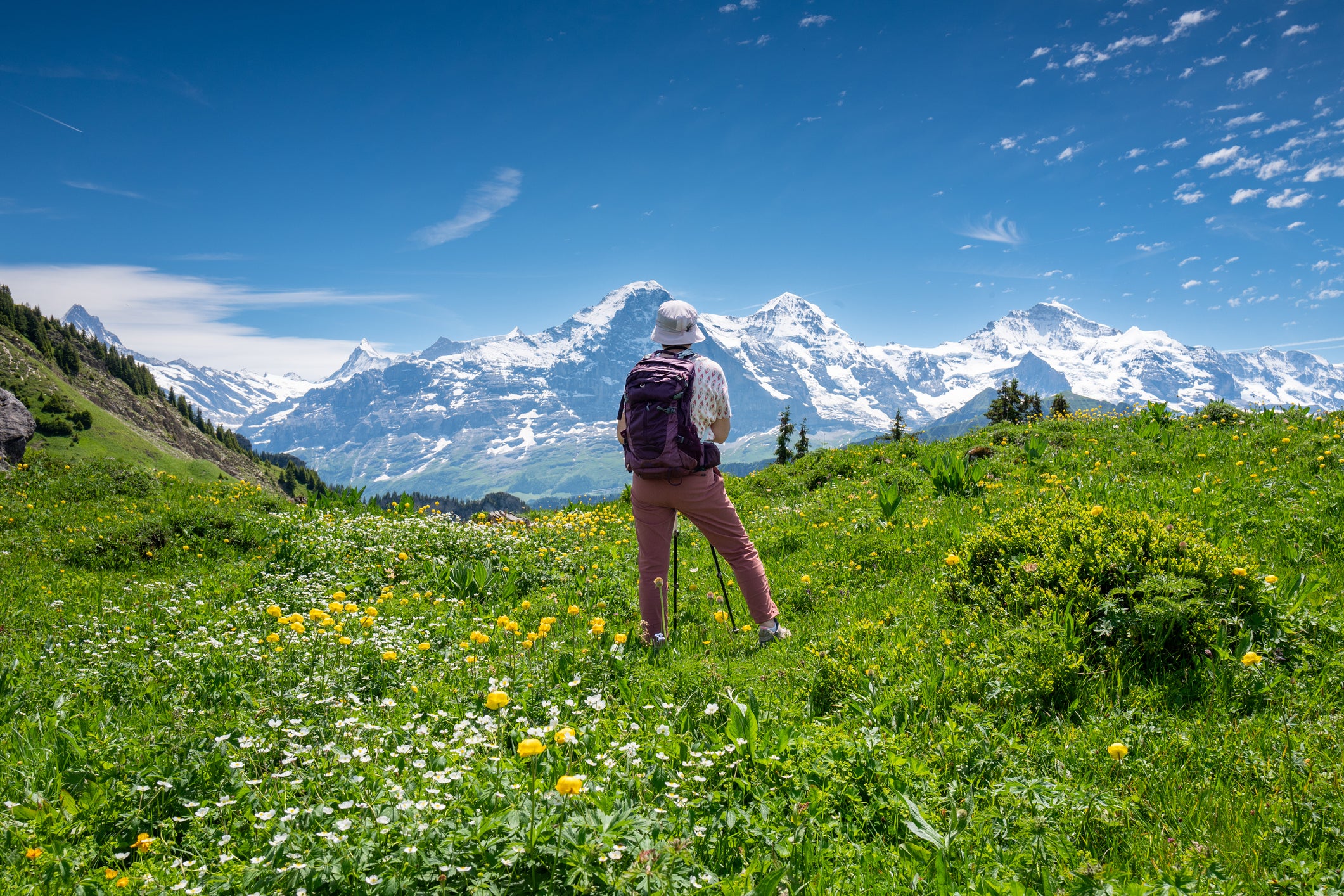
Switzerland is renowned for its winter skiing, but dreamy wildflower meadows paired with breathtaking mountain views make it a compelling spring and summer vacation destination.
The cheat code for seeing the most beautiful examples is the Schynige Platte, a ridge 6,500 feet above sea level in the Bernese Oberland region near Interlaken — and no mountaineering is required.
The historic cogwheel train that departs from Wilderswil is the most exhilarating way of reaching it. After you disembark, follow the Swiss Flower & Panorama Trail, which leads from the terminus and takes you right through the middle of rich alpine flora, with the Eiger, Mönch and Jungfrau mountains providing the most dramatic of backdrops. There’s also a flower garden to explore right next to the station that contains over 800 flower species.
Stretch the visit into a full week with a trip to the impossibly picturesque Lauterbrunnen Valley, between Interlaken and the Jungfrau Massif. Here, mesmerizing meadows gently ripple around the village of Lauterbrunnen and 72 waterfalls thunder down 3,000-foot-high cliffs.
For more epic views, take a cruise on lakes Thun or Brienz, then climb aboard the Eiger Express cable car from Grindelwald to the Eiger Glacier Station at 7,612 feet. From there, you can ride the improbable Jungfraubahn cogwheel train, which terminates at Jungfraujoch, Europe's highest railway station at 11,332 feet.
Great place to stay: Hotel Interlaken (rooms from around $200 per night) sits in the resort town and transport hub of Interlaken, making it a convenient base for exploring the region. Trains, boats, buses and mountain railways all depart regularly from nearby.
Read more: Is Switzerland Europe’s most beautiful country? Seven locations that will take your breath away
3. Early summer: Midnight sun — northern Norway
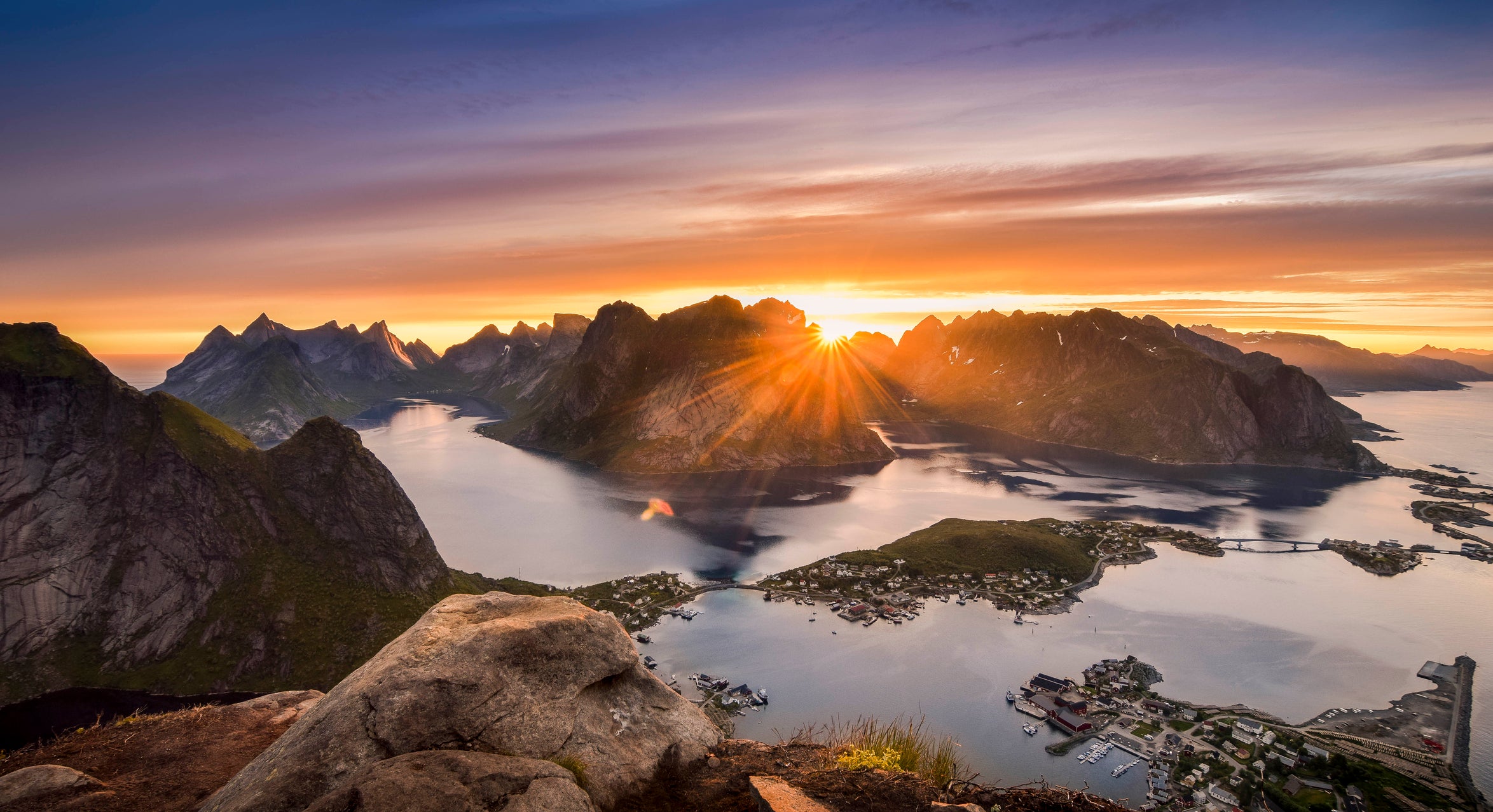
Around one third of Norway’s landmass is above the Arctic Circle, where summer sun between May and the end of July can stay above the horizon for 24 hours. So even at midnight, it’s still daylight.
Of course, this might make sleep patterns tricky to maintain, but it means that Norway’s glorious landscape is constantly illuminated and wrapped in an ethereal glow when the sun is lower.
One of the best places to view the never-ending sunshine is from the Fjellheisen Cable Car viewpoint above the city of Tromsø. From this perch, at an elevation of 1,380 feet, it’s possible to watch the sun trace a slow arc past the surrounding fjords, islands and mountain ridgelines without ever setting.
About an hour away, the coastal area of Sommarøy, known as the “Arctic Caribbean,” is another midnight sun hotspot — stunning driving roads weave past tiny villages and islets.
Perhaps the ultimate location, though, is 300 miles southwest of Sommarøy — the Lofoten Islands archipelago. With its jagged peaks and colorful fishing villages, it seems pre-packaged for midnight sun photography.
Stretch the trip into a week with visits to the stunning Lyngen Alps, home to jaw-dropping glacier-fed mountains, and Senja Island, which is like the greatest hits of Norway — fjords, angular peaks, beaches and fishing villages — packed into one location. They’re both under 100 miles from Tromsø.
Great place to stay: Radisson Blu Hotel, Tromsø (rooms from $365) is located on the harbor and features rooms with views of the city, the Arctic Cathedral or Tromsø Sound. The bar serves beer from one of the world’s northernmost breweries, nearby Mack Brewery.
Read more: Discover Norway’s majestic fjords with TravelSmart
4. High summer, late June–July: Lavender blooms — Provence
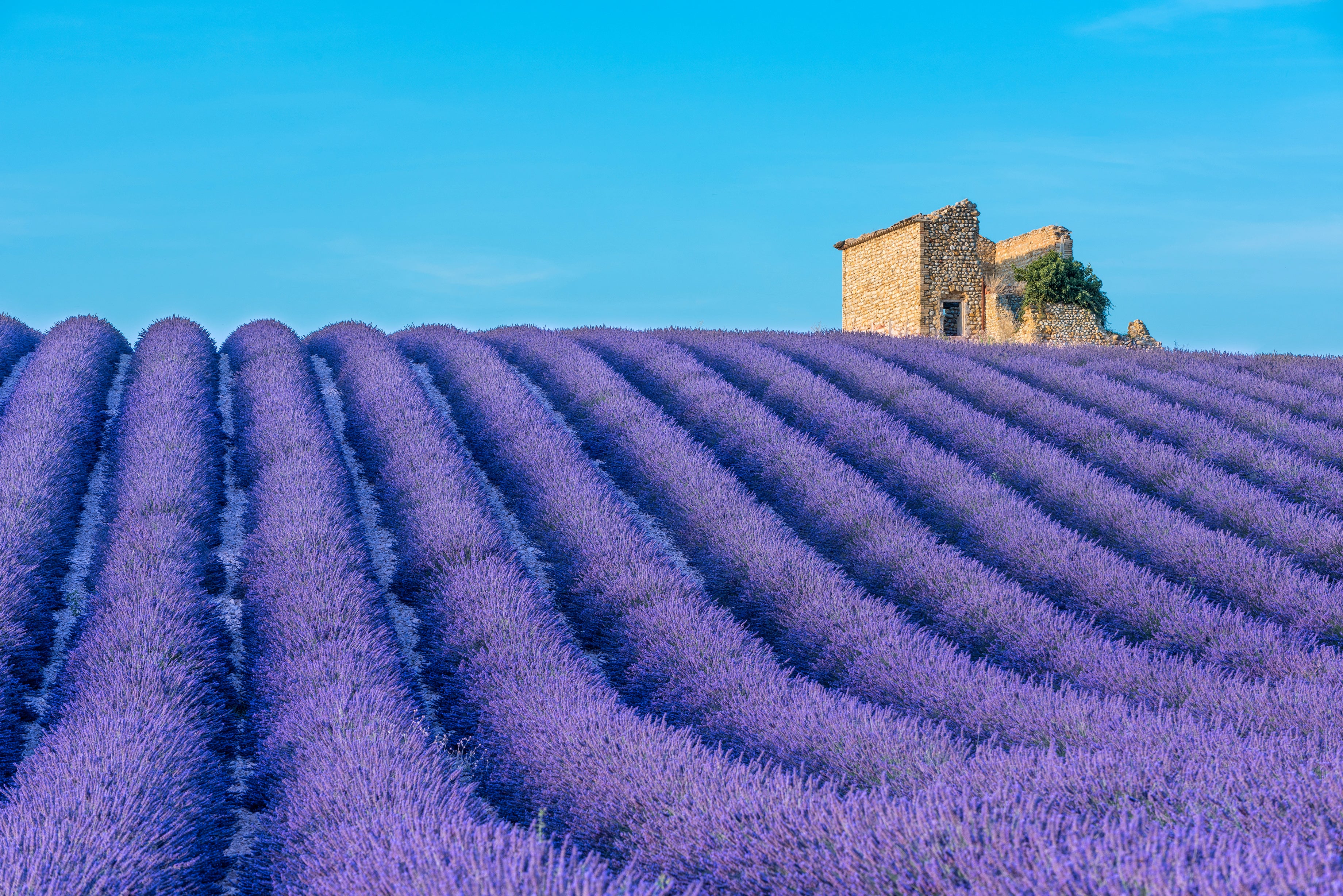
Provence turns purple in the summer with lavender — used in perfumes, soaps and essential oils worldwide — covering vast swathes of the landscape.
One of the premium regions for lavender-touring is the 300-square-mile Valensole Plateau, around 60 miles north of Marseille, where the plant stretches to the horizon.
The hillier Sault Plateau, slightly further north on the edge of the Alps, is another showstopping lavender landscape, while the Abbaye de Sénanque, near the beautiful hilltop village of Gordes, mesmerizes not through scale, but because the ancient building, paired with neat rows of lavender, makes for a postcard-perfect scene.
Fill out the week with visits to Verdon Gorge, France’s answer to the Grand Canyon, just east of the Valensole area, and the historic city of Avignon.
At this Unesco World Heritage Site on the Rhone River you can explore the Palais des Papes (Popes’ Palace), the largest Gothic palace in the world, Les Halles d'Avignon covered market and Cathédrale Notre-Dame des Doms (Avignon Cathedral), a Romanesque masterpiece.
Great place to stay: Hôtel Le Pré Saint Michel (rooms from $112), located in the town of Manosque, puts you in easy driving range of major lavender areas and the Verdon Gorge.
Read more: This French Riviera town is perfect for an art-filled getaway
5. Fall, late September–October: Autumn colors — Scottish Highlands
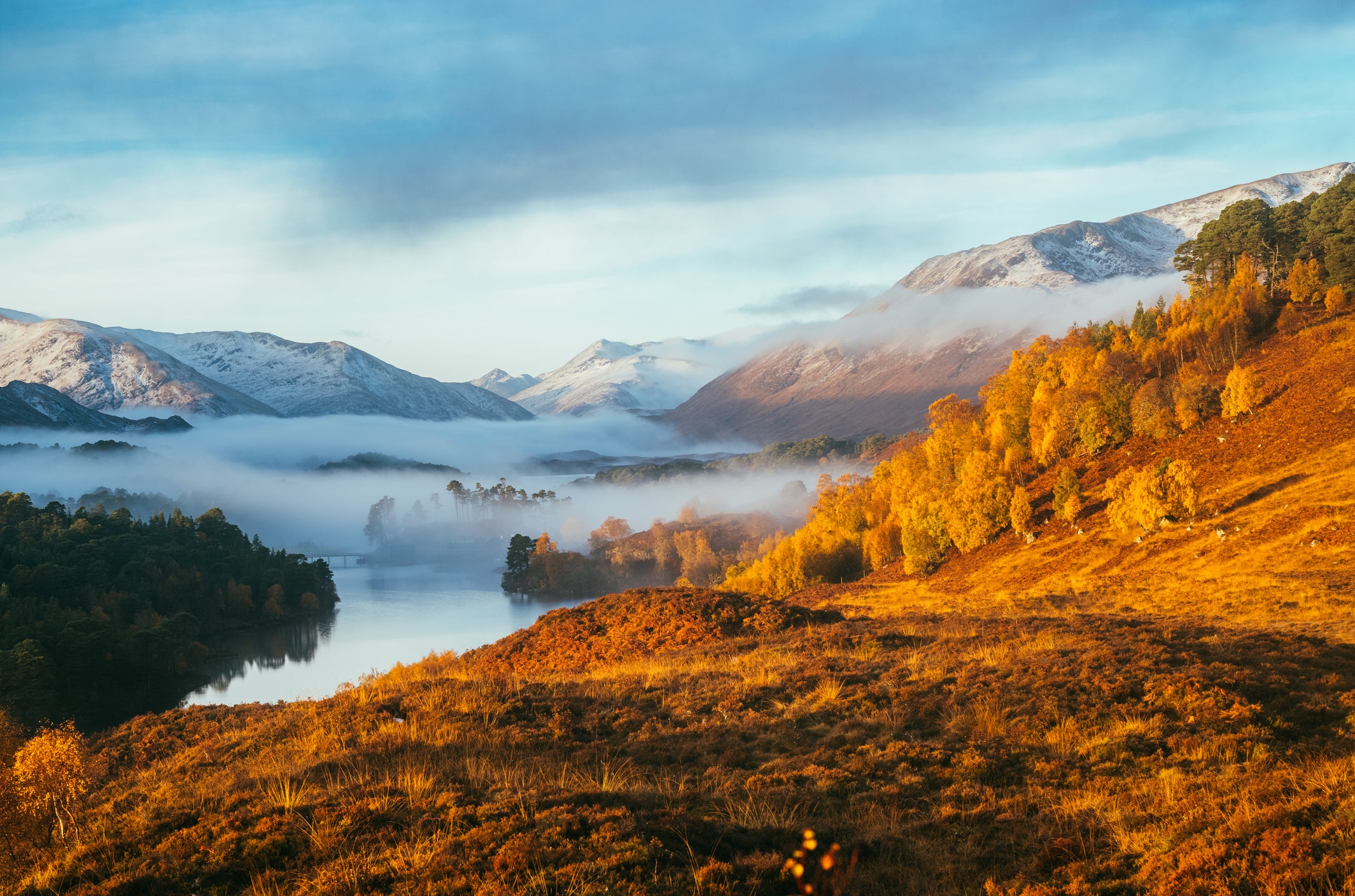
Scotland is spellbinding all year round, but visit in fall and its landscape pops with beech, birch and oak trees turning red, orange and deep bronze. Beyond, misty lochs and snow-covered mountains add to the allure.
Cairngorms National Park in the central Highlands, between Inverness and Perth, is one of the most rewarding areas to view the colors at their most kaleidoscopic. Glen Affric, about 27 miles from Inverness, is another hotspot for hypnotic hues.


Perthshire, too, is fertile foliage-chasing territory. While there, head to The Hermitage, a magical stretch of forest near Dunkeld with easy walking trails that’s home to Douglas firs, among the tallest trees in Britain, and thundering waterfalls.
Round out your stay with visits to the immense Loch Ness, said to be home to the legendary Loch Ness Monster, and a road trip to the Isle of Skye, one of the UK’s most dramatic landscapes. Not-to-be-missed sights include the Alpine-esque Cuillin mountains and the Old Man of Storr pinnacle.
Great place to stay: Kingsmills Hotel in Inverness (rooms from $79) has an indoor pool and beautiful gardens, and puts you within easy reach of Scotland’s autumnal treasures.
Read more: My epic journey to the remote Scottish island that looks like the Maldives
6. Winter, December to February: Northern Lights — Finnish Lapland
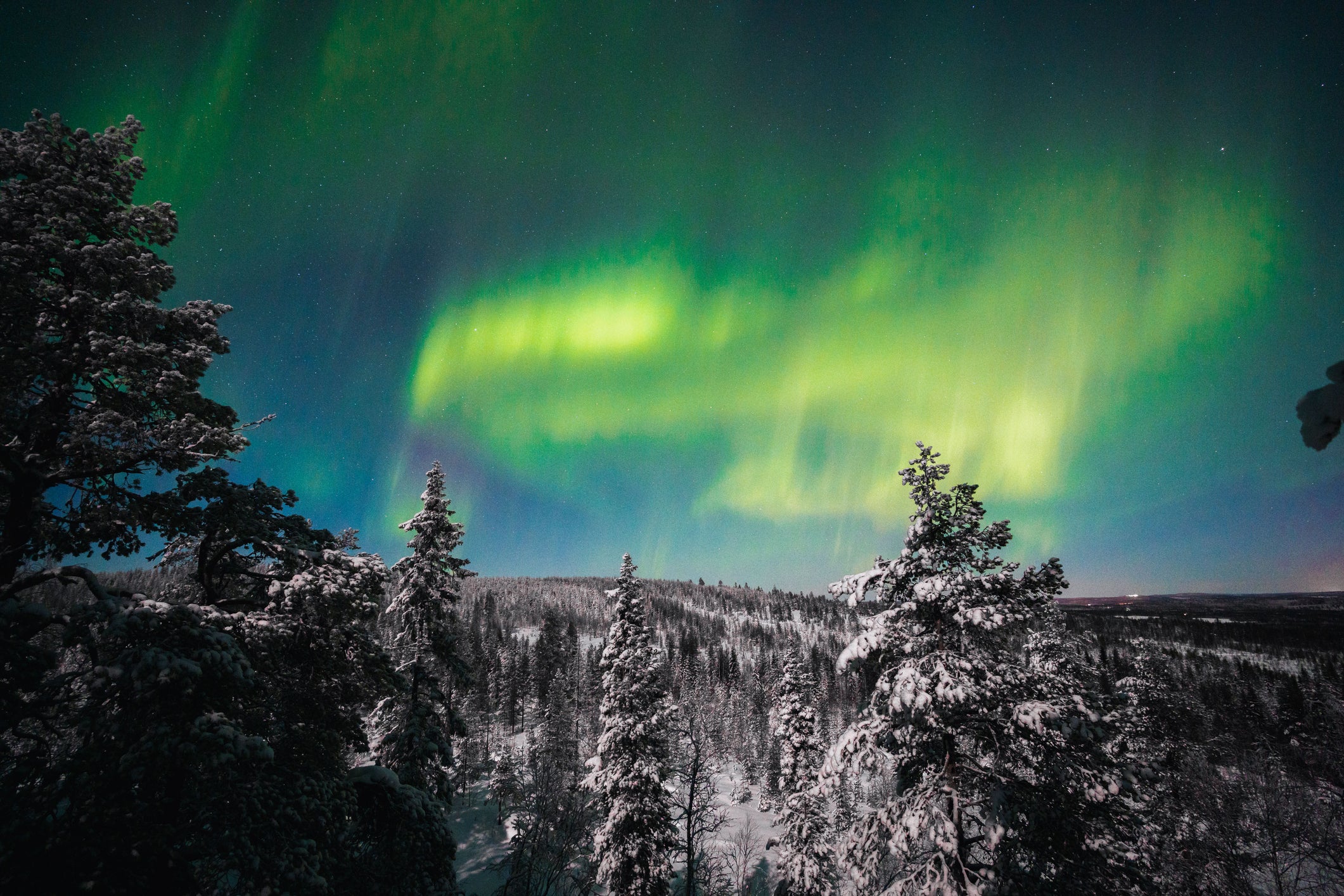
When solar particles collide with gases in the Earth’s atmosphere, dancing curtains of light in greens, pinks and reds ensue — and these Northern Lights are visible with particular clarity and regularity in the inky skies above Finnish Lapland between December and February.
The region’s gateway town, Rovaniemi, around 500 miles north of Helsinki, serves as the perfect HQ for aurora chasing. You only have to drive a short distance outside town for the light pollution to drop and the chances of a celestial show to rise.
For even darker skies and brighter displays, head to Saariselkä, a small resort village about 160 miles north of Rovaniemi, and to Urho Kekkonen National Park, a world of snow-covered forests and frozen rivers.
Other signature experiences in Lapland to add to a week-long vacation include guided dog sledding, cross-country skiing and snowshoeing.
Great place to stay: Arctic Light Hotel (rooms from $180), housed in Rovaniemi’s former city hall, has 57 inviting rooms and a restaurant serving regional ingredients, from Arctic char to reindeer.
Join our commenting forum
Join thought-provoking conversations, follow other Independent readers and see their replies
Comments
Bookmark popover
Removed from bookmarks