Is it possible to safely hike solo in the mountains?
Striding out into the mountains and uplands has never been more popular, but are we putting ourselves at risk by trying to hike higher and faster without guides or the right prep? Matt Ray asks the experts

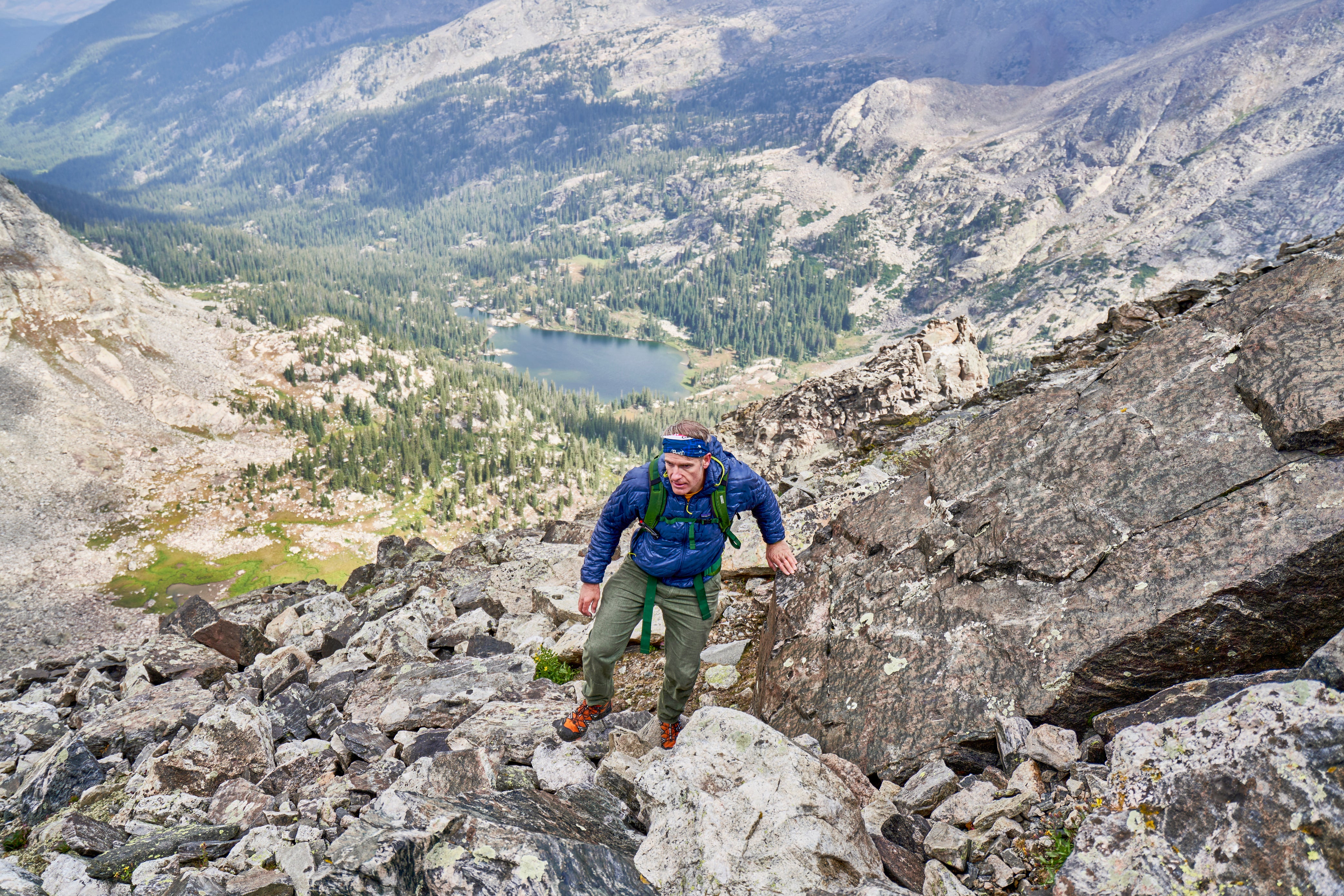
There’s something uniquely satisfying about lacing up a pair of walking boots, shouldering a pack and hiking up solo from the valley floor to the summit of a mountain and back down again, all under your own steam. The boom in outdoor leisure, fuelled by social media, has seen many explore the mountains for the first time, and hiking continues to be the most accessible way to enjoy being immersed in the world’s wildest landscapes, with all of the benefits that this brings.
As Tom Carrick, mountain safety officer for the British Mountaineering Council (which represents both hill walkers and climbers) says: “It’s so good for your physical health, your mental health and your social health, and we want to encourage people to safely come into the mountains, whether it’s your first time, or your 600th time.”
It’s never been easier to hop on a plane and tackle official, well-publicised long-distance trails, such as Corsica’s G20, which goes the length of the country and is known as “Europe’s toughest trail”, or the Swiss Alps’ Haute Route that takes you days deep into remote, high-altitude areas. Or to catch a train and take on iconic British challenges, such as scrambling up the knife-edge arête of Crib Goch in Snowdonia National Park, or hiking up Ben Nevis.
Read more: I’ve hiked in some of the most extreme heat in the world – this is how I stay safe
Just as with anything truly worthwhile, there are significant risks associated with being in the mountains, and there have been some recent tragic stories of solo or small-group hikers getting into trouble in challenging terrain. Conditions can change abruptly at altitude, where a lack of appropriate equipment and key knowledge can quickly lead to a survival situation.
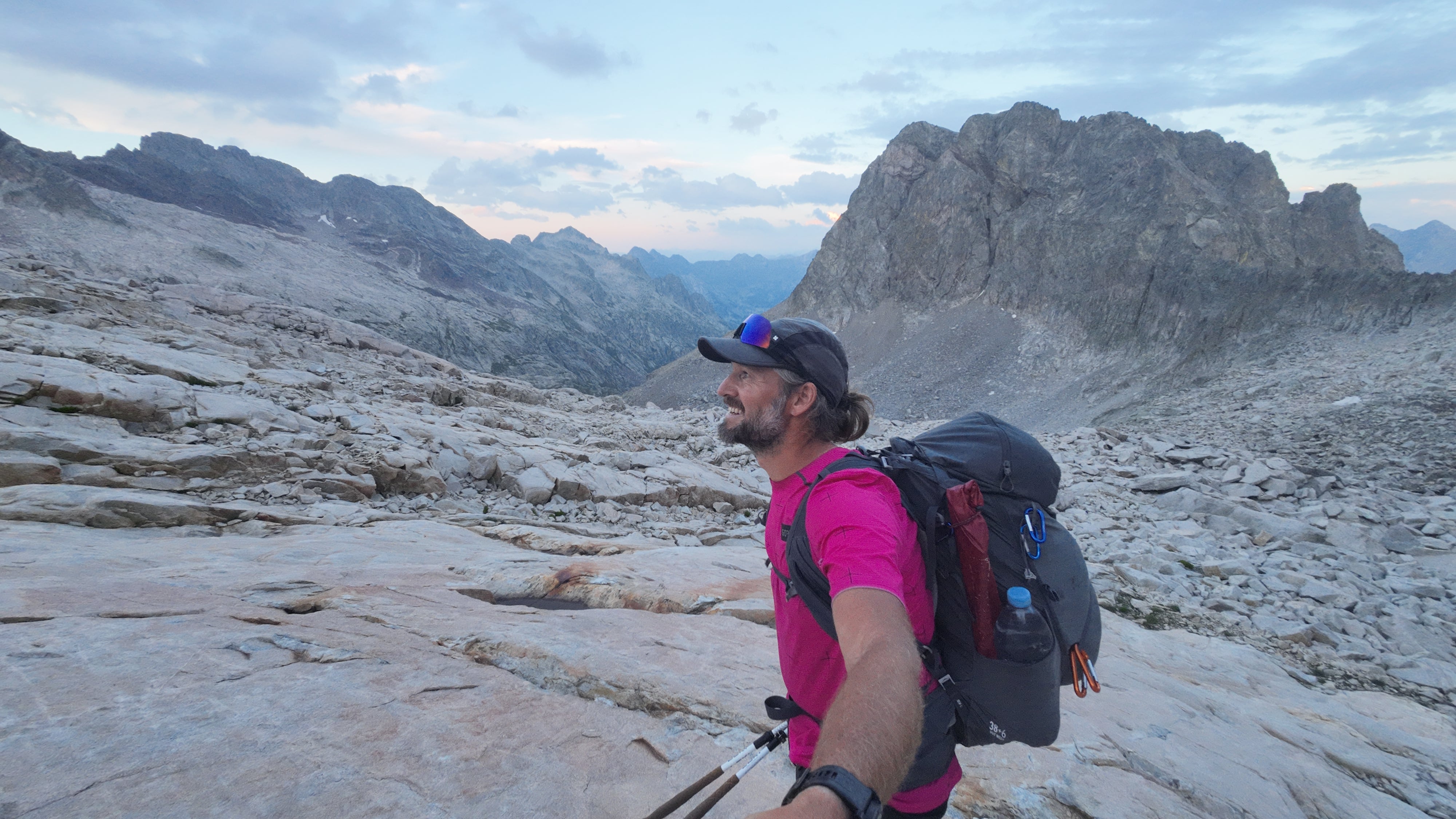
If this is all starting to sound a bit grim, then know that there are a host of solo adventurers, like Cotswold Outdoor ambassador and author Jamie Ramsay, who have made a rewarding career from overcoming obstacles and challenges in the outdoors: “Every hike I have been on has presented something that has tested me and I have learnt so much over the years. Solo hiking is exhilarating but it doesn't need to be unsafe,” says Ramsay, who who has run across Iceland and fast-hiked the length of the Pyrenees
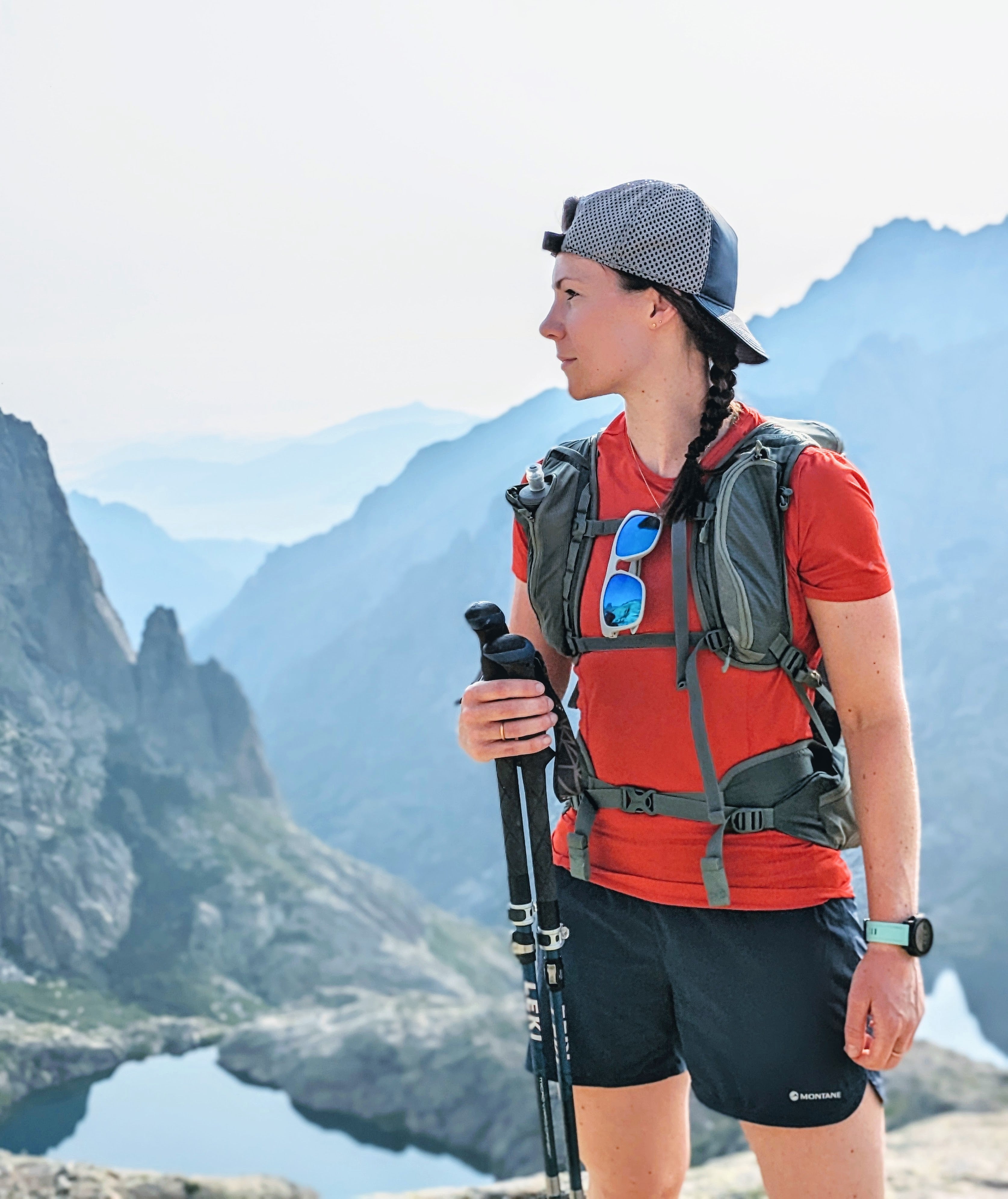
So, is it possible to make solo, self-guided hiking safer, and what should we do if things go wrong in wild, hard-to-reach places? Fastpacking adventurer and Montane Endurance Athlete Katy Parrott is no stranger to extreme outdoor challenges, but she’s had to fall back on some well-practised navigational skills, even on well-marked, official trails.
“I was doing Corsica’s G20 and even though it was the middle of the summer, there were these sudden, tropical downpours and full white-outs with 20-metre visibility.” Parrott was on her own on top of an exposed ridge when the weather came in. She missed one of the trail markers that are painted on rocks every 50m or so, and ended up going off-route and down into a ravine.
“Luckily, I'd plotted the whole route on my phone on OS Maps and also had a little map book as well. I had to retrace my steps back up to where the last marker was and then do a bit of micro-navigation to find the next marker, which was kind of hidden away on a rock a bit further on.”
Rather than charging backwards and forwards to visually search for the trail, which could have resulted in falling off a cliff in the bad visibility, Parrott matched her map to specific contour lines and features in the landscape that showed her she was in a gully. She then used the map to measure how far her position was off the trail (100m) and finally retraced her steps by using her watch to measure 100m. For this kind of micro-navigation, she recommends knowing your usual pacing for 100m by counting how many times your right foot touches down over a 100m distance.
Read more: Meet the women running remote refuges in the wilds of the French Alps
Parrott also recommends having backup forms of navigation, electronic and paper, because you never know when one of them might fail. It’s the same message from Carrick at the BMC, whose advice has evolved from saying to carry a backup paper map and compass to recommending that hikers actually draw out their intended route on their paper map before they set off, and know how to use the compass to orientate themselves by doing a basic navigation course online, or in the hills. You can start here with the BMC’s video guide to taking a compass bearing.
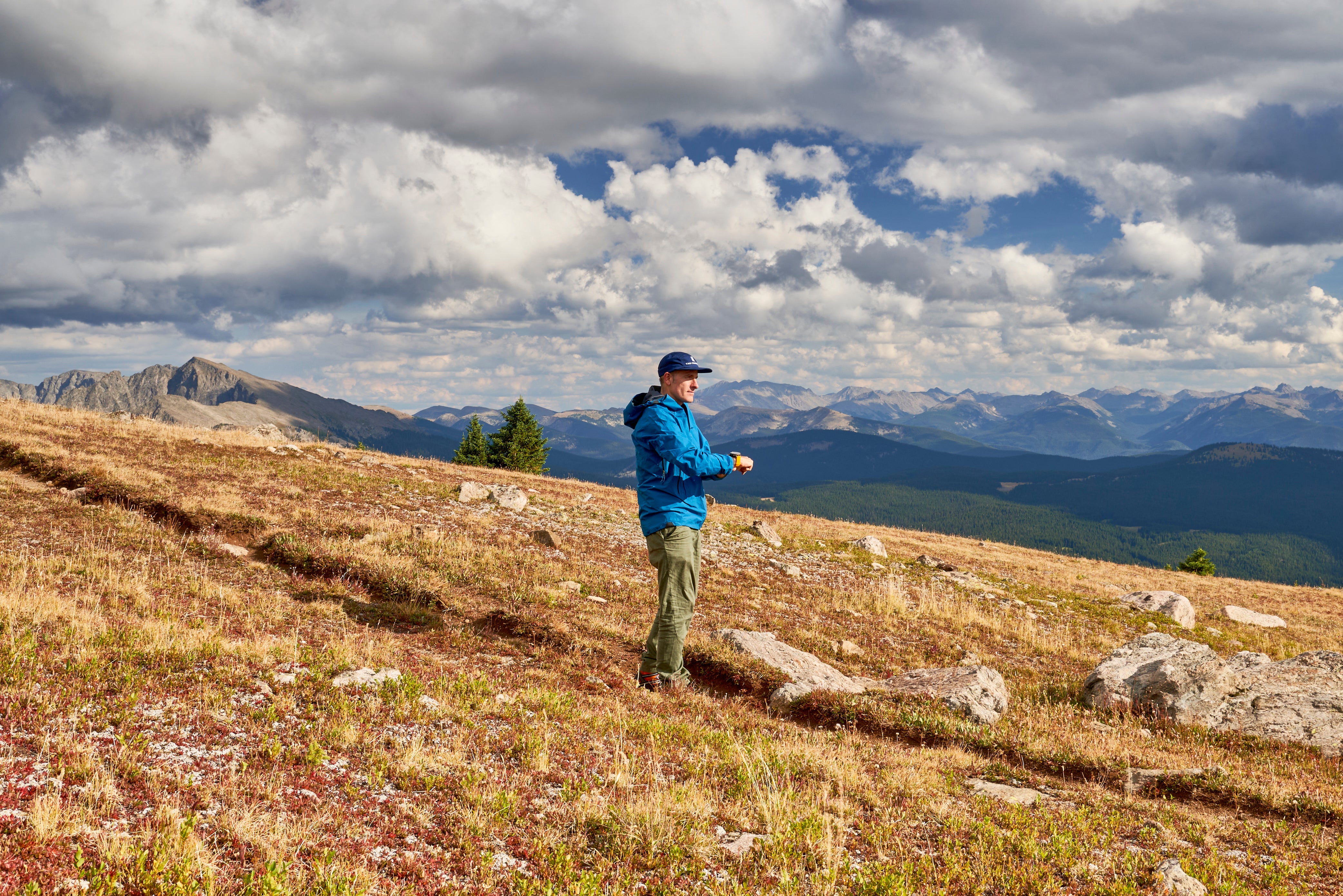
“I always download the maps I’ll need for the day to use offline and then put my phone on Airplane Mode before I set off into the mountains,” says Tom Carrick, who is also a qualified Mountaineering and Climbing Instructor and volunteer with Llanberis Mountain Rescue Team. Not only will you save yourself from having to answer work calls, but you can still take photos and videos while reserving power in case you have to use your phone to call for help in an emergency. “And I carry my phone in a waterproof case because when it rains, the water tends to run off your jacket’s hood and right onto the screen of your phone, which can stop you from being able to use the on-screen navigation at all.”
That’s not to say you should completely drop from the grid, especially if you’re hiking solo. Many tragedies may have been averted if solo hikers had simply notified someone of their plans and when they expected to get back, so that the alarm would have been raised and search parties sent out when they didn’t return to base on time.
“Share your intended route with a friend or family member and let them know when you set off. But remember to check in when you get home so they don't call the emergency services! For multi-day hikes, I take a GPS communicator and check in with my family at the end of every day,” says Jamie Ramsay.
Mobile phone coverage in the mountains is often patchy at best, but there are multiple, relatively affordable options on the market for communicating through your smartphone without mobile signal, from Garmin’s InReach GPS messaging devices to the iPhone’s text-via-satellite feature (on models later than iPhone 14 running iOS 18). This underlines the importance of battery life when a smartphone is part of your safety system. “Carrying a battery pack and charging cable, just as a backup, will ensure that you have that really crucial bit of equipment that can make an emergency call if you need to,” says Carrick.
Read more: North Wales is the perfect gateway to developing a hiking habit
As more of us explore the high places, social media has become a source of inspiration as we see influencers scaling classic summits, which suddenly seem more accessible to us. One problem with these posts is they often show the mountains in ‘Instagram conditions’ with bluebird skies and wall-to-wall sunshine, but in the mountains, weather hits different – and it hits fast.
“In the UK, the summit of a 1,000m mountain will have a 10-20C temperature drop compared to the valley bottom,” says Carrick. “If you’re setting off in the valley at 10-15C, by the time you’ve got to the top, you’re going to be quite close to zero, and if there’s any wind about then you’re going to be below freezing, because of the wind chill.”
Carrick stresses that you need to check the weather forecast for the summit or highest point on your route. In February this year, he was out in balmy sunny weather in Llanberris, but on top of the mountains it was still icy and snowy. “And the second the cloud comes in you're in a total white out; even people with a lot of experience navigating in remote areas struggle with that.
“The weather can change incredibly quickly. Climate change is exacerbating this problem even more, but it has always been a thing in the mountains. It can change on a half-hourly basis from gorgeous sunshine to complete white-out conditions and some really windy conditions as well. We’re definitely seeing that more now.” Carrick recommends having a backup hiking route planned for the day that crosses lower terrain, so that you don’t have to commit to hiking high in miserable conditions.
If you do have a problem at the summit, or you’re just a bit tired and you sit down, your body temperature will drop really quickly, and one thing that can come from being too cold is that you start making mistakes.
This is where a single problem can snowball into an emergency, says Carrick, who works as a mountain guide and also volunteers for the Mountain Rescue Team: “If I was going to tell anybody to take one thing into the mountains it would be a little, lightweight group shelter (or solo emergency bivvy bag). They’re really small and quite affordable, and they will keep your body temperature up.” On days when he’s guiding clients, Carrick will even put the shelter up for everyone to have lunch in, out of the wind.
Food and water also become more important at altitude, so skipping lunch is not advisable. “You need to stay hydrated and keep your blood sugar levels up so that you can make good decisions about whether you’re going up or down in the mountains,” he says, adding that when Mountain Rescue take people off the peaks they test their blood sugar levels and often find they’re dangerously low.
Read more: Where to wine, dine and hike along Britain’s original national trail
So, as well as your normal food for the day, you should always carry extra rations at the bottom of your pack. For Carrick, flapjacks are a favourite because they’re energy-dense with fast-release carbs for a quick sugar hit, combined with slow-release complex carbs and a bit of fat for longer-lasting energy.
Ramsay agrees: “A lot of hikers forget to take enough food or water with them. Pack more than you think you need and think about how you can get clean water if you run out. I always take a water filter with me.”
When it comes to clothing, Carrick will also always carry a packable, lightweight waterproof jacket and overtrousers even on hot summer days, because thunderstorms are harder to predict than regular rain. And in the winter or shoulder seasons, as well as waterproof outer layers, it’s worth packing an additional warm layer, such as a lightweight down jacket, or fleece, that you can put on under waterproofs if you have to stop for a while, or one of your layers gets wet.
Even gram-counting fastpackers like Katy Parrott, who like to move fast and light, don’t skimp on the safety essentials, such as a headtorch, navigational aids and a whistle. Making noise in an emergency may seem hopeless when you’re in the middle of nowhere, but it can be surprisingly effective. Just last week, a severely injured, hypothermic hiker was rescued after a 200ft-fall in the Washington mountains when two other hikers, who were far away across the canyon, heard his cries for help. They couldn’t even see him, but were able to call for help through their GPS messaging device, enabling rescuers to search the area and find him in time to save his life.
All of the experts I spoke to for this piece agree that there’s a key skill that’s essential for making solo hiking safer: knowing when to back off. “You should never take unnecessary risks and this is especially so when solo. If something makes you feel uncomfortable, find another route,” says Ramsay.
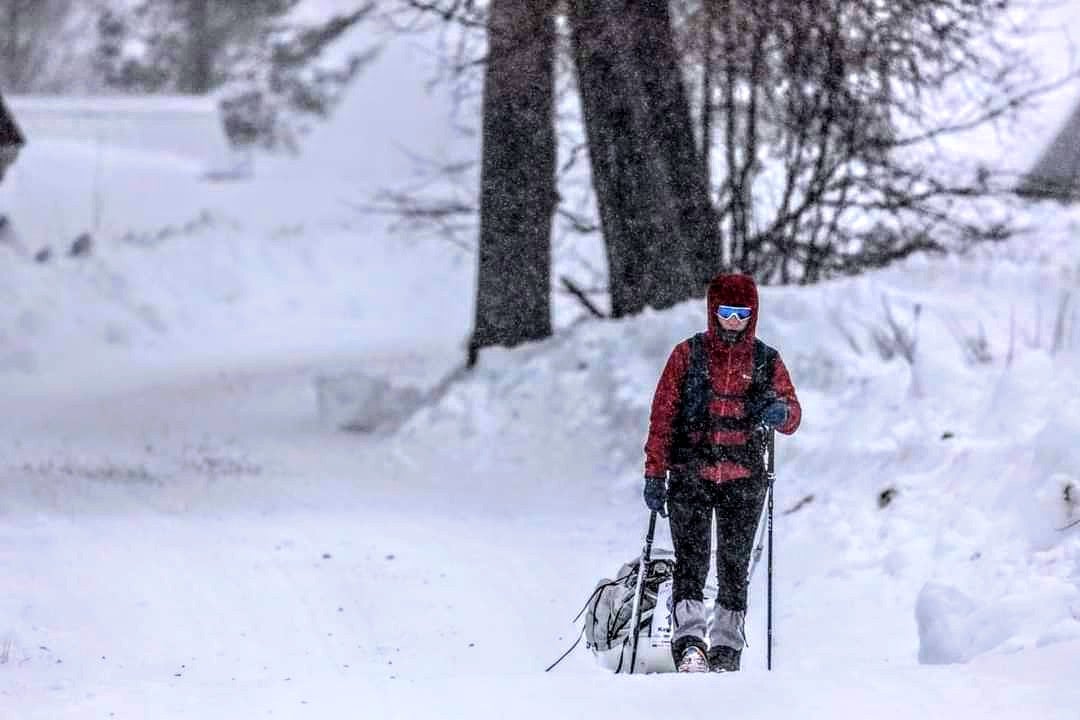
There’s one other piece of advice that I commonly hear from solo adventurers: ‘don’t let panic dictate your decisions’. Helpfully, Katy Parrott doesn’t just say ‘don’t panic’ because sometimes that’s the natural human reaction, as she found out 165km into the self-supported Montane Lapland Arctic Ultra. “It was the middle of the night, at about -15C with 20km to go and I basically hit a wall. I started to panic because I had no energy, I was shaking and staggering and questioning whether I could make it to safety before I passed out.”
She knew that she was now at risk and had to get a grip on herself. “So I just stopped in my tracks to take a few deep breaths to get past that ‘chimp brain’ of fight or flight, and to get my rational brain to kick back into gear, and that really helped to calm me down.”
Parrott was then able to come up with a plan to get through a dangerous situation. “I looked at the map and saw there was a shelter about 5km away. I realised I could do 5K and that felt easier than 20K. This clear, rational thinking got me to the shelter where I rested for 3-4 hours, had some food and a little bit of sleep and then carried on in the morning, which ended up being a success because I finished fourth overall and as the second female!”
Read more: I hiked to the UK’s most remote gastropub and foraged for my own dinner
As Carrick echoes, one of the best things to do if you get lost or hit by bad weather is to stop and take stock. “If you’ve been caught out in the mountains, one of the first things to do is probably to sit down, try and get yourself into some shelter and have some food and a drink to replenish your blood sugar levels while you think about how to get out of there safely.”
There’s usually a way to navigate out of a situation, even if you’ve managed to lose all of your navigational aids, especially if you retain an awareness of which general direction you need to head in and which landscape features you aren’t expecting to encounter on your route. For instance, Parrott says you can simply shove a stick into the ground and watch how its shadow moves across the floor to get an east-west line. At the very least, knowing such tricks can boost your confidence if you do become unstuck.
When it comes down to it, there’s nothing that beats experience, and Carrick recommends building a base of outdoor experiences from which you can learn new skills and encounter different conditions and terrain. This can help you to tackle more advanced hiking routes and make independent judgement calls, such as choosing different kit for different circumstances.
While outdoor organisations like the BMC are keen to promote safe and responsible hiking, they are not trying to put people off completely. “I think there’s definitely an increase in people coming to the mountains, but that's certainly not a bad thing. It's fantastic for us all individually, and there are a lot of skills that you learn when you spend time in the outdoors,” says Carrick.
Whatever your hiking goals, so long as you weigh the limitations of your current experience and the tools you are using against the challenges of changeable weather conditions and rugged terrain, and have a plan of what to do if things go wrong, then you can have an enjoyable and rewarding adventure in the mountains.
Read more: Off the grid in Norway – and more connected than ever
Join our commenting forum
Join thought-provoking conversations, follow other Independent readers and see their replies
Comments
Bookmark popover
Removed from bookmarks