As Bangladesh heads to the polls, human rights must come first
Bangladesh has a rare opportunity to choose a path that shuns the abuses of previous administrations, John Quinley and Benedict Rogers say


Next month, Bangladesh will hold its first national election since the ousting of the former prime minister Sheikh Hasina, who fled to India after a nationwide revolution demanding political reform, accountability, true democracy and respect for human rights. The 2024 movement marked the collapse of more than a decade of authoritarian rule, defined by the erosion of civic space and widespread human rights violations by state actors, including grave mass atrocity crimes. Security forces and members of the then-ruling Awami League, the political party of Hasina, killed hundreds of protesters during the countrywide demonstrations that led to her downfall.
Whoever wins the forthcoming election will inherit a country exhausted by repression yet hopeful for the possibility of democratic renewal. That opportunity will be squandered unless human rights are placed at the centre of the political agenda. The likely frontrunner is the Bangladesh Nationalist Party (BNP), long the main opposition to the Awami League.
Under Hasina’s rule, BNP members and supporters were frequent targets of arbitrary arrest, torture and enforced disappearance, many to never be seen again. These abuses were documented by national and international human rights organisations, yet accountability remained elusive. The repression was not incidental; it was structural and systematic, designed to neutralise opposition. Even more troubling, the repression was not an invention of the Hasina regime: previous regimes used similar repression to consolidate their power.
The BNP now faces a defining transition following the recent death of its longtime leader Khaleda Zia, who died after years of imprisonment and political exclusion under Hasina. Twice prime minister, Khaleda Zia became a symbol of opposition to the Hasina regime. Her passing closes a chapter shaped by personal persecution and political survival and opens a critical test for the party: whether it can move beyond grievance politics, as well its own record of repression when in power, and demonstrate, in practice, a commitment to democratic norms and human rights if returned to power.
Tarique Rahman, the party’s acting chairman and son of Khaleda Zia, returned to Dhaka from the UK, where he was in exile, for the first time since Hasina’s removal, shortly before the death of his mother. Addressing a vast crowd on the outskirts of Dhaka on his return, he struck a unifying tone, saying: “We have people from the hills and the plains in this country – Muslims, Hindus, Buddhists and Christians. We want to build a safe Bangladesh, where every woman, man and child can leave home safely and return safely.” If the BNP comes to power, it must translate this rhetoric into reality by upholding the rights of all.
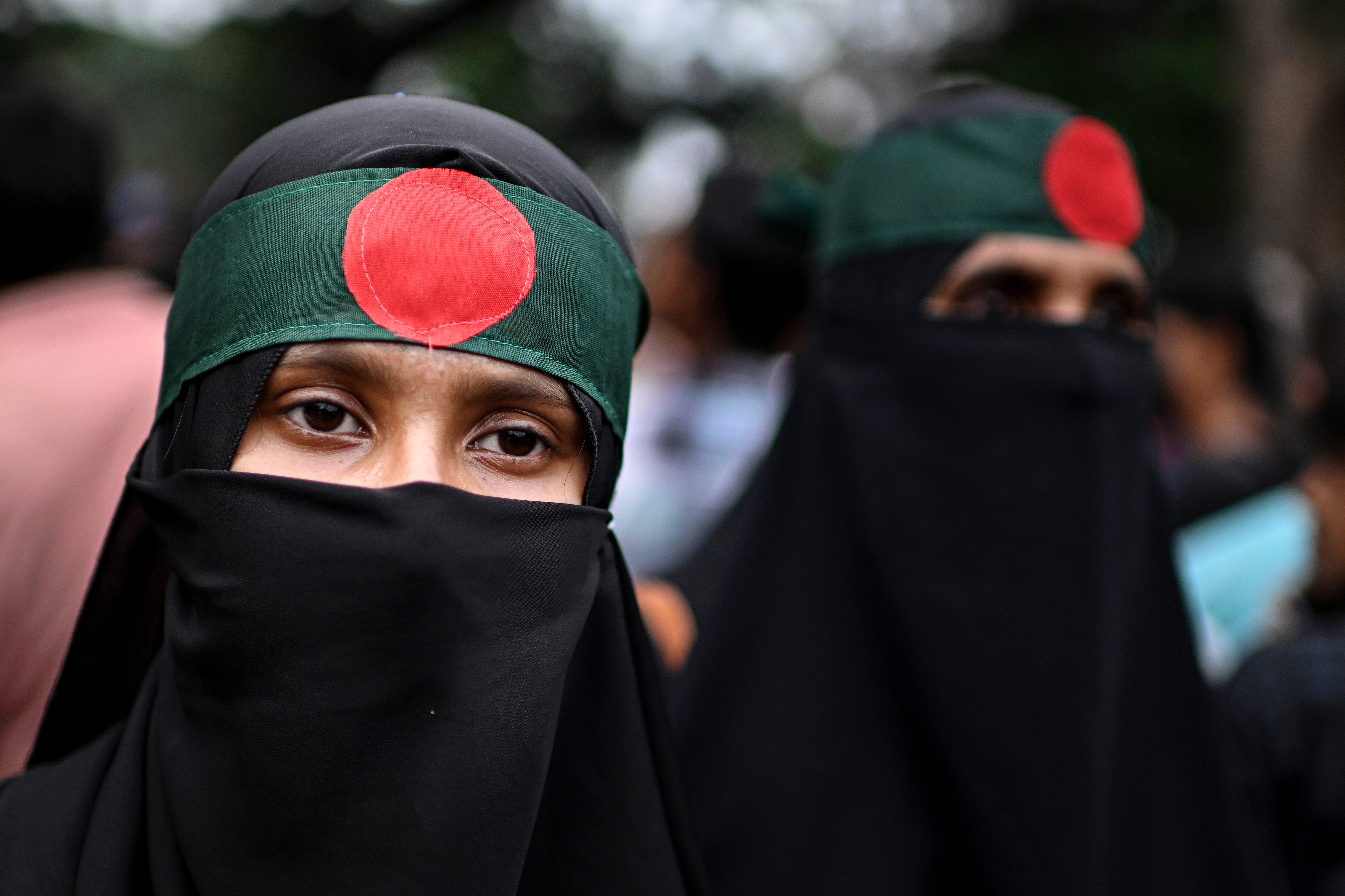
The post-Hasina political landscape is not defined solely by the return of established parties such as the BNP. New political forces have emerged from the youth-led uprising of 2024.
The National Citizen Party (NCP), formed in the wake of the movement, reflects a generation shaped less by party loyalty than by lived experience of repression, state violence and economic exclusion. The rise of the NCP signals deep frustration with the old political order and a demand for genuine reform rather than a simple change of faces.
Independent candidates have also come to the fore, often at great personal risk. Political violence has not disappeared with the fall of the old regime. In a stark reminder of how fragile the transition remains, the independent candidate and youth leader Sharif Osman Bin Hadi was assassinated in broad daylight in December. His killers remain at large.
The killing of Osman Bin Hadi underscores how easily fear can be reintroduced into public life, and how urgently accountability is needed if political participation is to be meaningful rather than performative. Whoever forms the next government must begin with the restoration of core human rights norms.
First, there must be truth and accountability for past human rights violations, particularly enforced disappearances, killings and torture. Families of victims of enforced disappearance have waited for years for truth and justice for their missing loved ones. Without credible investigations, fair trials and meaningful prosecutions, reconciliation will remain hollow and mistrust will continue. This accountability should be in line with international trial standards and transparent: all too often in Bangladesh’s past, revenge and score-settling, rather than real justice, has characterised political transitions.
Second, the independence of the judiciary and law enforcement agencies must be restored. Courts must not be used as instruments of political retribution, and security forces cannot be permitted to operate with impunity. Authorities face a necessary but delicate task: addressing the rise in political violence in Bangladesh while strictly avoiding the use of excessive force and upholding due process and the rule of law.
Third, civic space must be reopened – for free expression, peaceful assembly, independent journalism and legitimate political opposition. Under Hasina’s authoritarian rule, criticism was treated as sedition and dissent as disloyalty. No election can be free or fair if journalists, activists and opposition figures continue to work under threat. Yet following the assassination of Sharif Osman Bin Hadi on 12 December, Bangladesh slid back into violence when protesters vandalised and set fire to the offices of leading newspapers, including the Daily Star and Prothom Alo, trapping staff inside before they were rescued.
The interim government led by Muhammad Yunus must urgently defend press freedom, the rights of civil society and freedom of expression, assembly and association, and uphold the rule of law in the lead-up to the polls. This must be its absolute priority. Furthermore, whoever comes to power must place the protection of minorities, including women, religious minorities, LGBTQI people, refugees and other minority groups, at the centre of governance. Bangladesh’s human rights obligations extend beyond those who can vote. They include those excluded from the political process altogether, most notably the one million Rohingya refugees, who fled genocide in neighbouring Myanmar. A genuine commitment to human rights cannot end at the ballot box.
We have documented continuing violations against Rohingya refugees even under the interim government, including cases in which authorities forcibly returned Rohingya fleeing persecution and violence in Myanmar. Candidates in Bangladesh’s forthcoming election must have an answer for how they will address the rights of Rohingya refugees – and how they will relate to Myanmar and questions of accountability for Myanmar’s atrocity crimes.
Finally, governments worldwide should play a supporting role in safeguarding Bangladesh’s democracy and its longer-term human rights trajectory. In the UK in particular, the Bangladeshi community has a crucial role to play. There are several MPs of Bangladeshi heritage, and they must act and use their voice. The British government can and must act constructively and should demand a genuinely level playing field in Bangladesh. That means insisting on accountability and fair-trial standards for everyone, including former officials of the Hasina government, while defending peaceful assembly, the rule of law, and credible election monitoring in the run-up to the vote. Above all, Britain should step up support for national human rights organisations documenting abuses and electoral conditions on the ground.
The election in February is not simply about who governs next, but about whether Bangladesh finally breaks its long cycle of authoritarianism and political violence. The revolution that forced Hasina from power was, at its core, a demand for human rights. Betray that demand, and the next government will inherit not stability and peace, but merely a lull before another revolution.
John Quinley is a director at Fortify Rights and Benedict Rogers is a senior director at Fortify Rights
Join our commenting forum
Join thought-provoking conversations, follow other Independent readers and see their replies
Comments
Bookmark popover
Removed from bookmarks