Boris Johnson’s final appearance at the Covid inquiry was a lesson in self-absorption
During a haphazard appearance, the former prime minister explained how he had felt ‘homicidal’ over his government’s plan to educate children during lockdown – but his rationale for not implementing a nationwide catch-up programme post-pandemic is unforgivable, says Sean O’Grady


Watching Boris Johnson attend his latest and – so he was assured by the chair, Baroness Hallett – definitely final appearance at the Covid inquiry, one is reminded of just how strange it was to have this self-regarding, self-absorbed character running the country during such a crisis.
It wasn’t just his silly, carefully curated, unkempt hair, struggling to cover a steadily encroaching bald patch, with the blond hue looking increasingly like it appears courtesy of Clairol. It wasn’t just the impression that he wasn’t cut out for government, attention to detail and consistency. Nor the tasteless showboating “humour” – such as when the berk said having to work with the Department for Education on a pandemic response had made him feel “homicidal”.
Nor even the indelible stains of Partygate that not even the hardest-working and most dedicated of Downing Street cleaners on the minimum wage could hope to erase.
No, not so much any of that. But these current inquiry sessions, on how children and schools fared under the shifting policies of the Johnson government, with the questioning going into minute detail, do plant the idea in the mind of an implacable Johnson critic (me) just how difficult – indeed, impossible – some of the choices he faced actually were.
Perversely, the competing interests of pupils, their teachers, their (much more vulnerable) grandparents and the wider economy rendered any policy choice sub-optimal, as the jargon goes. You couldn’t “win” in such circumstances. In other words, even a leader with the courage of Churchill, the tenacity of Thatcher and the administrative skill of Attlee couldn’t have got the balance right. They would probably have gotten it wrong, too, but maybe for the better reasons.
Johnson was right to plead, even self-servingly, that the inquiry is all about learning important lessons for the future, and not creating an alternative history of the pandemic, one where some mythical genius of a prime minister would have saved lives, and preserved the educational opportunities of the “kids”, as he insists on calling them, and not cost the Treasury much money.
All the choices were bad ones – and, in fairness to the old rogue, when he asked one of the many barristers gently tormenting him what system they would devise to create exam grades for pupils where there are no exams and precious little teaching or learning, the lawyer had no ready answer.
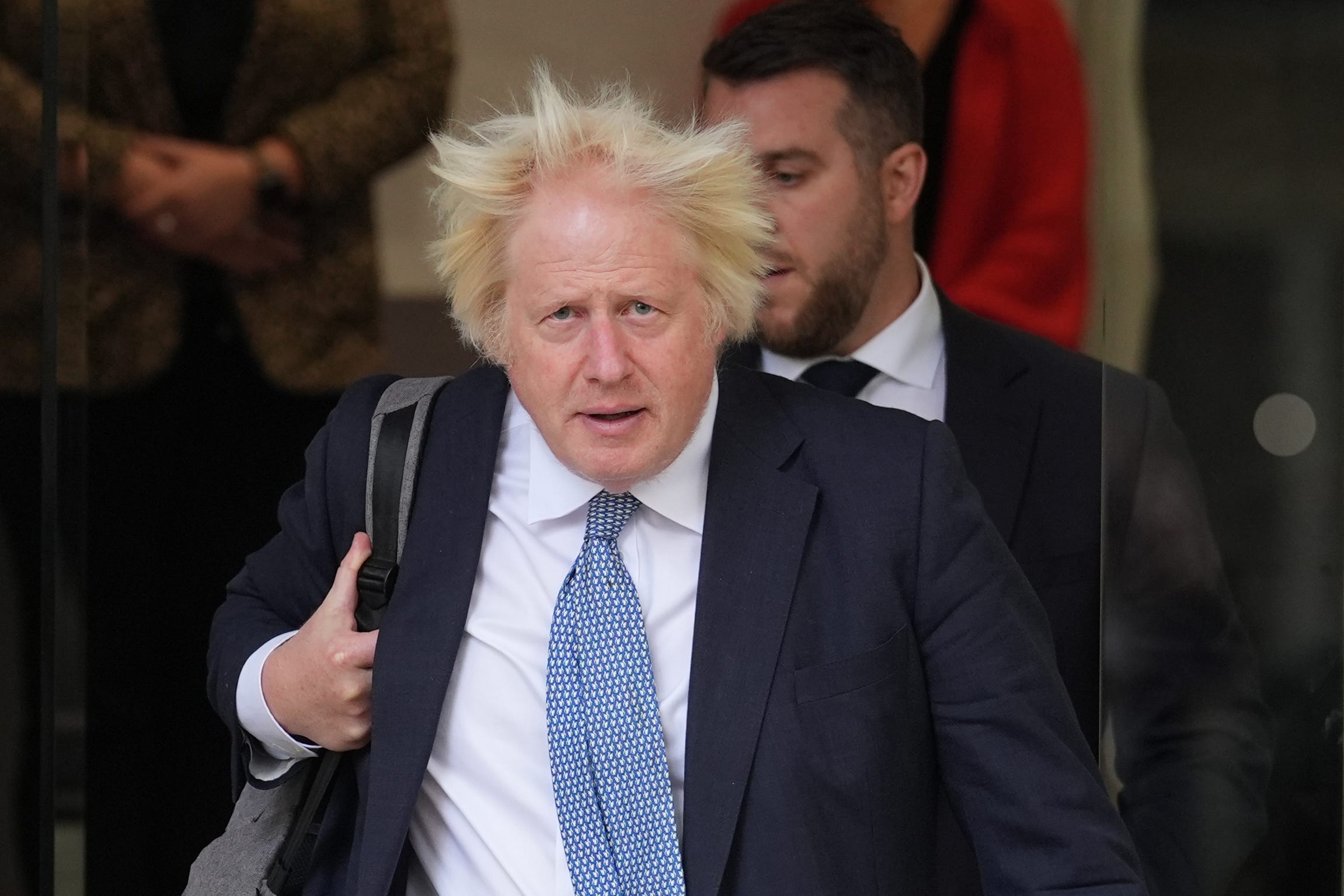
Freed from the cares of office, albeit a light enough burden in his case, Johnson cheerfully fessed up that he presided over a comprehensive concatenation of Covid catastrophe, as he might express it. “Was Covid a disaster? Yes. Was the loss of education a disaster? Yes. Was the loss of exams a disaster? Yes. Was the disappointment, anger, the additional frustration of a large number of kids a disaster? Yes, it was, but it has to be seen in the context of us trying to deal with a much, much bigger disaster and that was the loss of learning and the loss of the exams themselves.”
Indeed so. The chair didn’t intervene with the obvious follow-up: “Was Boris a disaster? Yes.”
That would actually have been a bit unfair. After all, you’ve got to have some necessary sympathy for someone who had Dominic Cummings, Matt Hancock and Gavin Williamson as his principal lieutenants in this difficult pre-vaccine phase of the crisis.
Johnson was going to throw some group under the bus – and if it ended up being the teachers, by opening up schools and forcing them to administer “mass testing”, so be it. Except it was a uniquely bad choice, because the students suffered, too.
Johnson just about admitted that he had no real intention of rolling out a full educational recovery programme post-pandemic, because it was simply too expensive. Never mind that Kevan Collins, as England's education recovery commissioner, had spent months designing a catch-up plan. It was disposable – as was Collins (“who I like”), but who resigned anyway.
At this point, Johnson playfully threw in an observation about Rachel Reeves’s forthcoming Budget as if to prove his point about spending – but it didn’t, obviously.
What we learned from this episode of the Covid inquiry series was that, in such unprecedented conditions, tough choices and sacrifices were inevitable; that some of those would inevitably be the wrong ones; and there was no one better at that than Boris Johnson.
At the end of his performance, he got up before the baroness had stood herself, and was duly ticked off, in kindly, infant-school-headmistress fashion. It wasn’t due to his usual lack of respect for others, but rather that he couldn’t wait to get out of there. And who could blame him for that?
Join our commenting forum
Join thought-provoking conversations, follow other Independent readers and see their replies
Comments
Bookmark popover
Removed from bookmarks