Charles has forged a holy bond with the Pope – but will William break it?
If you want to restore your faith in humanity, the first meeting of a pope and a king for 500 years is a good place to start, writes Catherine Pepinster, but the shadow of agnostic William looms large


As the King prayed with Pope Leo in the Sistine Chapel in an unprecedented display of Christian unity, I suspect some Vatican officials will have breathed a sigh of relief.
At one time, there was considerable anxiety about what would happen when Charles came to the throne, and one senior Vatican official told me that they considered his mother, Queen Elizabeth II, to be the last Christian monarch. They had noted her own deep Christian faith and how seriously she took the monarch’s role of supreme governor of the Church of England.
Perhaps it was the comment that Charles made back in 1994, when he wanted to amend the traditional monarch’s title of Defender of the Faith to Defender of Faith, to reflect the very different multicultural and multifaith world he would reign over. It might have suggested to Rome that he would not take his religious duties as seriously as his mother did.
Those Vatican officials needn’t have fretted. The two huge volumes of Charles’s speeches as Prince of Wales show a keen interest in faith. Since becoming King, he has met faith leaders frequently, and in the past year, he has particularly engaged with Roman Catholicism. He visited the former home of the Victorian writer and cleric John Henry Newman, who had converted from Anglicanism to Catholicism – Charles attended his canonisation in Rome in 2019 – and led the royal family in attending the Catholic funeral of the Duchess of Kent at Westminster Cathedral.
Perhaps even more significant was that he asked Roman Catholic lawyer Lady Elish Angiolini to be his representative, or lord high commissioner, to the Church of Scotland’s general assembly. Catholics were banned from the role. Charles’s choice meant there had to be a change in the law to allow it to happen. Centuries-old prejudice was swept away.
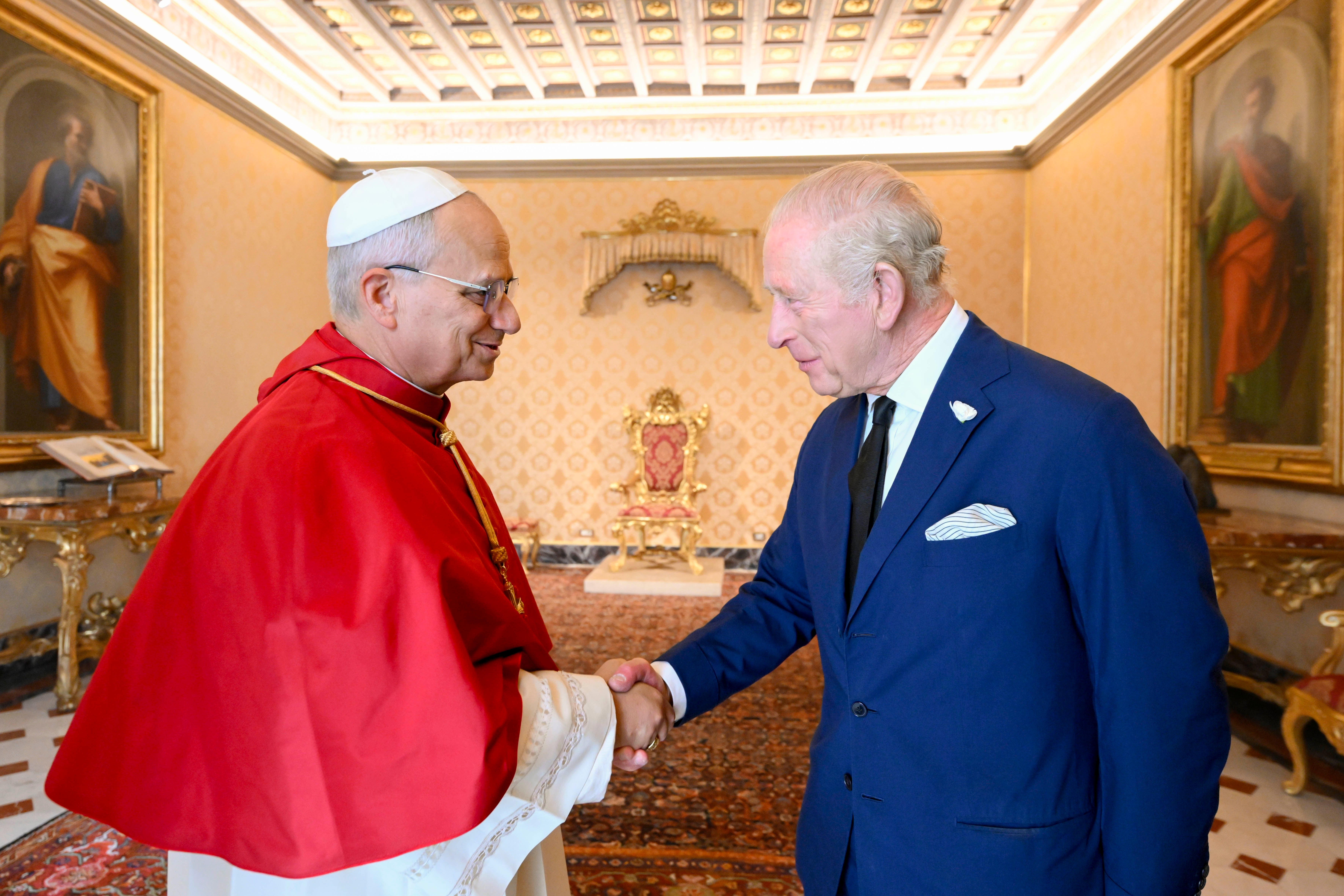
No wonder then that, alongside the prayer service in the Sistine Chapel, the Vatican decided to give him what is called a spiritual honour: to be made a “confrater of the abbey of St Paul” at the papal Basilica of St Paul’s Outside The Walls, and installed in a special chair with his royal coat of arms. It will then be made available for the King and his successors to use when they are in Rome.
Charles III may well use it again, but William V? There is little sign that the Prince of Wales has much time for religion. Yes, he was “hatched and matched” in the Church of England, with his christening in the music room at Buckingham Palace and his wedding to Kate Middleton at Westminster Abbey watched by millions around the world. But there is little sign of engagement with religion other than those formal ceremonies.
One formal religious ceremony will soon start to loom over his life. His father’s reign will undoubtedly be much shorter than that of Elizabeth II, which is why clerics started talking about how William needed to start thinking about his own crowning as soon as his father’s coronation was over. I know of at least one clerical coronation expert who sent a detailed memo to William’s office about it, urging him to think about it as soon as possible.
The coronation has always been essentially a religious service, involving anointing and the receiving of Holy Communion, as well as the taking of oaths. Watching the 1952 ceremony and that in 2023, you can see that the key participant firmly believes in its Christian essence. It cannot be taken for granted that William will.
That matters not only for the Church of England, but for all of us. A monarch with a belief in something greater than themselves is, in effect, a signpost to that greater thing. Without it, it is much harder to see the monarchy having any profound purpose.
Join our commenting forum
Join thought-provoking conversations, follow other Independent readers and see their replies
Comments
Bookmark popover
Removed from bookmarks