Starmer’s local election U-turn will hit the Tories just as hard as Labour
Given Labour’s dire position in the polls, the May elections were always going to deliver an adverse judgement of the electorate – but Nigel Farage’s Reform look set to make gains in the shire councils that were once solid Tory strongholds, says Professor Sir John Curtice


Labour’s decision, in the wake of court action by Reform UK, to reverse the postponement of local elections for 30 English councils on 7 May, is undoubtedly a serious embarrassment for the government.
Local authorities that supposedly reckoned they were unable to run elections while preparing for local government reorganisation – half of them run by Labour and only a handful of them with majority Conservative or Liberal Democrat administrations – had been told they could stand down their local election preparations. Now they find themselves being required to execute the sharpest of U-turns.
However, so far as Labour’s prospects in the local elections are concerned – and the message they may send Sir Keir Starmer – the implications of the reinstatement of the elections are not as significant as might seem.
Although Labour-run councils were far and away keenest to postpone, the government’s original decision was never going to enable the party to hide from the potentially adverse judgement of the electorate on 7 May.
For the most part, the postponements involved relatively small councils, in which collectively less than 700 council seats were due to be – and now will be – contested. That represented just one in eight of the seats for which an election had been expected. Elections in London, where 1,800 seats are at stake, and those scheduled to take place in and around most of England’s bigger provincial cities, where another thousand seats are up for grabs, were always going to go ahead anyway.
These elections take place in prime Labour territory that is now, given the party’s dire position in the polls, potentially under threat. In London, nowadays Labour’s strongest region anywhere in Britain, the party won control of 21 of the 32 London boroughs when they were last contested in 2022. Every single seat is up for election again this year in a city where Labour currently has nearly two-thirds of the seats, but where the Greens already have a track record of performing well in local elections.
Labour also currently control 25 of the 32 metropolitan councils in and around England’s provincial cities where elections are taking place. In half of these councils, again all the seats are up for election. This includes, for example, heavily Leave-voting Barnsley and Sunderland, where Reform will have a potential breakthrough in its sights.
Equally, there has never been any prospect of the devolved elections not taking place in either Scotland or Wales – in both of which the polls currently point to the party ending up in third place. In Wales, where the party has been running the devolved Welsh government ever since its inception in 1999, the party has not lost an election since 1931 – and thus defeat would be cataclysmic.
Meanwhile, the Conservatives have good reason to regret the reversal of the postponement decision. Although it was mostly relatively small Labour councils where only a third of the seats are up for grabs that opted for postponement, so also did three county councils under Tory control and a fourth where the Conservatives are the largest party. These are four big councils whose postponement accounts for over two in five of all the seats where the election had been postponed. As a result, the total number of Conservative councillors who now find themselves not having to defend their seat was slightly greater than the total number of Labour councillors.
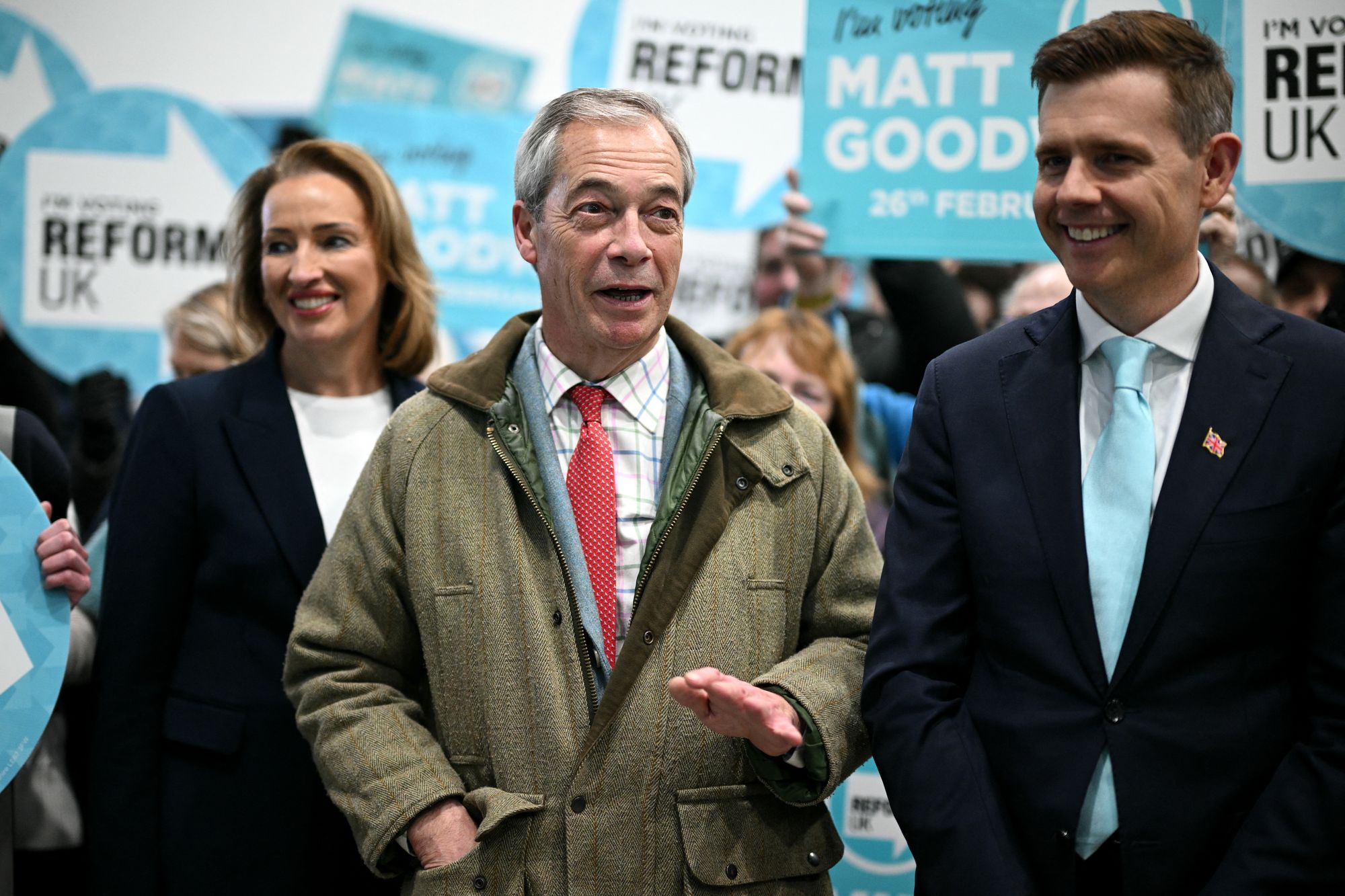
Norfolk and Suffolk, East and West Sussex… these are just the kind of shire Tory councils where Reform made a breakthrough in last year’s local elections. Kemi Badenoch will be concerned Nigel Farage could now register a repeat performance.
John Curtice is professor of politics at Strathclyde University, and senior fellow at the National Centre for Social Research
Join our commenting forum
Join thought-provoking conversations, follow other Independent readers and see their replies
Comments
Bookmark popover
Removed from bookmarks