The chilling impact of Putin’s frozen assets on the Western alliance
At least seven EU countries objected to Russia’s confiscated billions being diverted to Ukraine over fear of reprisals, writes Mary Dejevsky. But Russia has little to crow about, as it’s no closer to getting its cash back


In the nearly four years since Russia’s invasion, the European Union has maintained unity in its support for Ukraine. That solidarity, however, has come under increasing strain, with this week’s EU summit showing the first really significant split.
The issue was, of course, money, and whether the cash-strapped countries would agree to keep Ukraine afloat by reaching into the €210bn (£184bn) of Russian assets that have been frozen in EU banks since the start of the war. Instead, fear of reprisals – especially from Belgium, in whose Brussels-based company, Euroclear, the assets are stored – has meant that European leaders have instead now agreed a two-year interest-free loan to Ukraine of €90bn, to be divided between 24 European states.
It is about two-thirds of the amount that Ukraine is thought to need to get through 2026 and 2027.
Hungary and Slovakia, countries which have kept up sporadic ties with Moscow, were always dissenters on the question of using Russia’s frozen assets. What their dissent concealed, however, was that their objections were widely, if quietly, shared. This week, at least five other countries, Belgium, Italy, Malta, the Czech Republic and Bulgaria, were said to agree, with indications also from Paris that it too had misgivings about using around €18bn of Russian assets frozen in France.
At stake are very big issues of principle and practicality, with equally big implications not just for the EU, but globally.
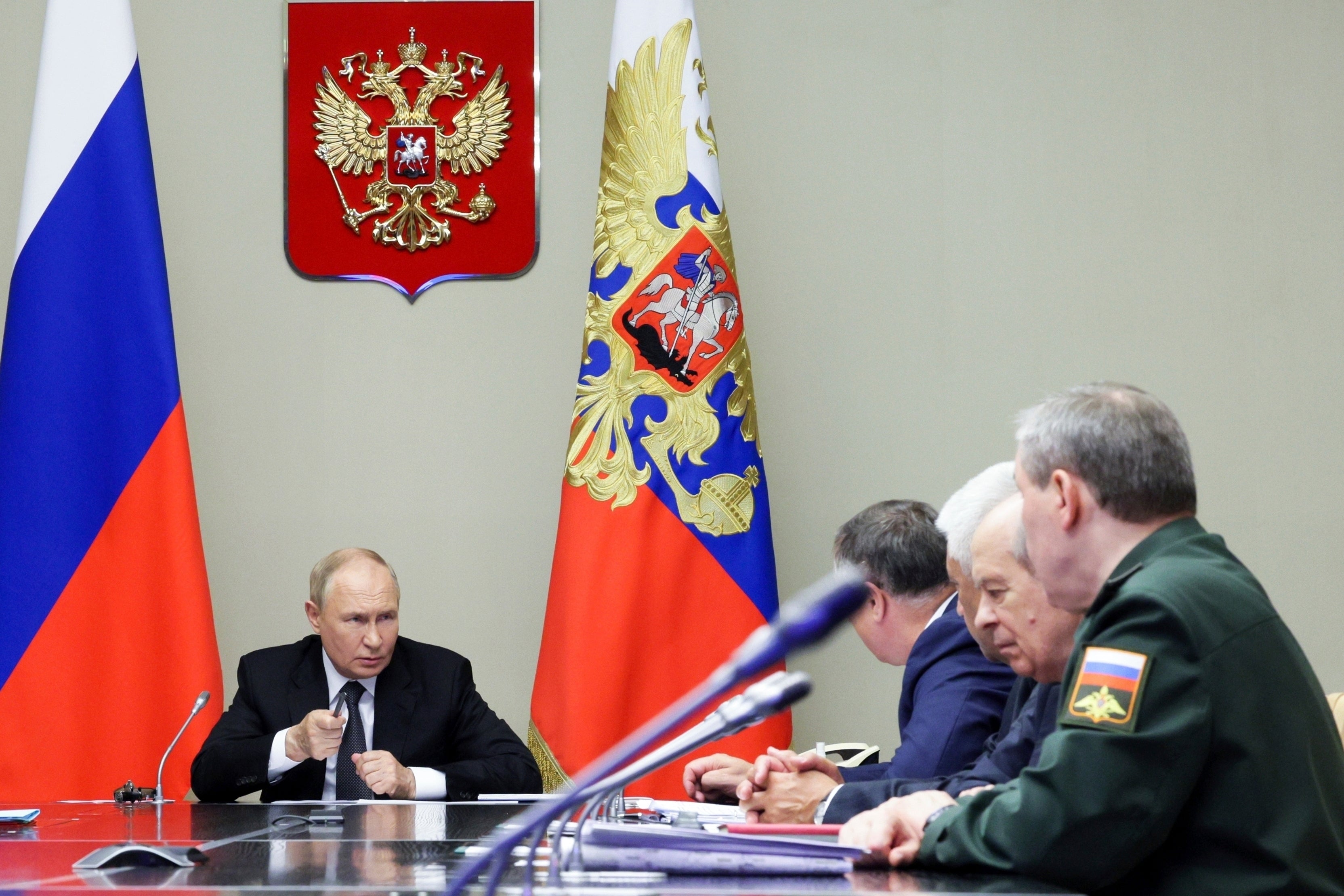
The consensus among those who took the view that Russia acted illegally and thereby forfeited any right to international legal protection for assets held abroad was that the money should be used for Ukraine’s benefit, although some murkiness then surrounded precisely what it should be spent on and when.
Early on, the idea was that the money would be earmarked for post-war reconstruction, in lieu of reparations (which it was deemed Russia would refuse to pay). More recently, however, the idea seems to be that it would be used to help pay for military help – replacing what the US contributed before – and so, in effect, to continue the war.
The latest idea was that the money would also be used to help keep Ukraine running – not just funding the war, but paying state employees, and keeping schools, hospitals and power plants functioning. With the money, it was envisaged that Ukraine could remain viable for another two years; without it, Ukraine could face economic collapse as early as February.
On the other side, it was argued that Russia’s illegal invasion needs to be kept distinct from its foreign assets. hIt was reasoned that, for e EU essentially to help itself to another country’s deposits would amount to theft, jeopardise a basic principle of international finance, threaten the good name of the EU and its members as reliable guardians of other people’s money, and precipitate a worldwide free-for-all in which no one’s assets would be safe from confiscation by a foreign power.
There is also a view that Russia could sue in the courts – which it had been threatening to do – and win, leaving the EU and its banks to pick up the enormous tab.
The legal arguments are contested, but this risk helps to explain why Belgium emerged in the vanguard of the objectors. Euroclear holds a disproportionate amount – €150bn – of the Russian assets, and Belgium demanded that all EU countries share the risk equally, which the others, equally understandably, do not want to do. The rift led to convoluted efforts to find a legal route for using the assets that would somehow get the EU off the hook, but such a route proved elusive.
An early mechanism, which met little opposition, was for the EU to release the interest accrued on the assets since they were frozen and use that for the benefit of Ukraine. Now, however, with the US turning away from Ukraine, far bigger sums are needed, which is why the assets themselves came into play.
Another route, advanced last week by two of the most convinced proponents of using the assets – the president of the EU Commission, Ursula von der Leyen, and the EU chief diplomat, Kaja Kallas – would be to declare an emergency and suspend normal voting rules to force the measure through. This, though, not only underlines that what is afoot is essentially an effort to get around the law, but also highlights some of the defects in EU democracy and the inroads it can make on national sovereignty. These are some of the very same arguments, it might be remembered, that were advanced by the UK’s Brexiteers.
While Brexit may have removed the UK from direct involvement in this debate, the UK’s full-throated support for Ukraine and London’s role as a global financial centre make the controversy a live one, here, too. And while Keir Starmer recently suggested that the UK would be willing to contribute the Russian assets frozen here, the banking establishment is reported to be warning against such a prospect – for the obvious reputational reasons. In this respect, the sudden media availability of the foreign secretary, Yvette Cooper, was striking.
Only hours before EU leaders were due to meet, she gave several one-to-one interviews, telling the former Chelsea FC owner, Roman Abramovich, he had 90 days to transfer his £2.5bn proceeds from the forced sale of the club to Ukraine.
Given that his assets were frozen by the UK, this sudden demand might seem a stretch. In the context of the high-stakes EU summit, however, it could be seen as a small gesture of support, albeit one that might usefully divert attention from what the UK might or might not do about other Russian assets it holds.
The Abramovich diversion, however, should not be allowed to distract from the importance of the EU’s decision. Moscow may be crowing that “illegal moves...failed” but its assets remain frozen – and with no sign that they will ever be returned.
Join our commenting forum
Join thought-provoking conversations, follow other Independent readers and see their replies
Comments
Bookmark popover
Removed from bookmarks