‘Silence never truly arrives’: what the eve of a ceasefire feels like in Gaza
After two years of war, Gazans woke to a fragile ceasefire and a chance to imagine life beyond the ruins, says Ahmed Kamal Junina – as well as the cautious hope that the peace might finally last


In Gaza, waiting has become a way of life. For two years, it felt as though time itself had frozen on 7 October 2023, only to resume just yesterday. The days in between blurred together – heavy, indistinct, almost dreamlike – until that final night, when the air finally shifted and time seemed to move again.
For days, we clung to our phones, tracking every rumour, every update about the talks in Egypt. The word “ceasefire” echoed through conversations with both longing and suspicion. “Do you really think it will happen this time?” a neighbour asked.
Waiting in Gaza is far from passive; it is lived through fear, through loss, through the hum of drones and the thud of explosive-laden armoured personnel carriers (APCs). Each hour brings another headline – and too often, many lives lost.

For two years, Gaza has been living through a nightmare that no one should have to endure. Entire families have been wiped out. Hunger and disease have spread through shelters and streets alike, claiming lives silently. Universities, hospitals, schools – all have turned to dust. Yet amid all this, we have not stopped imagining a different tomorrow.
Those who had to evacuate to the south have been calling relentlessly – friends, relatives, colleagues. They ask about us, about Gaza City, about their homes that now lie in ruins. They dream of returning north once a ceasefire is announced. Some have even tried to return, despite the danger – a journey so cruel it strips the word “home” of meaning. Meanwhile, those of us still here – in Gaza City and the north – hold on to the same hope, but for the opposite reason: that a ceasefire might spare us from being forced to evacuate south.
Life in the north has become incredibly difficult. Israeli tanks are mere hundreds of metres from my home. A collapse in the talks could mean they gradually move into our neighbourhood, where several apartment buildings have been levelled by bombing campaigns in recent days. Yet even here, people hold on to the smallest fragments of hope.
Weeks ago, loud cheers rang out across neighbourhoods and tent-filled camps. For a moment, many believed the war had ended. It was, in fact, a collective act of anticipation – rehearsing joy for the moment when a ceasefire might finally be declared. But the celebration faded as quickly as it began, and the familiar silence of dread returned.
Then came Wednesday 8 October. At 7.22pm, the cheers rose again – this time with real promise. News spread that negotiations in Egypt were progressing and that an agreement might be announced within hours. From my window, I watched neighbours clapping, whistling, shouting. After nearly two years of drones, sirens and explosions, the sound of joy felt almost foreign.
That evening, my family gathered in the living room, glued to our phones, debating every report. A typical Gazan family discussion: political theories, hopes, fears. We imagined the announcement by 9pm, but the hours stretched on.
I went to bed exhausted, still hoping to wake up to a quieter dawn. At 2.20am, my phone buzzed. A message from my brother: “It’s done. They’ve reached an agreement.”
I jumped up, fumbling with my phone, switching between radio stations to confirm. When the words finally came through, I froze. Joy and disbelief intertwined. Two years of endless days had blurred together, filled with mourning and displacement. For a fleeting moment, my body caught up to a reality my mind couldn’t yet grasp.
In the morning, the house was alive with cautious whispers and smiles. We hugged one another, repeating the news as if saying it aloud would make it real. But here in Gaza, we’ve learned that the final hours before a ceasefire are always the most dangerous – when the sky seems angriest and the bombs fall heaviest, as if punishing us for daring to hope. A few hours later, reports came in that 25 people had already been killed, a stark reminder that real change can arrive only slowly, and that the cost of waiting is still counted in lives.
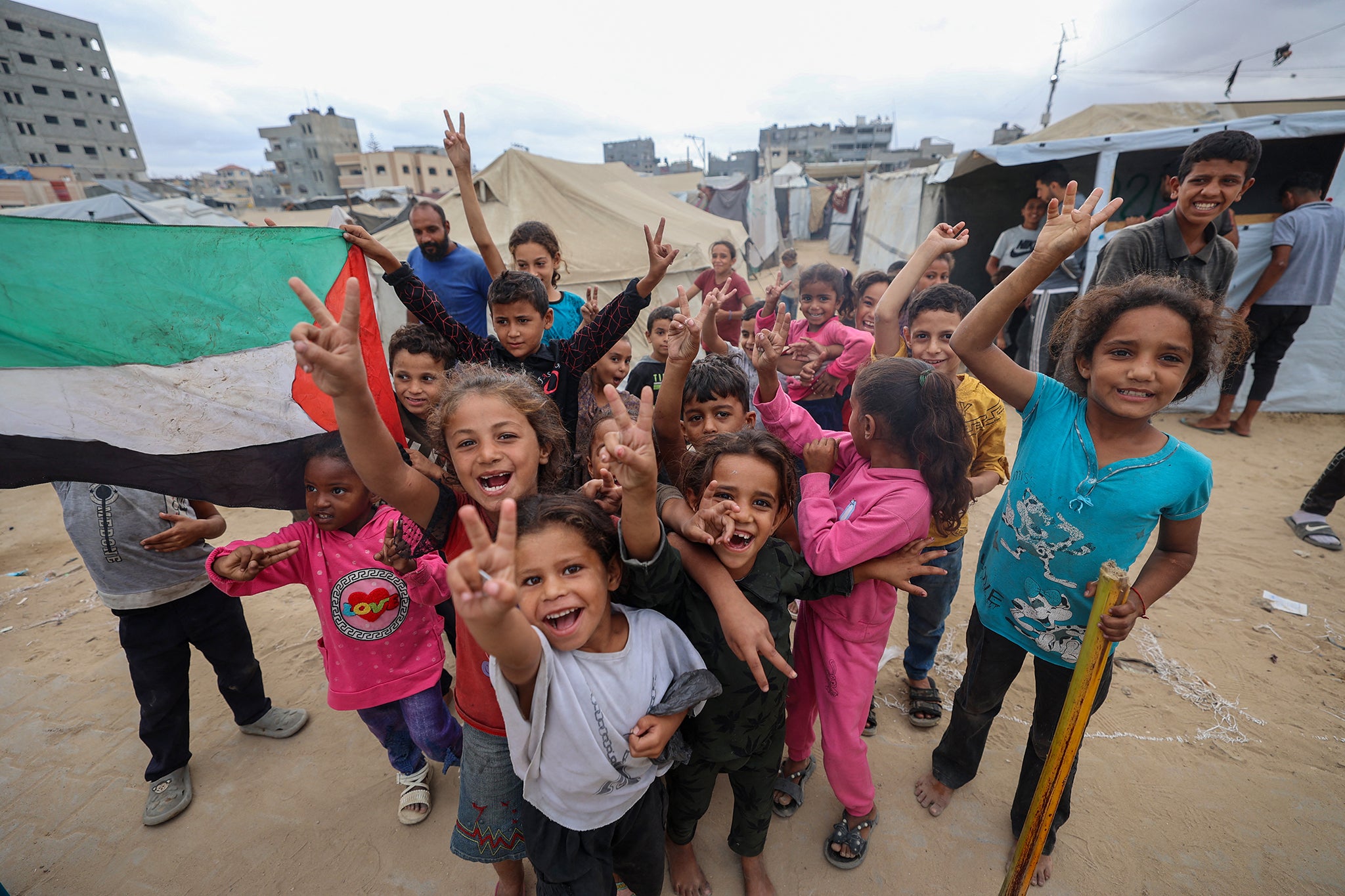
I stepped outside to see my neighbours. Faces carried hesitant smiles. Children ran through alleys, shouting “Ceasefire!” as if the word itself could heal wounds. Messages from friends and students poured in, celebrating that we had made it through. Despite the rubble, the grief and the exhaustion, a quiet relief hung in the air. We needed this pause, however fragile.
Yet even this pause carries the same familiar sounds. The drones have not left the sky; they hover constantly, their hum sinking into every thought and dream. The explosions may be fewer, but booms still ripple through the day. Here in Gaza, silence never truly arrives. Even in moments that promise calm, the air hums with reminders that war lingers above us.
This morning, as I walked through the streets, I heard someone say, “Let’s hope this one lasts.” And I realised that here, hope is not naïve. It’s a reserved act of survival.
If this ceasefire truly holds, it cannot undo what we have lost. But it offers something invaluable – a chance to breathe again, to gather strength and to imagine life beyond the ruins.
Now is the time for the world to reclaim its humanity – to help Gaza not merely survive, but to rebuild: to restore its universities, schools, hospitals and homes; to heal the deep wounds of war; to secure the future our children deserve; and to ensure that reparations begin without delay.
Join our commenting forum
Join thought-provoking conversations, follow other Independent readers and see their replies
Comments
Bookmark popover
Removed from bookmarks