The three-wheeled car plan that may be Reform’s most idiotic idea yet
‘30p Lee’ Anderson wants to bring back the old Invacar ‘invalid carriages’ for disabled drivers. That’s not only daft but disrespectful, writes Sean O’Grady


Lee Anderson is a Reform UK MP and loudmouth who has made a reputation for himself by saying daft and offensive things. Only yesterday, he was trumpeting the fact that he’d spent a previous job at the Citizens Advice Bureau “gaming the benefits system” – just the sort of upright character you’d hope to represent the country.
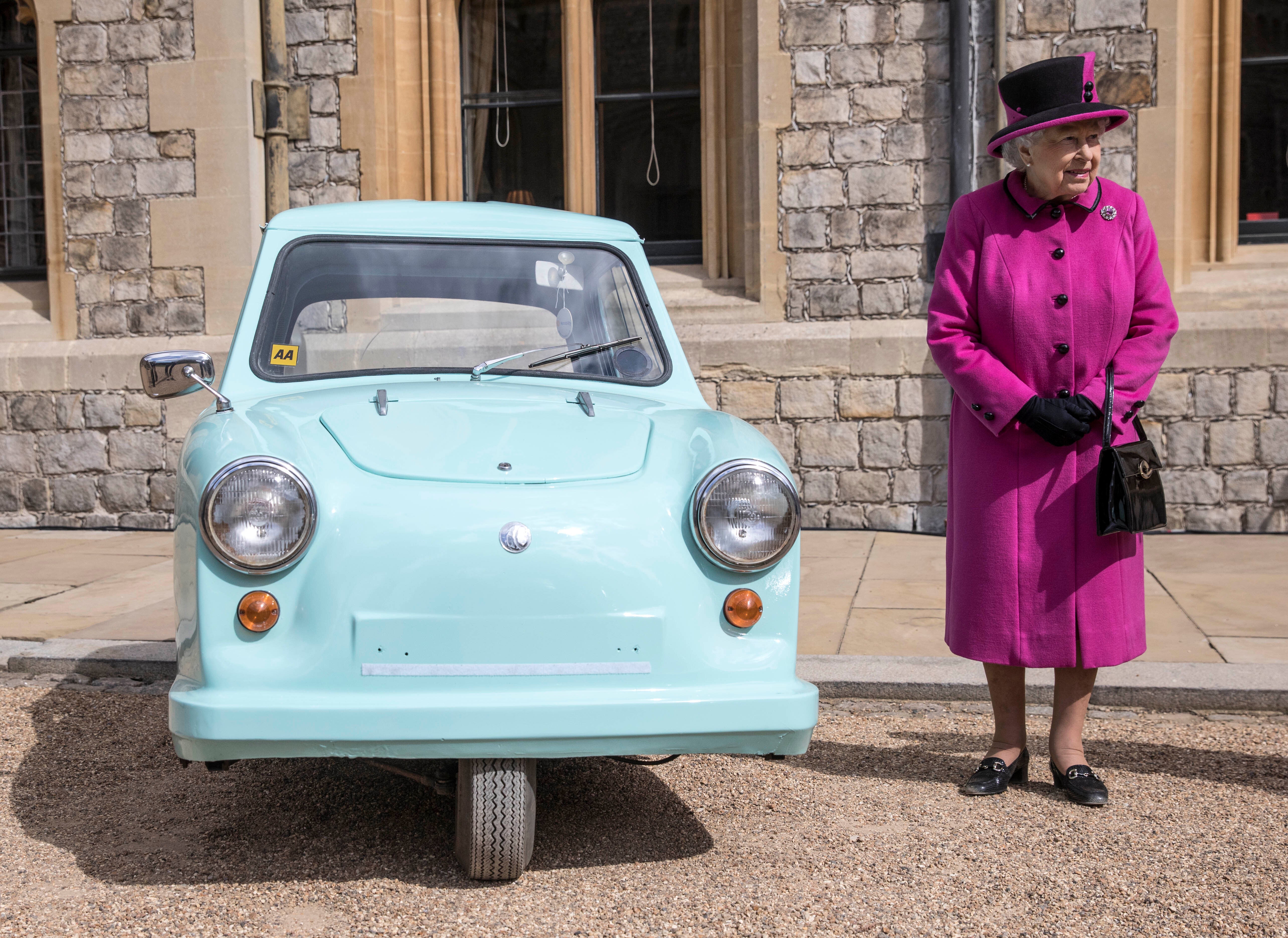
But his latest – proposing that people with disabilities be leased special little “invalid carriages” as they once were in distant, less enlightened times – is a doozy. Did he really say that? Yes. Here’s the quote about the much-maligned Motability Scheme: “It’s an absolute scandal. I remember, back in the day, if you were on disability and you wanted a car from the state, it was a blue three-wheeler. Anybody remember those? What’s wrong with that? Let’s go back to that.”
For the record, Lee, here is why “bringing back” the NHS invalid carriage is a stupid idea. First, the original “Invacar”, short for “invalid carriage”, was primarily designed for ex-servicemen and women who’d been injured in the Second World War. They had one seat, were tiny, and were not suitable for the wider range of disabilities that we see today.
They were unsafe in a crash, and couldn’t be used for a long journey. They were limiting and stigmatising. They had three wheels, for tax reasons, and weren’t that stable in their handling. They were very small and couldn’t even be put on the road today as cars because they’d need to be larger, more substantial and more sophisticated to contain all the crumple zones, side bars and driver aids to prevent accidents (and risk of further disability).
And, presumably, as we also demand these days, four seats, a boot and motorised wheelchair access. They would thus be expensive to make in such small volumes for the UK market alone; no manufacturer would spend the money on tooling up for them, and they wouldn’t be suitable for everyone with a disability in any case.
The only vehicle that comes close to the old Invacar today is the Citroen Ami. This is a two-seater plastic tub with an electric motor, a top speed of 30mph and a range of about 40 miles on a single charge. It doesn’t cost much to run or buy, but it is so limited in its abilities that it’s not allowed to be marketed as a “car” but as a “quadricycle”, and it is, of course, impossible to adapt for people with every disability, including wheelchair users.
I can’t see it making sense for the government to buy lots of those and lease them to people for whom they are useless. Far better to have a properly assessed allowance that can be used flexibly for bus fares, taxis, to help run your own car or put towards renting one from the Motability lease scheme (which can use its financial muscle to get deals).
It should be no great surprise that Lee Anderson should come up with such a bad plan. His nickname, “30p Lee”, derives from his assertion that a healthy meal could be prepared for a tiny cost. He meant that the cost of living crisis was a myth. Which it wasn’t, and isn’t.
He was also suspended from the Conservatives by Rishi Sunak for claiming that Sadiq Khan, mayor of London, was controlled by “Islamists”, a phrase which is commonly taken to mean terrorists, an even more absurd idea. Anderson refused to apologise, and out he went, ending up in Nigel Farage’s gang. Now this paragon of compassion, the Mother Theresa of Ashfield, seems to have been made Reform UK’s spokesperson on social security (presumably Sarah Pochin got community relations).
Anyway, he’s unhappy that people with extreme disabilities can use their relatively modest mobility allowance to put towards the cost of leasing a smart modern vehicle – cars, yes, but also scooters, power chairs and wheelchair accessible vehicles (WAVs). Customers are not, contrary to the myths, ever “given” their vehicle; they only rent it, and the leasing deal may well mean some heavy additional payments of their own. You cannot, in any case, get a BMW or Mercedes limousine, a Bentley Continental or a Maserati GranTurismo on the Motability scheme. You can get one of the smaller BMW or Mercedes cars, but they’re not the expensive ones. They just have a “premium” badge. Peugeots, Toyotas and Vauxhalls are also popular.
Like Lee, I remember the Invacar, a common enough sight in the 1970s, well. It always seemed to me a strange three-wheeled contraption (and not to be confused with the much more capable Reliant models). It stopped production in 1976 when the then Labour government decided it was completely out of date, and a flexible allowance was a better idea. The Invacar is effectively banned now, but if you catch one at a classic car show or in a transport museum, you’ll always see it painted in the standard turquoise blue, ironically reminiscent of the official Reform UK colours.
I doubt Lee would be seen dead in one, though: up there at the helm of his BMW X5 SUV, subsidised by the taxpayer-funded parliamentary mileage allowance of 45p per mile, motoring is just fine for him. He’s looking down on the people with disabilities in every sense..
Join our commenting forum
Join thought-provoking conversations, follow other Independent readers and see their replies
Comments
Bookmark popover
Removed from bookmarks