Is the national security adviser becoming a threat to Keir Starmer?
As Tony Blair’s chief of staff, Jonathan Powell was the ultimate backroom operator. Now he is back at the heart of Labour’s foreign policy and is a prime target for the opposition and right-wing press, says John Rentoul
When Keir Starmer cancelled Rishi Sunak’s choice of national security adviser and appointed Jonathan Powell instead, it seemed to be a triumph for “serious” government.
Tony Blair’s premiership was a long time ago, but it looks increasingly like a model of good administration, and Powell was at the heart of it. He invented the modern role of the political chief of staff to the prime minister, and made it work so well that every PM since has copied it.
Powell is supremely well qualified, in particular, to advise on foreign policy. His role in the Northern Ireland negotiations and his post-government work on conflict resolution means that he has a deeper understanding of how the world works than almost anybody else.
He also has a confidence that makes him valuable to any prime minister. When he spoke to students at King’s College London at the launch of his book Talking to Terrorists: How to End Armed Conflicts in 2014, he said: “There is no conflict in the world that cannot be solved.”
His other priceless quality, from Blair and Starmer’s point of view, is his discretion. He told students that the tell-tale book by Christopher Meyer, the British ambassador to Washington during the Iraq war, was “unforgiveable”. Powell explained: “There is a deal where civil servants like that get to do quite interesting things and get to hang out with important people when they are doing important things without actually adding much value, but in return they keep their mouth shut.”
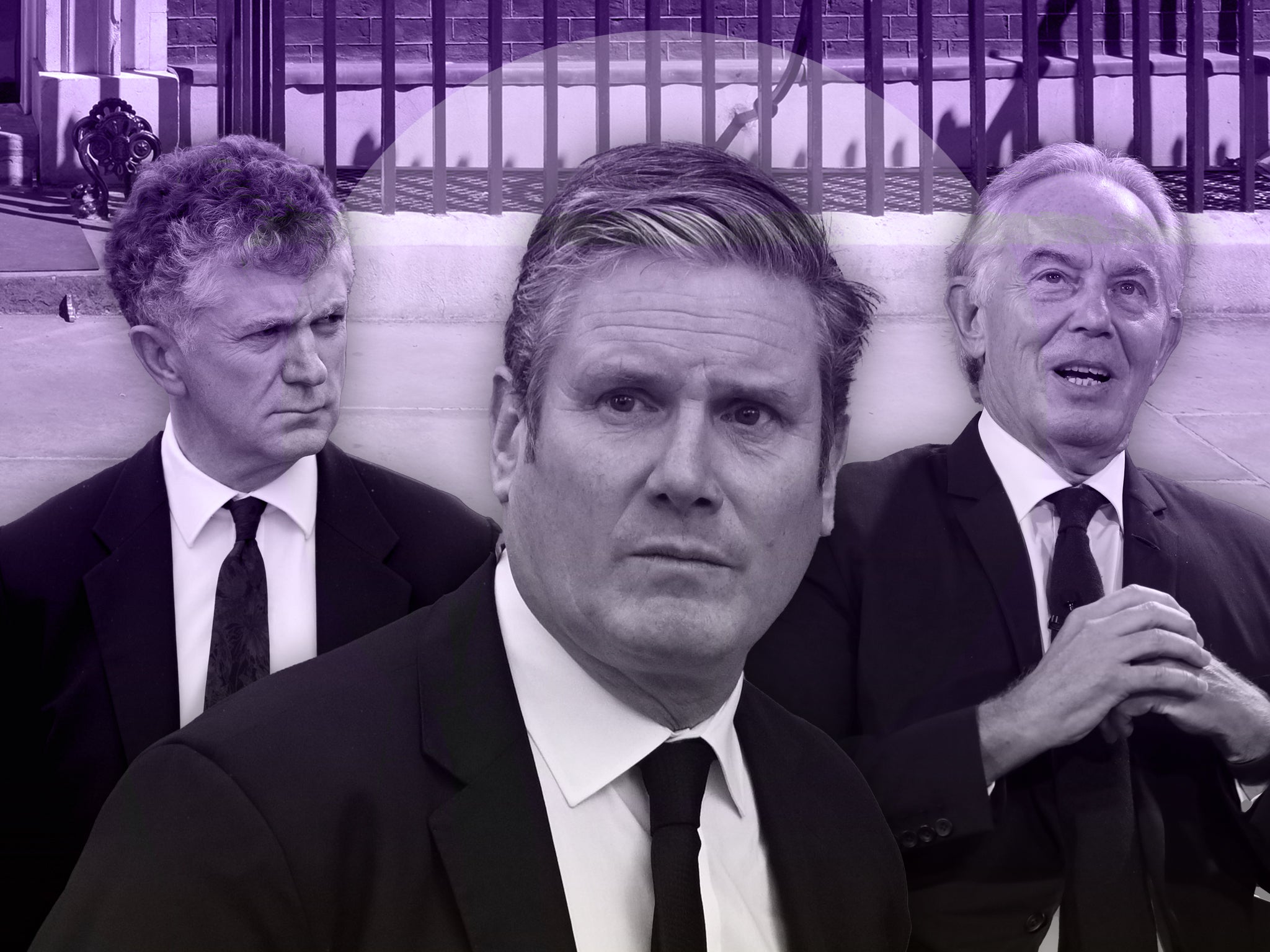
So we can see why he was the most important Blairite to be brought into the Starmer administration – more important even than Peter Mandelson. Powell quickly established himself as Starmer’s main foreign policy adviser. So much so that one well-placed insider told me that David Lammy had little to do as foreign secretary before last month’s reshuffle, because Powell and Mandelson did it all.
But there were problems from the start. Powell’s first job for the Starmer government, before he was appointed to his current job in December, was to negotiate the deal to pay Mauritius to take possession of the Chagos Islands.
According to The Sunday Times, Powell was not interested in discussing how to make the case in public for the deal, saying to colleagues that the answer to questions about why Britain should pay to give the archipelago away was: “We have to.”
In the end, Nigel Farage’s belief that Donald Trump would scupper the deal proved unfounded. As long as the US could continue to use the airbase at Diego Garcia, it seems that the Trump administration was happy to accept British arguments about the need for legal certainty.
But it is still a deal that is hard to defend in the court of British public opinion. And now the other opposition party, the Conservatives, are seeking to blame Powell for another failing – namely the collapse of the China spy case. Kemi Badenoch was so sure of her ground – or possibly so desperate for relevance – that she led the attack in the Commons on Monday herself.
She did not succeed in making the case that Powell or the prime minister had done anything wrong, as opposed to suggesting that they may have taken a different view from the Conservative Party of the importance of promoting “closer economic ties” with China.
But there is a danger to the Starmer-Powell alliance that it lacks political nous. The difference with the Blair-Powell partnership is that Blair had an acute political sense. One of the rudest things that the intensely loyal Powell said about the former prime minister was that he was a “flibbertigibbet”. I suspect what he meant was that Blair would sometimes agree with him about the technocratic answer to a problem and then change his mind as he thought through the political implications.
Starmer does not appear to have that same political sixth sense, which means that he and Powell may reinforce each other’s conviction that the “worldly” policy is the right one, and they may dismiss political criticism as mischief made by the opposition or the press.
Starmer tried on Tuesday to patronise Badenoch in the Commons by saying: “This is not the time for a fight about the role of any individual player.” But that is often how political disputes are conducted. Powell may be doing invaluable work behind the scenes on Ukraine (not bearing fruit so far) and Gaza (as acknowledged by Steve Witkoff, President Trump’s special envoy), but unless Starmer can sell his adviser’s solutions better, Powell will continue to be a target.
Join our commenting forum
Join thought-provoking conversations, follow other Independent readers and see their replies
Comments
Bookmark popover
Removed from bookmarks