Labour’s Erasmus breakthrough shows the way back from Brexit
The logic of closer relations with our nearest neighbours is irresistible and even Kemi Badenoch can see that, writes John Rentoul


One of the hidden costs of Brexit was that Britain put itself at a disadvantage with EU negotiators by starting from a position of: “We don’t like you.”
One of the hidden gains of a Labour government, therefore, is that EU negotiators know that they are talking to people who think differently from the last lot. This makes it easier to secure deals that benefit both sides.
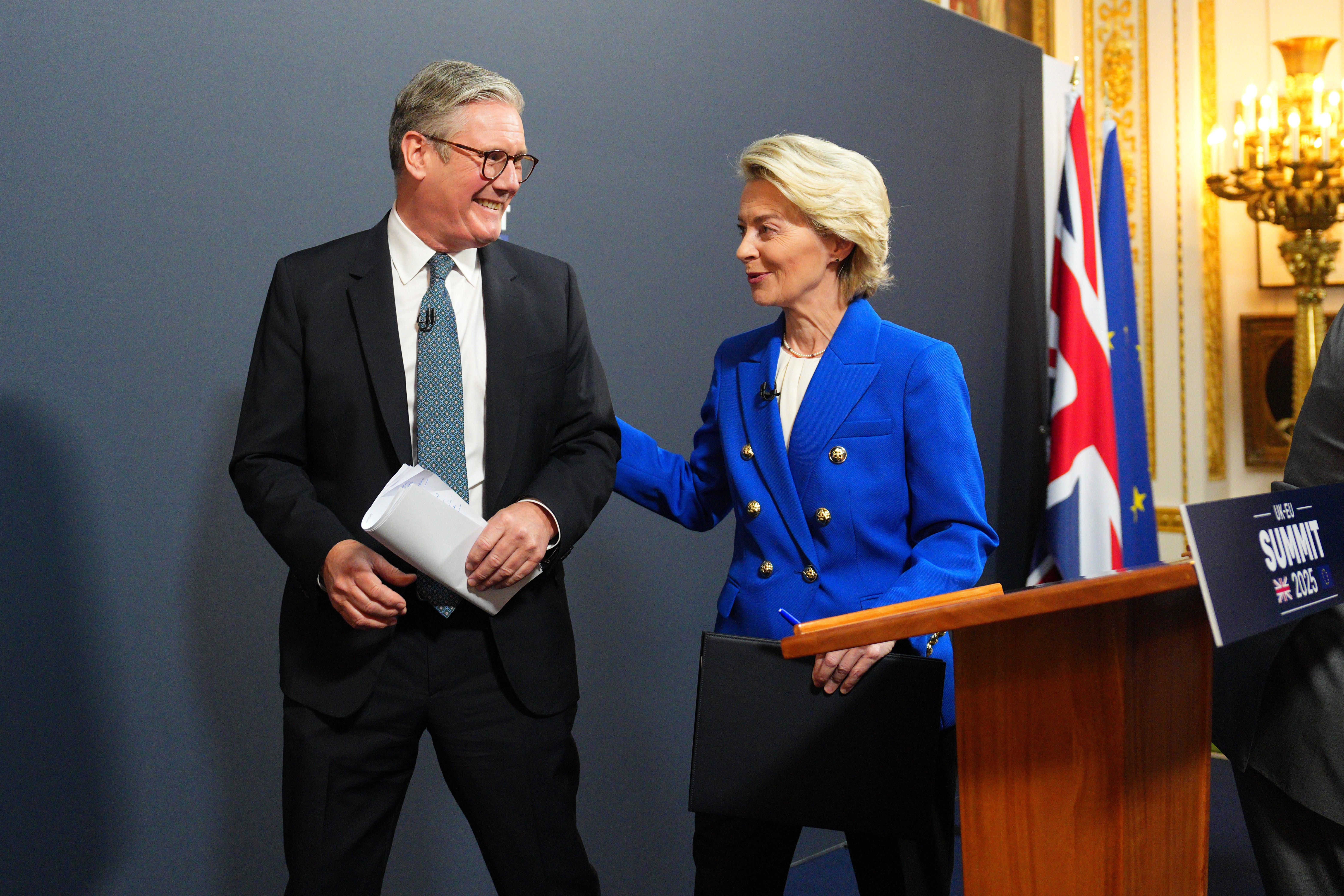
Britain’s return to the Erasmus youth exchange programme is evidence that the change is working. The two sides agreed terms surprisingly quickly. I am told that the British team didn’t expect to reach a deal this year, but that good relations between Nick Thomas-Symonds, the Europe minister who has just been promoted to the status of attending cabinet, and Maros Sefcovic, the EU’s chief negotiator, made the early breakthrough possible.
The Conservatives pretend that they think the Erasmus scheme is poor value for money. That is what Boris Johnson said when he failed to keep Britain in it as he negotiated his withdrawal agreement.
But it was not what his spinners said during those negotiations. Five years ago, as the talks grew more serious in the weeks before Christmas, The Times reported that the UK is “expected to remain part of the Erasmus exchange programme”. It said that one of the costs of a “no-deal” Brexit, which was then still a possibility, was that UK access to Erasmus would be “scrapped”.
It was scrapped anyway, because the EU refused to be flexible. Johnson had to play the part of the fox in Aesop’s fable of the grapes and declare that he didn’t want to be part of Erasmus in any case – instead of sour grapes, he said they were expensive ones.
Now the benefits of such a scheme will be available again to young people on either side of the Channel. Labour is obviously worried that it will be portrayed as a career-furthering opportunity for middle-class students, and has gone out of its way to stress that it will include apprenticeships, further education students and sports clubs, “particularly among disadvantaged groups”.
But the Conservatives have refused the bait. Kemi Badenoch chose to devote not even one of her six questions at Prime Minister’s Questions today to accusing Keir Starmer of trying to reverse Brexit. She must have worked out that most voters would think a young people’s exchange scheme is a good idea.
Erasmus is only the first in a queue of self-contained deals that are working their way through an increasingly well-oiled negotiation machinery. Next up is an agreement for the UK to rejoin the EU electricity market. Thomas-Symonds’ news release claims that this “could lower electricity costs”, which sounds like a rather cautious claim, but anything that brings down the UK’s exceptionally high electricity prices must be welcome.
Also in the queue is a deal on food and drink trade, the sanitary and phytosanitary agreement that would reduce the border checks between the UK and the EU, a tangled mass of red tape that the Tory government tried to unravel but never came close to succeeding.
Boris Johnson used to talk colourfully about the “gravitational pull” of the EU, as if it were a virtuous achievement to resist it, but the reason Labour is moving in the direction of working more closely with the EU is that it is in the national interest.
We are still a long way from “reversing Brexit”. Starmer was surprisingly emphatic about that in the Commons last week, when he rejected the demand from Ed Davey, the leader of the pro-EU Liberal Democrats, to negotiate a customs union with the EU. “I do want a closer relationship than the one we have at the moment,” Starmer said. “But I gently point this out: having now done significant trade deals with other countries, including the US and India, which are hugely important to the JLR workforce and on pharma, it is not now sensible to unravel what is effectively the best deal with the US that any country has got.”
But the logic of a closer trading relationship with the EU is hard to resist. It is in Britain’s economic interest. Today’s Erasmus deal opens the door to a series of deals over the rest of this parliament – and possibly beyond – that will make us better off.
Join our commenting forum
Join thought-provoking conversations, follow other Independent readers and see their replies
Comments
Bookmark popover
Removed from bookmarks