If a pint puts drivers over the limit, it’s time to order smaller drinks
Stringent new alcohol limits for motorists could accelerate the end of the pint – good, says Rosamund Hall, who prefers a shorter but still thirst-quenching schooner…


The UK could soon have one of the most stringent drink-driving limits in Europe. Under the government’s new road safety measures, a full pint would put many motorists over the legal alcohol limit.
Recently qualified drivers could no longer risk downing a beer if they then intended to get behind the wheel. The era of the “just one” could be about to disappear.
And perhaps that’s no bad thing. If we’re serious about road safety, maybe we should go further still and follow Australia’s lead: a zero-alcohol rule for new drivers for their first three years behind the wheel.
But if that’s where we’re heading, then surely it’s time to rethink our devotion to the pint, our hulking “national drink” that’s more than half a litre of liquid. As a drinks writer, a foamy beer rarely leaves me wanting more – only needing the loo.
So I have a modest proposal. Might it be time for pubs to ditch the pint… and embrace a smaller measure instead? We could look to the continent for inspiration.
Brits on holiday in Europe are used to ordering a nice, cold beer – the light, crisp kind that practically whispers: “Drink me while eating some plain, salty crisps from a little bowl, and all will be well.” It’s thirst-quenching perfection.
What I love about such moments is that it’s never a massive pint that arrives. It’s usually around 330ml of liquid refreshment – closer to what we’d know as a half (284ml).
Yet here in Britain, we are obsessed with pints. It feels like sacrilege to admit that I don’t enjoy them – all that gassy liquid sloshing around your innards – but I don’t understand why we’re so precious about protecting the pint as a “pour size”. Though it’s been a common unit of measurement since the 14th century, its ever-changing volume was only formalised with the Imperial Weights and Measures Act of 1824.
Perhaps it’s time we embraced its cooler, more sensible sibling: the two-thirds pint (379ml). Official and legal only since 2011, it is surely a measure whose time has come.
Research by Cambridge academics suggests that switching from pints to two-thirds could benefit consumers’ health for a simple reason: people drink less.
In 2024, a study led by Professor Dame Theresa Marteau found that when the traditional full pint (568ml) was replaced by a two-thirds pint – 10 imperial fluid ounces – which in hard-drinking Australia is called a schooner, beer consumption fell by 10 per cent over four weeks. Crucially, for the embattled pub trade, the number of trips to the bar didn’t change.
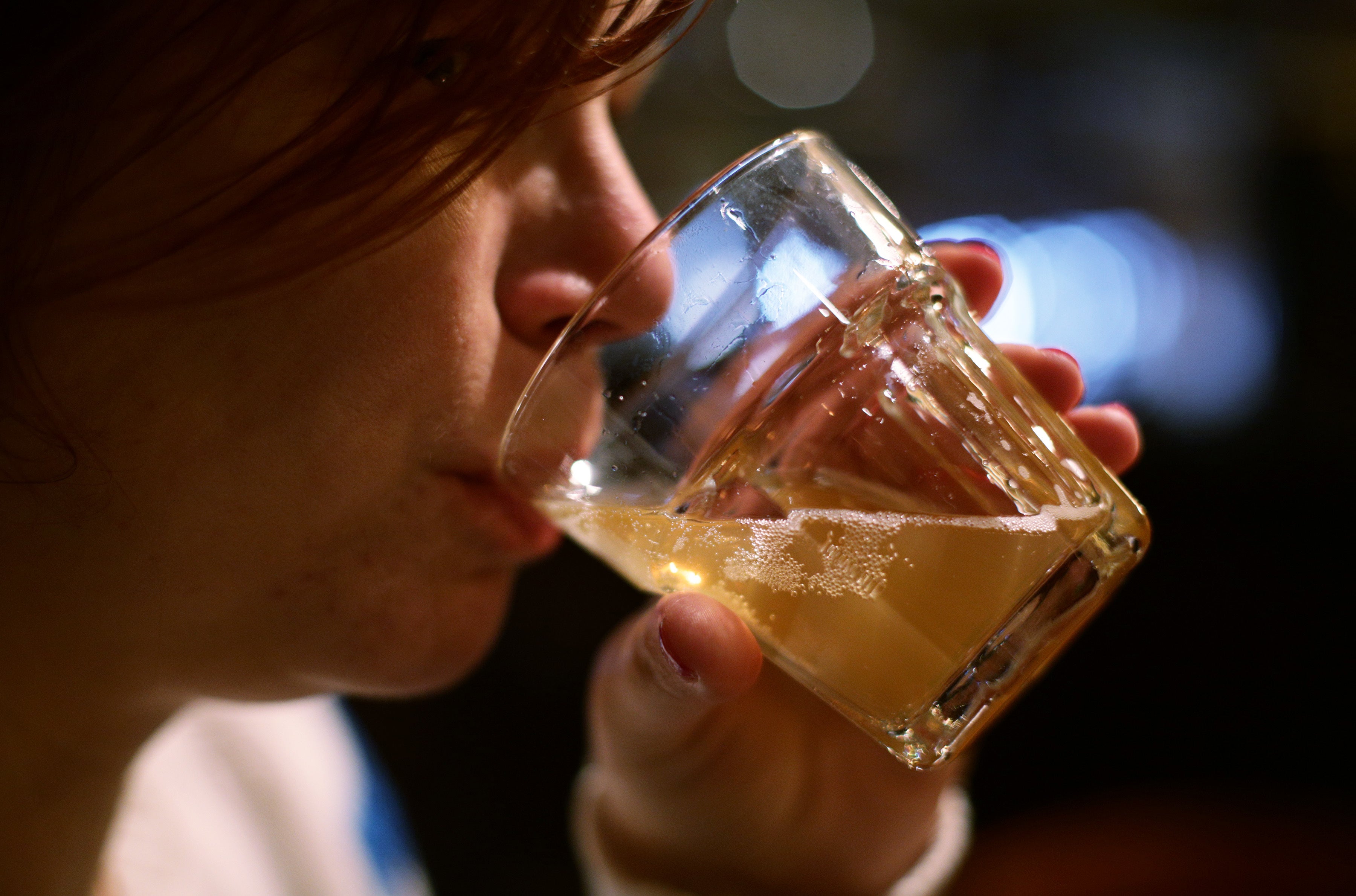
As Marteau explained: “We tend to consume in units of one – ‘one glass of wine’, ‘one glass of beer’, ‘one slice of cake’. Make those units slightly smaller and people end up consuming less.” It really is that simple.
We are a nation that instinctively believes more is better. But if we want longer, healthier and happier lives, we might start by adjusting what we sink on a Friday night. You can hardly accuse the Spanish or Italians of having less fun simply because their pour sizes are smaller.
Indeed, it’s faintly embarrassing that Britain has one of the largest standard beer measures in the world. In the US, a standard beer is 473ml. In France, order “une bière” and you’ll receive 330ml, unless you specify “un demi” or “une chope” (250ml), or a wine-glass-sized 150ml galopin. Ask for “une pinte” and the bar staff will instantly know you’re from across La Manche.
Even in Germany – land of Oktoberfest – the average beer is 500 ml, still less than a pint. You order either a large glass (“ein großes Bier”, 500ml) or a small one (“ein kleines Bier”, 300ml). For a full Bavarian litre, don’t ask for a stein – order “eine Maß”.
In Spain, the logic is colder beer, more often. Drinkers order multiple small beers rather than one large one, with “una caña” (200ml) the default. There’s also the doble, or the 330ml tubo.
The two-thirds pint does, admittedly, have a branding problem. “I’ll have a two-thirds” lacks romance. Which is why adopting the schooner makes sense. At 425ml, it’s slightly larger than our two-thirds, but the name has charm – and charm matters.
If pubs offered something akin to two-thirds of a pint more widely – and if we had a satisfying way to order them – they could quickly become the most popular measure of all.
Perhaps the new alcohol limits for drivers will accelerate the end of the pint. I for one am ready to raise a glass to the age of the schooner.
Rosamund Hall (DipWSET) is a drinks writer specialising in wine and spirits
Join our commenting forum
Join thought-provoking conversations, follow other Independent readers and see their replies
Comments
Bookmark popover
Removed from bookmarks