Robert Jenrick’s great betrayal: ‘Treachery with a scowl on its face’
There is a high psychological price to pay for treachery, says John Rentoul – loyalty is what makes party politics work, which is why defectors are treated with such disdain


Perhaps he really was lost in a stairwell in an unfamiliar building, as was the official explanation for Robert Jenrick being late to his own defection. Or perhaps he was on his phone checking the well-timed attempt by Kemi Badenoch’s office to sabotage his launch by leaking part of his speech.
But it was symbolic that when Nigel Farage introduced him to applause from Reform loyalists, he failed to appear, and Farage had to keep talking for two minutes before his sixth MP finally made his entrance.
Deserting one party and joining another is a big moment, and it would be no surprise if Jenrick hesitated before taking the plunge. His former colleagues were already calling his behaviour treachery, having attended a shadow cabinet meeting with him on Tuesday. The chair of the local Conservatives in Newark said they felt “absolutely betrayed” by him.
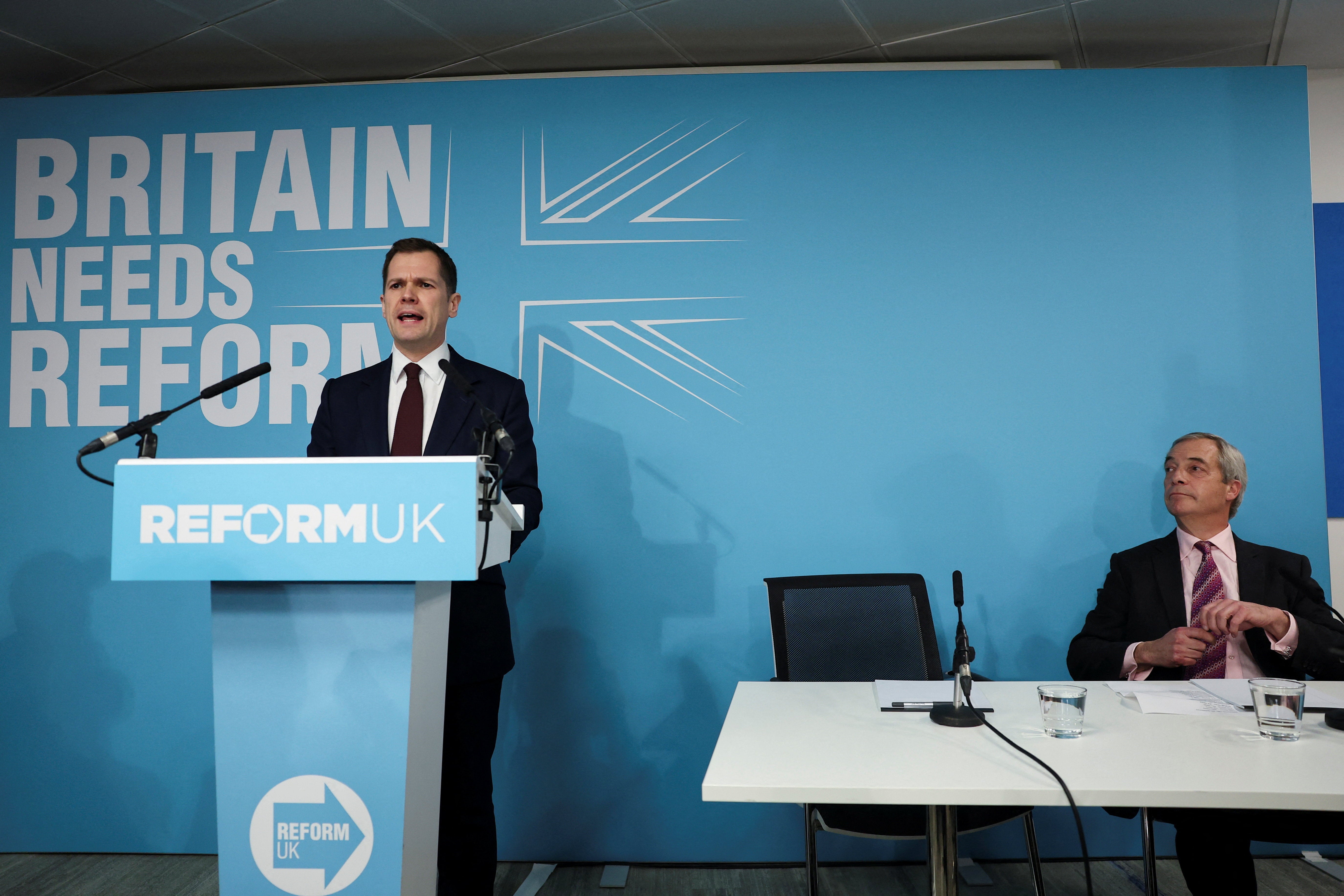
Some Conservatives even compared Jenrick to the cabinet’s supposed disloyalty to Margaret Thatcher, which she called “treachery with a smile on its face”. Given Jenrick’s usually serious appearance, his was described as “treachery with a scowl”.
Jenrick also knows that some of his new colleagues are suspicious of him. He knows that Reform is divided over the wisdom of accepting Conservatives who served in the last government – even if he resigned as a minister in protest at Rishi Sunak’s policies on immigration.
There is a high psychological price to pay for treachery. This is supposed to be one of the reasons the faithfuls have an advantage in The Traitors, the reality TV game: it is more stressful having to lie.
Camilla Tominey, the Telegraph and GB News journalist, revealed that she had texted Jenrick last week to ask, “Are you defecting or not?” He said, “No.” When she followed up, “Not yet or never?”, he replied, “Never.”
Past defectors have spoken about the loneliness of losing a network of friends and the difficulty of gaining acceptance in their new party. Shaun Woodward, the most celebrated defector of the Tony Blair years, “made my flesh creep”, recorded Chris Mullin, one of his new colleagues, in his diaries. “This is one of New Labour’s vilest stitch-ups.”
And Michael Gove warned Robert Jenrick this morning that his own betrayal of Boris Johnson in 2016, when Gove withdrew his support and said he’d run against him for party leader, “in the eyes of most people at that time and a continuing number to this day, it didn’t matter what my reasons were, the overall impression, I’m afraid, was of treachery”. The impression that will have been generated, he said, is that Jenrick was caught “mid-plot”.
It was no coincidence that both the Labour and Liberal Democrat press offices used Traitors themes on social media to mock Jenrick – Badenoch holding up a slate with his name on it, and Jenrick captioned “Wannabe PM” and “Traitor” in the chair, addressing the audience.
Treachery makes good TV. No doubt there will be a TV drama of Jenrick’s defection. Several of the scenes are ready-made. Jenrick at a shadow cabinet away day last week, scribbling detailed notes as shadow ministers discussed strategy, including how to take on Farage. The away day was held in an office with a view of the Tower of London, so “you could look out of the window and see where traitors used to end up”, one of those present told The Times.
There will be a great opportunity for a young actor to play the part of the mole in Jenrick’s office who leaked a draft of the defection speech to Badenoch. Her office tried to cover the mole’s tracks by suggesting that a copy of the speech had been left “lying around”. The leak was the trigger that prompted the Tory leader to launch her pre-emptive strike against Jenrick.
She was already suspicious of her leadership rival, who had never seemed to come to terms with his defeat. Her suspicions were heightened by recent conversations with Jenrick, who seemed to be collecting evidence for the charge he made when he announced his defection, that “the Conservative Party isn’t sorry; it doesn’t get it”.
He gave as an example a “recent” discussion at the shadow cabinet about whether Britain is broken. This was, in fact, during last week’s awayday. Badenoch and Jenrick clashed directly. He said Britain is broken. She said that while some things are broken, they are not beyond repair.
Jenrick said in his defection speech: “A few had a third line, which is that it is broken but we can’t say so because the Conservative Party broke it.”
In his speech, he attacked former shadow cabinet colleagues by name – Mel Stride for presiding over rising welfare spending as work and pensions secretary, and Priti Patel, who “created the very migration system that allowed 5 million people to come here” as home secretary.
It was advance notice of these personal attacks that gave Badenoch the chance to sack Jenrick before he quit. Jenrick said he would have gone “in the next few days”, although Farage, who said that previous defections had fallen through at the last moment, admitted that he thought there was only a 60-40 chance that Jenrick would come over.
Badenoch’s decisive action limited the damage of Jenrick’s defection and deprived him of his bargaining power with Farage – presumably, Jenrick wanted to be Reform’s shadow chancellor; now he will just have to wait to see what Farage will give him.
Loyalty is what makes party politics work, which is why defectors such as Winston Churchill (twice), Ramsay MacDonald and Shaun Woodward have been regarded with such disdain.
It might seem at first glance that Jenrick’s defection is evidence that politics is moving in Reform’s favour and against the Tories. But Badenoch impressed people with her sharp and decisive sacking, and once the smoke has cleared, the acrid stench of betrayal may cling to Farage’s party and drag it backwards.
Join our commenting forum
Join thought-provoking conversations, follow other Independent readers and see their replies
Comments
Bookmark popover
Removed from bookmarks