Why Trump is panicking about the Supreme Court and tariffs
Donald Trump’s public bluster masks real anxiety as the Supreme Court weighs the legality of his emergency tariffs – and a ruling against him would be costly, humiliating and politically explosive, writes Chris Blackhurst


The giveaway with Donald Trump is when he starts bleating. He likes to use his Truth Social platform to warn of something before it has actually happened, choosing, as ever, apocalyptic language and block capitals. It is a sign he is nervy and unsettled, that he is not getting his way.
So it is, with the imminent US Supreme Court decision on his tariff regime. “WE’RE SCREWED,” he wrote, saying it would be a “complete mess” if the judges went against his strategy. Businesses may be able to claim refunds, fuelling Trump’s further unease: “It would take many years to figure out what number we are talking about. And even, who, when and where, to pay.”
What is under consideration, at the behest of a clutch of small businesses and some US states, is the legality of Trump’s “emergency” tariffs – the ones imposed under the International Emergency Economic Powers Act, or IEEPA and proclaimed on “liberation day”.
They also cover the anti-fentanyl measures levied on Canada, Mexico and China. Excluded are those that were justified on grounds of “national security”, such as steel and aluminium, or those that were in response to deemed unfair foreign practices. Nor is the court opining on the charges that came in after “liberation day”, via subsequent trade deals.
It still represents around half of his new tariffs. If his administration was ordered to pay back, the hit would be a not inconsiderable $130bn. More importantly, the blow to the president’s majesty would be enormous.
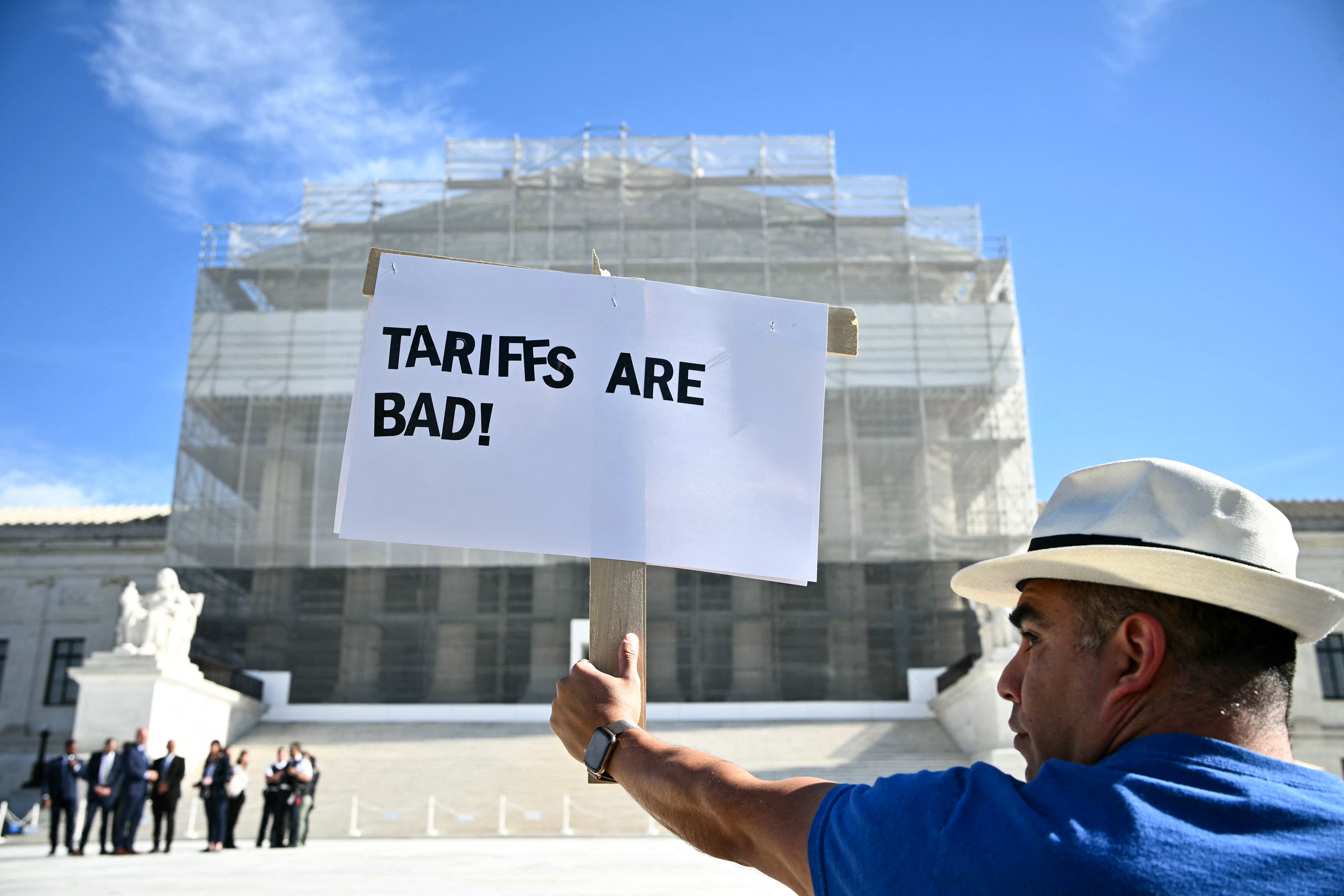
Currently, the markets are predicting only a 30 per cent likelihood of Trump winning. He has lost previously in two lower courts. At a hearing in November, a majority of the highest justices in the land were heavily questioning the government’s case. Conservative judges did not appear impressed. That’s why Trump is nervous; why, too, he has repeatedly attacked the lawsuit, stepping up his tirade as the verdict nears.
In reality, he always was on thin ground. No president had used the 1977 IEEPA in that way before. His trade secretary, Scott Bessent, struggled to present a scarcely credible justification, insisting “the national emergency is avoiding a national emergency”. That is really what is under scrutiny here: the weaponising of tariffs in a fight that exists in Trump’s imagination.
Those trying to get the tariffs overturned argue that the IEEPA does not even use the word “tariffs”. Under the US constitution, it is Congress that introduces taxes, not the president acting alone.
Prepare for more gnashing and stomping. The fact that investors will be delighted and shares will head upwards as a result will not deter him. Firms will likely ramp up their import orders, frontloading them, to take advantage of the lower rates. They will do so in the knowledge that this is an obdurate leader who is not minded to reversing because a group of lawyers do not approve.

Neither can they expect a payday anytime soon. Refunds would be “almost impossible for our Country to pay”, Trump asserted this week. “Anybody who says that it can be quickly and easily done would be making a false, inaccurate or totally misunderstood answer to this very large and complex question.”
He has made tariffs his weapon of choice, as we saw again recently over Greenland. Far from backing off, Trump will almost certainly double down, making the duties temporary and product-specific under a different piece of legislation, the Trade Act of 1974. That would allow him to raise tariffs of up to 15 per cent for 150 days.
We’ve seen climbdowns from him, but such is the importance Trump has attached to tariffs, the feeling among White House-watchers is that he will not budge. That was in evidence at Davos, where there was wide acceptance that, come what may, tariffs are here to stay. Trump is fixated by them; he understands them, no one gets killed or injured, although there is inevitable socio-economic fallout, but that does not concern him. They’re a stick that he can wave, that plays directly to Maga, and as he sees it, America’s exploitation and betrayal.

Having to reimburse would hurt financially. One of the less shouted aspects of his onslaught is the levies’ revenue-earning potential. He’s portrayed them as striking back at those who have been plundering America and taking its wealth and might for granted, but they are intended as well to boost the federal coffers.
What this means, therefore, is yet additional uncertainty and volatility. The court may rule out his policy; he will seek another route to ensure it remains, at least in a respectable form. Avoiding humiliating personal capitulation will be his top priority. It will take time for the dust to settle and a clearer picture to emerge, if it ever does with this president. That will impact on businesses across the globe, which are left in limbo, not knowing what may be coming down the track. That will put investment decisions, already made and affected in many cases by geopolitical and economic fragility, on hold.
One judge, Amy Coney Barrett, who was appointed to the Supreme Court by Trump, said that refunding the tariffs would be a “complete mess” – words that Trump himself chose to echo. That was in relation to repayments. It does not follow that the system itself is wrong.
He will be furious; businesses will be entitled to feel relieved. They should be under no illusion, as with horror movies, in all likelihood, there will be a sequel. The Supreme Court may not like them, but we have not heard the last of Trump and tariffs.
Join our commenting forum
Join thought-provoking conversations, follow other Independent readers and see their replies
Comments
Bookmark popover
Removed from bookmarks