25 moments that have shaped the 21st century
One quarter of the century has gone, and it’s having a bit of a quarter-life crisis: John Rentoul looks back and picks out the points on which world and UK history alike have pivoted

At the start of the century, when Tony Blair held hands with the Queen and sang “Auld Lang Syne” in the new Millennium Dome, most people had mobile phones and wrote texts by pressing number keys one, two or three times. The word “internet” was just beginning to take over from the “world wide web” and the “information superhighway”.
New Labour had captured the Geist of the Zeit, and carried all before it, and in the wider world it seemed as if liberal democracy faced no serious challenge to its whiggish advance. Centrists of the world had nothing to lose but their nagging sense that the new century might throw up new problems that they had not foreseen. So how did we get to where we are today?
Fast-forward 25 years, and the biggest change for most people in Britain and the world is probably the advances in technology, the internet and the smartphone. Lives are easier for most people, but politics is more fragmented. At the turn of the century, Blair had subdued the Tories, but it was assumed that when they came back, they would copy New Labour, and Cameron did: gay marriage, pro-EU. All that was blown up by the 2016 referendum, and now it is not obvious that either the Tories or Labour will survive as national parties at all.
Yet the biggest change in politics is the great class inversion: Labour is now the party of the graduate middle class, while the Tories and especially Reform are the parties of the non-graduate working class. All the assumptions of the two-party system 25 years ago are defunct. This is how I think we got here ...
2000 Britain’s first home broadband connection was installed in Basildon, Essex. It is hard to recall what life was like when almost all of it was offline. Although there has been a lot of angst about slow pace of economic growth for most of the quarter-century, and about the negative effects of new technology, for most people the quality of life has increased in ways that are not measured by GDP: online shopping (Tesco online grocery deliveries started to take off in 2000), knowledge, and the convenience of life admin.
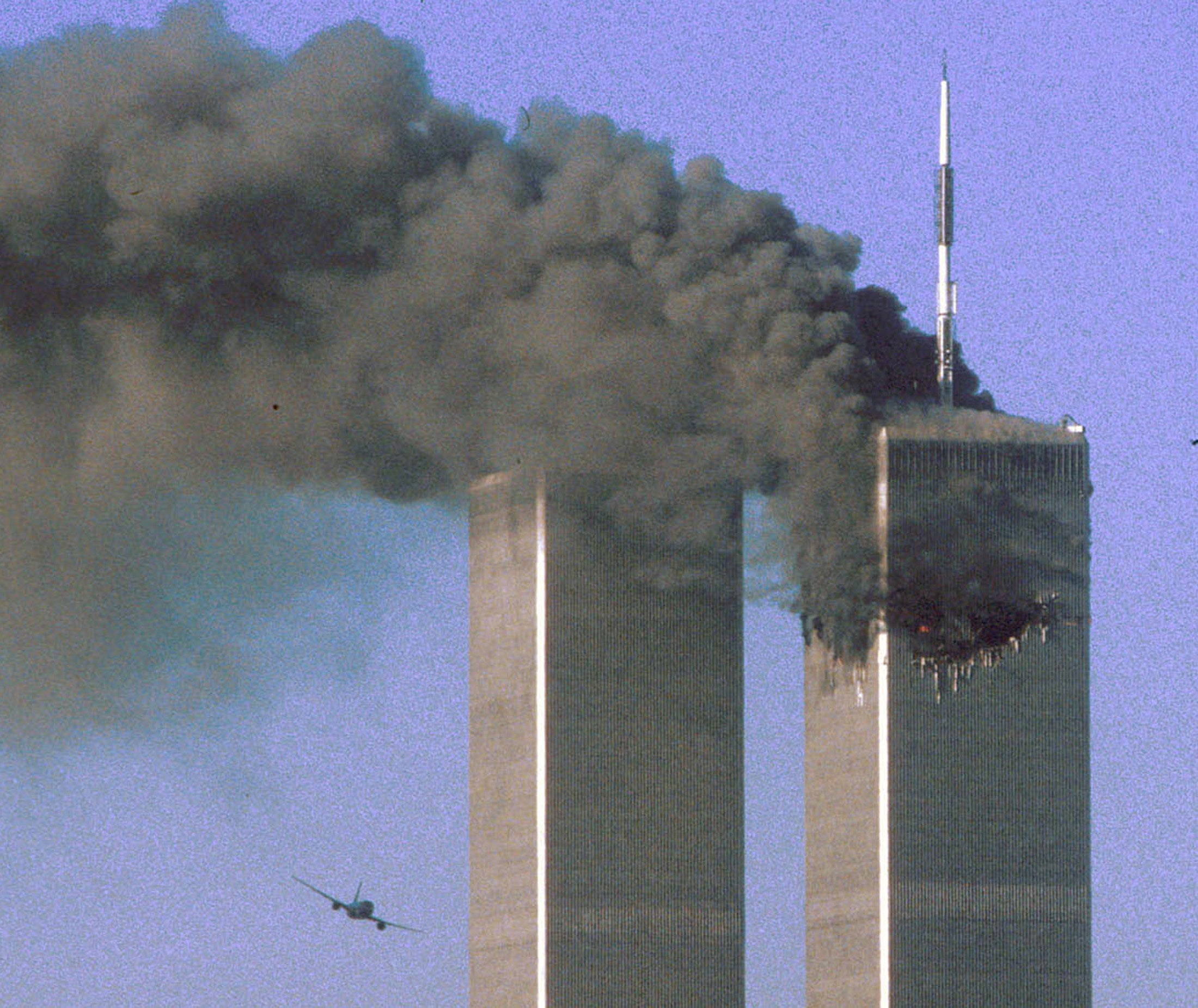
2001 Planes flew into the twin towers. It became starkly clear early in the new century that liberal democracy was not going to have it all its own way. The whole world united in supporting George W Bush, the new president of the US, although he did not seem to be equal to events, in pursuing the authors of 9/11 to their hiding places in Afghanistan. The whole world, that is, apart from Jeremy Corbyn, a backbench Labour MP, who set up an organisation called Stop the War. The world would not be united for long.
2002 Euro notes and coins were introduced in the eurozone countries. Blair’s energy and leadership helped compensate for Britain being in the EU’s second tier. Many respectable economists thought the new currency would collapse, but the history of the EU took a quite different turn.
2003 Blair supported Bush’s invasion of Iraq. The Labour Party (and the EU) were divided.
2004 The EU expanded from 12 members to 22. The Blair government decided against imposing temporary restrictions on free movement from new members, partly for good liberal reasons, and partly because, as Ed Balls said, “we didn’t think many people would move”. A million Poles came to Britain in the next few years, changing the Europe question in British politics from one about a currency to one about immigration.
2005 Blair was re-elected for a third term, but his party and his country were moving away from him.
2006 Charles Clarke was sacked as home secretary because he promised that every foreign prisoner would be considered for deportation on release – and they were not. The Blair government had gained control of an early wave of asylum applications, but the issue of immigration was threatening Labour in new ways.
2007 The iPhone was launched in November. As soon as I saw one, I knew it would change my life. It did, very much for the better. Partly this was because I was now on a thing called Twitter, which, until Elon Musk bought it in 2022, was a blast.
2008 On the negative side, the financial crisis. On the positive, Barack Obama won the election. It seemed that the politics of calm deliberation, thoughtful courtesy and pragmatic social justice was still alive. And he even served two terms. Yet his mere existence, let alone his historic significance in the American politics of race, had an appalling effect on the Republican side, which coarsened and degraded itself.
2009 The MPs’ expenses scandal. An informal system that, in effect, compensated MPs for their relatively low level of pay looked terrible when exposed to the light of day, and added fuel to the anti-politics fire.
2010 The most important thing that happened in the election, which I still think Labour could have won if Alan Johnson had replaced Gordon Brown, was that Gillian Duffy, a former Labour voter in Rochdale, confronted the prime minister about immigration from eastern Europe and he called her “some bigoted woman”. The Labour Party responded to its loss by electing Ed Miliband as its leader.
2011 The forgotten referendum on changing the voting system. I wouldn’t bother with that again. And, as Nick Clegg himself said, it would have made no difference at all if the vote had been on a truly proportional system.
2012 The London Olympics. A happy time. Not so good: Xi Jinping, authoritarian nationalist, became general secretary of the Chinese Communist Party.
2013 David Cameron delivered his speech at Bloomberg in the City, promising a referendum on Britain’s membership of the EU in the first half of the next parliament.
2014 Cameron won the Scottish independence referendum at the cost of blowing up Scottish politics for a generation. Again, he was right in principle, but he should not have conceded the right to decide the question, the date and the franchise to Alex Salmond.
2015 The Labour Party sealed its overreaction to the success of the Blair years by electing Corbyn on the inane grounds that “at least he believes in something, even if it is ‘Imagine’ by John Lennon”.
2016 The EU referendum in Britain and the election of Donald Trump in the US completed the grand slam of the retreat from the sort of politics that had dominated the turn of the century.
2017 Theresa May tried to secure the substantial majority she thought she needed to get Brexit through the Commons and was blindsided by the electorate, which was under the temporary illusion that Corbyn was a decent bloke who believed in traditional Labour things. She should have given up when she lost her majority altogether, having to rely on the DUP, but instead condemned parliament to two years of pointless deadlock over Brexit.
2018 The Salisbury novichok poisoning was the end of Corbyn, whose initial reaction was to take Vladimir Putin’s side in questioning the government’s account and with his reluctance to explicitly hold Russia responsible for the attack.
2019 Boris Johnson, the winner of the EU referendum, finally claimed his prize three-and-a-half years later, becoming leader of the Conservative Party and winning the general election in a landslide.
2020 Johnson had two achievements to his name. First, he took Britain out of the EU, which is what the people voted for; and he delivered a vaccine programme, which started with Margaret Keenan, a 90-year-old grandmother, in December – faster than anyone had believed possible.
2021 A video of Allegra Stratton failing to answer a mock question and joking about a lockdown party in Downing Street, in her audition to be Johnson’s spokesperson, was leaked a year later. That was the end of Johnson’s premiership, although it took several more months of poor decisions before he was finally relieved of his duties.
2022 The Conservative Party had its Corbyn moment in electing Liz Truss – the first time party members of any party had directly chosen a prime minister, and one that MPs would probably not have chosen. The restoration of common sense, in the form of Rishi Sunak, a leader of Obama’s virtues, came too late to save the Tory party.
2023 The Rwanda scheme was ruled unlawful by the Supreme Court in November. Sunak had promised to stop the boats, but failed to do so. Migrants started using dinghies to cross the Channel in numbers in 2020, which had nothing to do with Brexit: once the “ease” of the route was discovered, despite its dangers, the numbers grew.
2024 Keir Starmer fought a brilliant defensive campaign and won an election victory that looked like Blair’s on the numbers, but which was very different in its underlying meaning. Meanwhile, Kamala Harris fought a poor defensive campaign and lost.
2025 Shabana Mahmood was appointed home secretary in Starmer’s September reshuffle. In my view, the Labour government’s fate hangs on her ability to succeed where Sunak failed, in stopping the boats. Although such an appointment would have been unthinkable 25 years ago, Blair’s recent implied endorsement of her suggests that he thinks that her tough approach to immigration is an updating of New Labour’s politics for the second quarter of the 21st century.
Join our commenting forum
Join thought-provoking conversations, follow other Independent readers and see their replies
Comments
Bookmark popover
Removed from bookmarks