Who will mourn my beloved Zipcar?
The whizzy ride-sharing company allowed thousands like me to live without a £500-a-month gas-guzzler and save a fortune, so losing the service is a disaster for me, says Jonathan Margolis. But I’m well aware that it had some enemies ...


The probable closure of Zipcar, the UK’s leading car-sharing company, is a bloody shame – and a disaster for me, personally
For the tens of thousands of people, me included, who rely on Zipcar in London – it has already failed in Bristol, Oxford and Cambridge – it’s going to require a substantial rethink of how we live. We’ve managed very happily without a car for the past five years in London, using Zipcars and their sister vans as needed. Saves a fortune, no worries about all the usual car stuff, and environmentally beneficial. Seems a win, win, win.
But yesterday I received an email telling me that my beloved Zipcar will be shuttering its UK operations by 31 December.
With Ubers becoming ever more expensive and hard to get, and black London cabs a luxury for the rich, we may have to consider buying a car – which neither we Zipcar users, Londoners in general, nor the planet need in the slightest.
As Caroline Russell, leader of the Greens in the London Assembly, has said, the expected closure of Zipcar is “grim news”. She depends on it, she explains, to visit her elderly mum.
The inconvenience of Zipcar disappearing is less than if, say, the Tube ceased to exist, but comparable to, for instance, washing machines being outlawed or the most useful local bus routes permanently withdrawn.

Zipcar offers hourly or daily self-drive car and van rental, available instantly, fuel and insurance included, via a superb app and GPS system. Until recently, cars had to be returned to the on-street bay where they were picked up – but now, you can rent a car in one part of London and leave the car in another. Zipcars were also congestion-charge exempt.
I began using Zipcar eight years ago, while my beloved classic 1974 Saab was undergoing repairs, which was most of the time. Whatever I needed, there was a Zipcar within a few hundred metres: a car that wouldn’t break down for a day by the sea, a van to take a tonne of garden cuttings or rubbish to the dump – all easy, with no massive car-rental deposit as demanded by traditional hire companies.
When I lost my nerve driving a 45-year-old car on modern roads and considered something more practical, I did some calculations. They signalled strongly that for a Londoner, a combination of Zipcar, the occasional Uber, and regular car rentals for longer trips was the future.
I worked out that the real cost of a reasonable small used car – finance included – was about £500 a month. If I spent £125 a week on Zipcars and Ubers instead, I’d be spending the same – but without the stress of servicing, repairs, parking permits, MOTs, people scraping it in car parks and that funny noise it made that disappeared the moment a mechanic tried to hear it.
In reality, I typically spent no more than £30 a week, and often nothing at all. The average privately owned car spends 98 per cent of its life parked in the street – surely the maddest £10,000-£50,000 investment known to humanity.
People talk about win-win scenarios. Zipcar is so many times a win I lose count: cheaper, environmentally superior, a money saver, a stress reducer. It’s fair to say it’s perhaps half as convenient as owning a car – but equally fair to say that as a place to store junk, your own car can’t be beaten. Mine have always doubled as rubbish dumps.
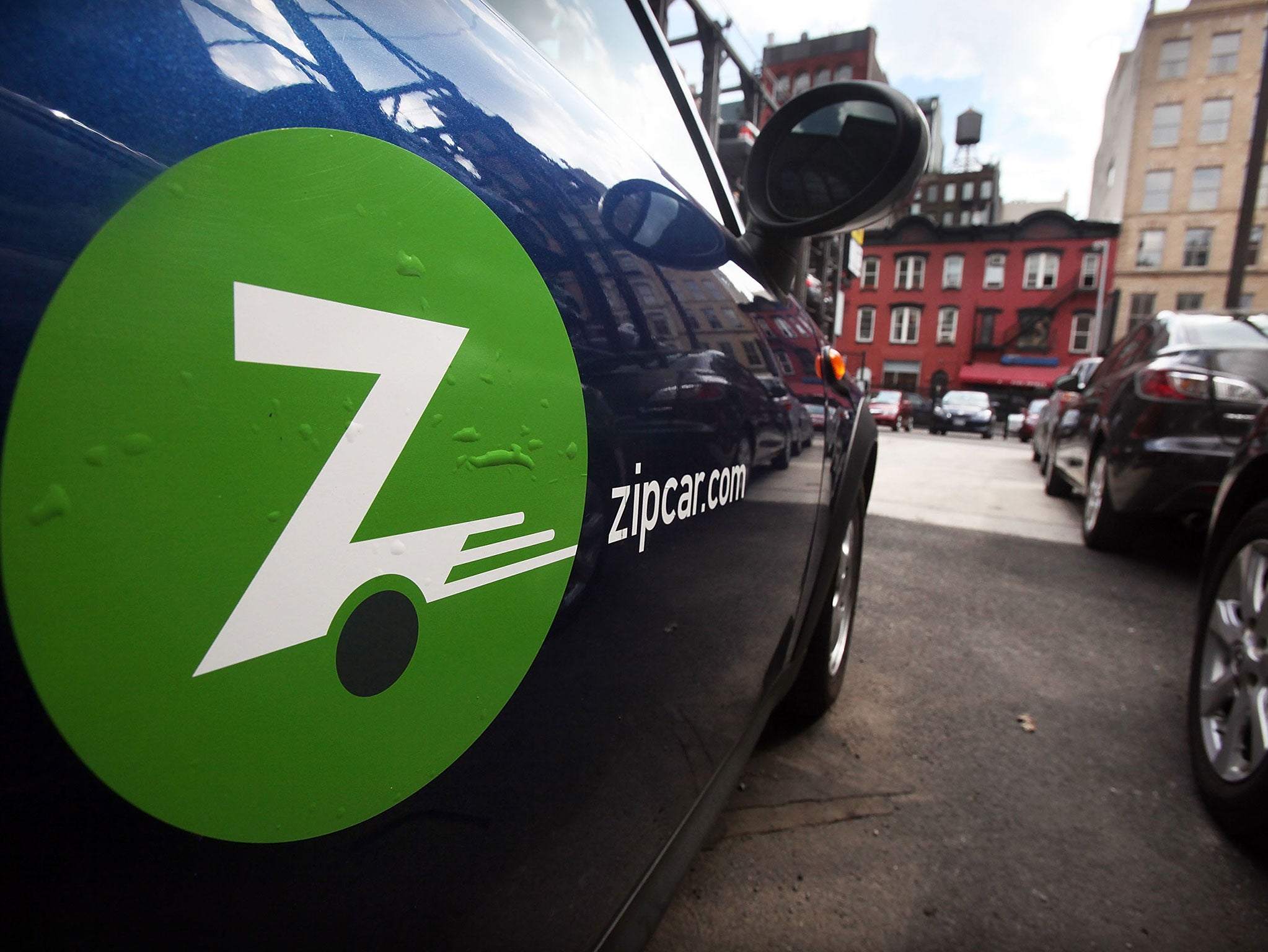
When my pal comes down to stay from Leeds, he always remarks how London streets are like a “ring of steel”. The sight of hundreds of miles of streets lined with parked cars – almost all of which are black or grey and of identical design – is absurd. Car sharing, if it could work, would substantially mitigate this.
Yet, in the somewhat fancy London area (where we have the cheapest house), there is a strange resentment towards Zipcars. I suspect there is a recessive gene in the English middle class that manifests: a) if you can’t or won’t own a car, you don’t deserve the right to drive, and b) every English person has the right to park their car immediately outside their front door, not 25 metres away.
One local proudly joined Zipcar solely to move what he considers invasive socialist tanks near his front lawn. Although Zipcar is American and owned by Avis Budget, it is technically a community car club – and hence too lefty by half for some.
He discovered that the first 30 seconds of a Zipcar loan is free, so he uses that brief window to move any parked Zipcar to outside someone else’s house.
London’s mayor, Sadiq Khan, ought to be concerned by Zipcar’s disappearance. Yet one factor making the business model non-viable is the decision to charge electric vehicles the £13.50 daily congestion charge – and applying this to Zipcars entering the congestion zone.
I doubt the mayor is fully up to speed with this issue, as car sharing and community transport are very much up his street. But someone in Khan’s transport directorate, I suspect, has been asleep at the wheel.
Join our commenting forum
Join thought-provoking conversations, follow other Independent readers and see their replies
Comments
Bookmark popover
Removed from bookmarks