Equine therapy taught me to take myself less seriously
As a wellbeing editor, Emilie Lavinia thought she had mindfulness sussed out, until she spent the weekend with some therapy horses

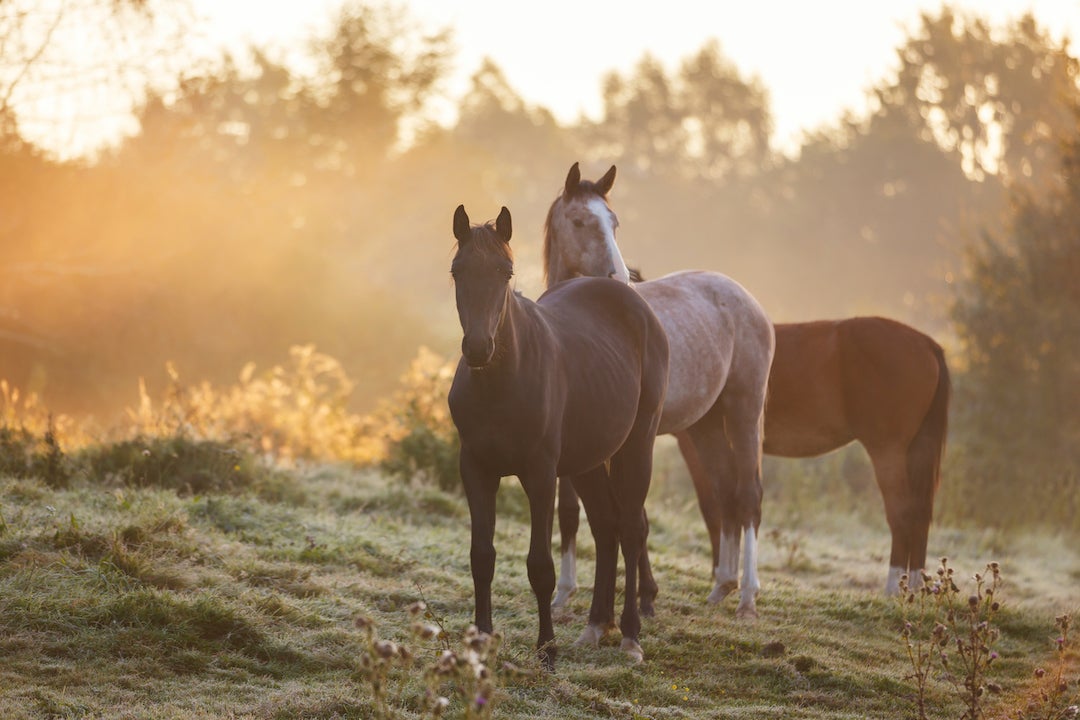
Perhaps it’s the influence of the wellness boom, the surging popularity of astrology or the embrace of Traditional Chinese Medicine by beauty editors that’s to blame, but lately posts about the Year of the Horse have flooded my Instagram feed. Apparently, contrary to the shedding of 2025’s Year of the Snake, this year signals a triumphant gallop forward.
As we enter this year, I’ve been reflecting on an unusual wellness experience that I had in 2025 and what it taught me. Far more than I expected, as it turns out. Last year I spent the weekend at an equine therapy retreat and I came away with a totally new perspective.
If you’re at all sceptical about how time in the company of horses might sever the toxic connections one’s brain makes when ruminating on the past or heal a problematic relationship with productivity, I can understand. But I emerged from the weekend with a different mindset.
 ‘You don’t need to obsess over protein and calories’: Joe Wicks on beating the UPF trap and decomplicating food
 Men are still faking it until they break: Inside the crisis of hidden depression
 How to spot the symptoms of burnout and treat them, according to wellbeing experts
 I’ve been a health editor for a decade, these are the 2026 wellness trends you need to know
My equine wellness experience
The origins of equine assisted psychotherapy date back to Ancient Greece. Some 2000 years ago Hippocrates is documented recommending horse riding as a therapeutic tool, and throughout history there have been numerous examples of how horses and humans have symbiotically improved each other’s lives.
Today, there is growing evidence across the USA, South Africa, Europe and Australasia of the benefits of equine assisted psychotherapy for human wellbeing. Some studies show promising results across sleep, cognition, physical recovery and social skills after equine therapy of varying styles.
My experience of equine therapy occurred close to home, in leafy Richmond park. The stables here play host to Operation Centaur – an organisation offering therapeutic experiences with horses. But we began the process at Bhuti, the wellness centre at boutique hotel Bingham River House.
It was here that I sat with a group of strangers, each having selected a photograph of a horse that meant something to us. It was a good icebreaker. We found ourselves telling stories about our realtionship with horses, what our jobs and circumstances now demand of us, and what we each hoped to gain from the experience.
I, like most people in the room, had grown up with horses. I reflected on how much I had enjoyed it. How galloping down a country lane or riding bareback in the snow had been wildly exhilarating and how well I would always sleep after a day at the yard cleaning hooves, brushing tails and pulling yellow ragwort plants out of the ground. I’d given up riding when I became a teenager and no longer considered having active hobbies to be cool, which is something I have always regretted.
The premise of equine therapy
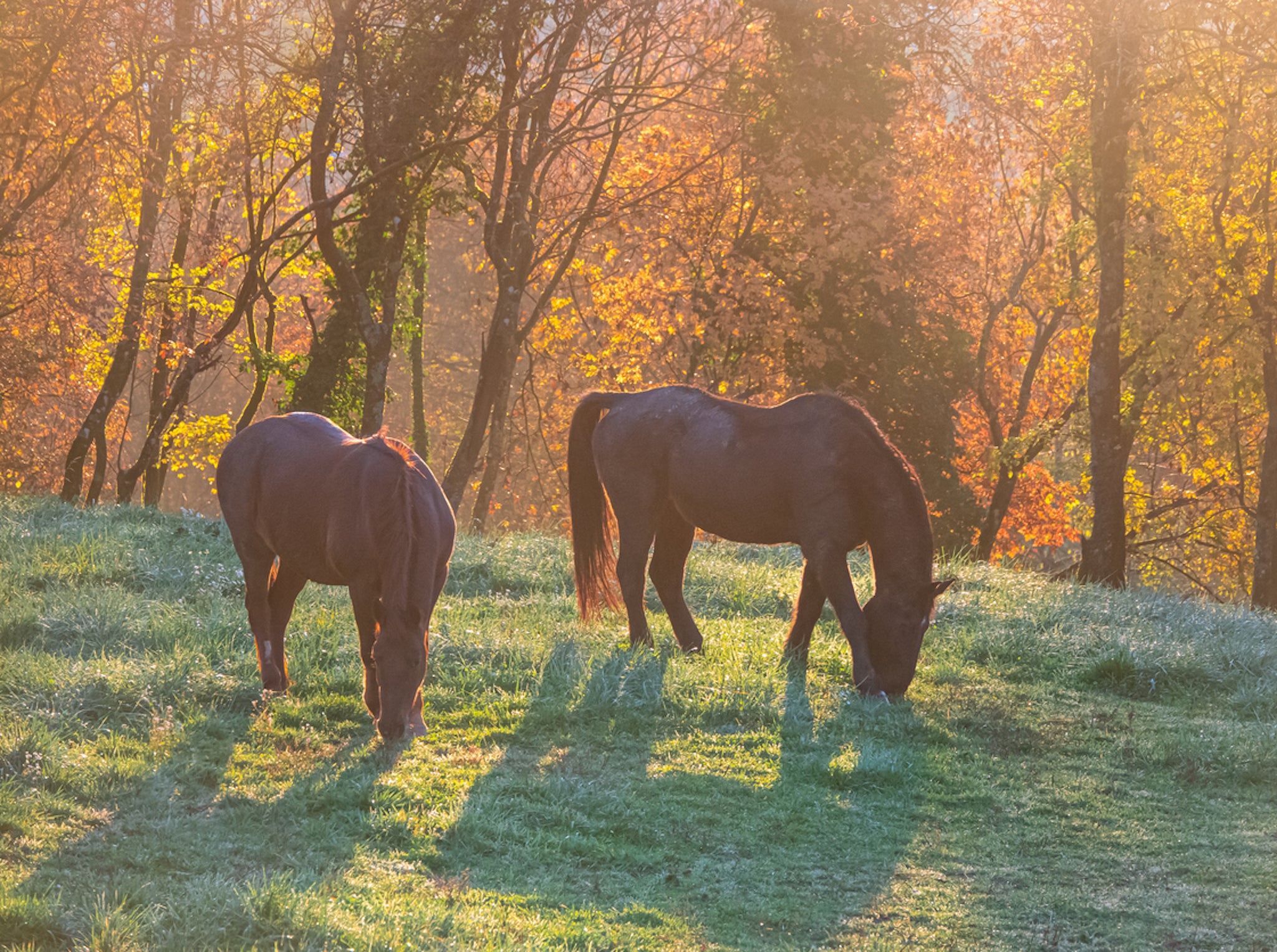
Horses represent a unique set of opportunities when it comes to mental wellbeing. Being with them offers time in nature, responsibility for a living creature other than yourself and a certain level of physical activity and skill. You should also be relatively brave and calm because they are big, heavy and sometimes unpredictable – and falling off one at speed hurts. All these things, I would argue, are good for our brains. Perhaps with the exception of falling off.
Dr Puffin O’Hanlon, a clinical psychologist, equine therapy researcher and leader of the retreat also points out that, “horses can help us to tune into the world through our senses – and it is these sensations that connect us to the ancient wisdom of cells, organisms and our own bodies. Your nervous system doesn’t speak language, it speaks senses, energy, emotions and reflexes.
“Learning to tune into the non-human environment and to listen, co-regulate and communicate with horses can teach us how to connect with neglected or disavowed parts of ourselves, and how to build positive relationships with others.”
I knew all too well how refreshing and soothing the company of horses could be, but I was still sceptical about any groundbreaking self discoveries while on the retreat. I was also surprised to learn that there would be no riding on this trip. We wouldn’t be controlling or commanding the horses, we would simply be spending time with them and observing them and doing the same with the trees around us in forest bathing sessions and silent nature walks.
Read more: How to spot the symptoms of burnout and treat them, according to wellbeing experts
Perhaps I read too many fantasy books as a teen, or maybe my view of life is deeply over romanticised. I had expected that I would connect immediately with one of the horses we’d be observing and that I would experience a magical moment and feel all my stresses wash away. Things didn’t exactly go that way.
In the first instance, while I searched for a meaningful moment with the horse I had chosen, he – a beautiful golden-toned creature – turned side on, parted his legs slightly and released a crashing stream of yellow that foamed on the dusty ground. This was not the special connection I had hoped for.
“You’re just going to p**s all over this situation then?” I said to him. “Thanks.” Then I found myself laughing. This horse wasn’t hung up on my issues, or trying to force a connection or a special moment so why should I be?
I watched the same horse struck by impulse, rolling on the ground in ecstatic joy moments later and I laughed some more. Over the course of the day I felt my jaw unclench and a softness came over me. I felt lighter and more comfortable. I loved how unbothered this animal was, how all the horses were. These horses had no expectations and were just taking each moment as it came. “Perhaps I, a chronic overthinker, should try to do the same,” I thought to myself.
“Horses invite us to step out of our externally-focused, forward-looking, progress-seeking predator mode and to start to look more fully around us and within us in the here and now,” explains Dr O’Hanlon. “Horses don’t care what you’ve said, they don't care about your past achievements or future aspirations, but they are acutely aware of how you make them feel in the moment.”
What my experience with horse therapy taught me
That evening, in a beautiful room at Bingham Riverhouse overlooking the water I didn’t feel the need to look at my phone, chase emails or catch up on work. I sat still and enjoyed just being quiet by myself. This may sound unremarkable, but for me and so many other people who’ve learnt to use every waking moment for productivity, it was somewhat out of character.
I reflected on something Dr O’Hanlon had said at dinner about how many of us tend to allow our so-called ‘rational brains’ to dominate our thoughts, actions and decisions rather than leaning into natural impulses.
“The more we compartmentalise ourselves and rely on the human rational brain to lead the way, through solving problems in words and numbers, and developing more and more complex tools to get things done, the more difficult it becomes to direct attention or energy to the myriad other ways of being, problem solving and communicating.
“Horses bring our limbic brains online. Most importantly, they bring our threat and attachment systems online simultaneously. They also immediately act out our inner worlds and relationship patterns. They react constantly to our tiniest movements, intentions and emotions. Unlike human therapists, they are not distracted by the words that people use, nor are they blindsided by silence. They are powerful and reactive and they are tricky to ignore.”
Read more: Why you need to get outside if you want to boost your wellbeing this winter
Over the years I’ve learned to optimise my time. I’m always thinking and doing, planning something or working on a project, article or email. Or I’m deep in my thoughts, analysing everything that has happened or might happen. I very rarely just sit still and allow my brain to switch off and my body to move naturally, reacting sensorially to what’s around me.
I’m no stranger to this kind of mindfulness. I often spend time in nature considering how to worry less and how to go with the flow and I rely on practices like Yoga Nidra to help me quiet my mind. But spending time with a creature who showed me how to do this unlocked something in my mind. It was bizarrely profound.
Though we often imagine that as human beings we’re the most important creatures on this earth, it’s possible that we’ve lost all sense of how to react appropriately to our surroundings, and that we’ve lost the joy of simply being and not doing.
My weekend in the company of horses inspired me to lighten up, forget productivity and go with the flow. After the experience, I’ve successfully reminded myself not to think too hard and not to worry too much, which has significantly eased my stress levels. Like many of us, I can be guilty of taking myself and the situations I find myself in a little too seriously, but apparently all it takes to actually live more mindfully is hanging out with a horse.
The next Project Centaur retreat at Bhuti, Bingham River House will take place in spring 2026.
Join our commenting forum
Join thought-provoking conversations, follow other Independent readers and see their replies
Comments
Bookmark popover
Removed from bookmarks