A chartered physiotherapist shares three exercises that can ‘help reduce lower back pain’
This trio of moves can help mobilise the spine, reduce stiffness in the lower back and hips and build core stability, physiotherapist Tash Gale tells senior fitness writer Harry Bullmore


Such is the prevalence of lower back pain that, in 2023, the World Health Organisation (WHO) released guidelines for “non-surgical management” of the condition. An accompanying report states that lower back pain affected 619 million people globally in 2020, with that figure only expected to grow due to “population expansion and ageing”. About 90 per cent of cases are non-specific – “it isn’t possible to identify a specific disease or structural reason to explain the pain”.
According to the report, the major risk factors for non-specific lower back pain are low physical activity levels, obesity, smoking and high physical stress at work. As a result, “physical therapies to improve muscle strength and ability to move”, as well as “lifestyle changes including more physical activity, healthy diet and good sleep habits”, are front and centre among WHO’s suggested treatments.
How to use movement to manage lower back pain
For many people, varied movement can be beneficial for easing lower back pain if approached in an appropriate, gradual and progressive way. After all, the body adheres to the SAID (specific adaptation to imposed demands) principle, so if pain-free movement of the spine is the goal, slowly reintroducing movement in this area is the obvious way to achieve it.
Likewise, strengthening the surrounding muscles can help you build a strong base of support and stability for your spine. But what sort of movements can we use to achieve this?


Below, chartered physiotherapist and Physique ambassador Tash Gale shares three exercises which “can be helpful to reduce lower back pain”. Between them, they aim to mobilise the spine, reduce stiffness in the lower back and hips, and build core stability. However, she adds: “Exercises chosen for back pain should be specifically chosen for an individual for their needs and the exercise should be tailored to the individual.”
A physiotherapist’s three exercises for reducing lower back pain
Exercise one: Cat/cow stretch
Sets: 3 Repetitions: 5-10
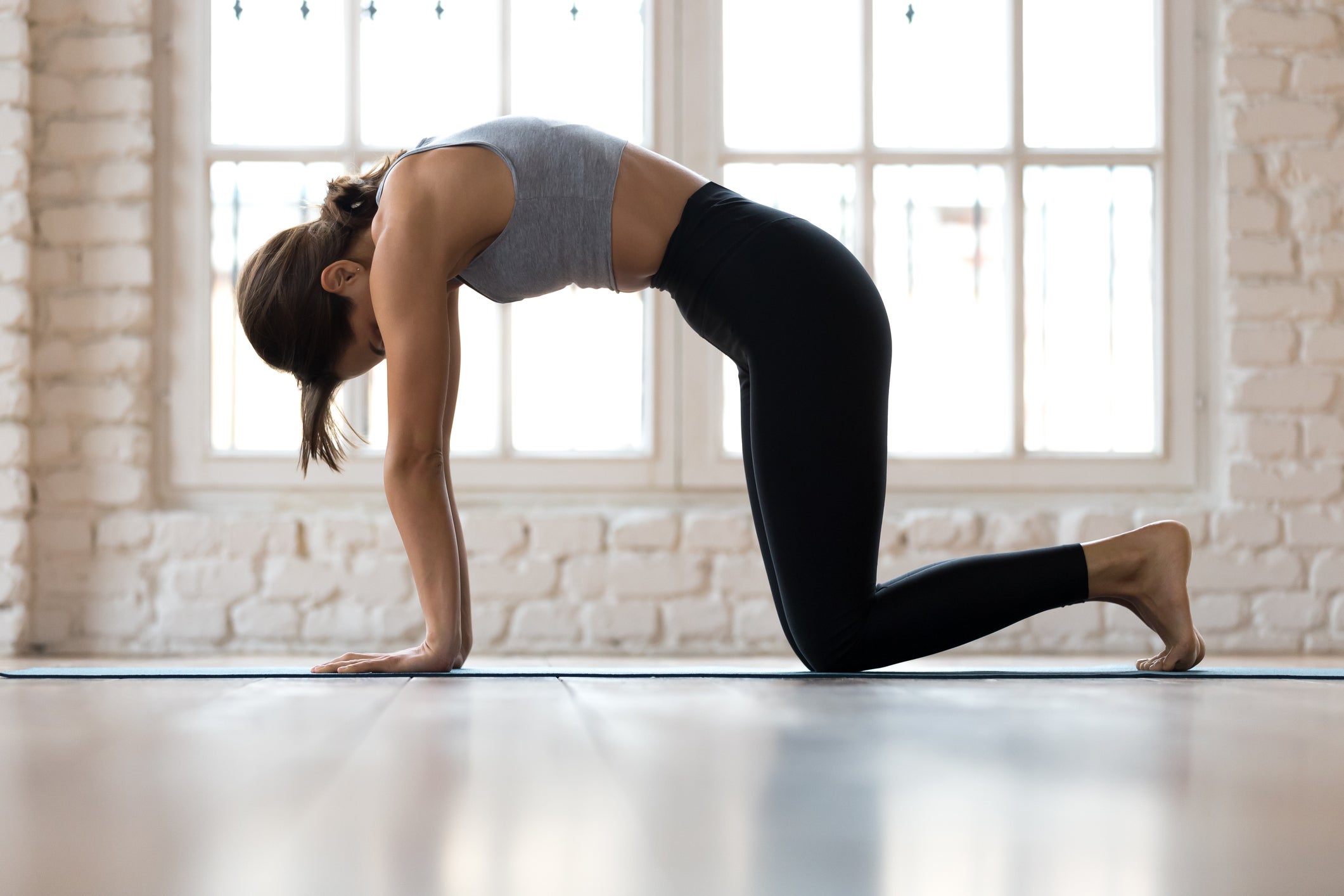
- Start in a tabletop position, on your hands and knees with your arms straight, knees at a right angle, hands under your shoulders and knees under your hips.
- Inhale and lift your head and tailbone to arch your back. This is the “cow” portion of the exercise.
- Exhale and tuck your chin and pelvis to round your spine. This is the “cat” portion of the exercise.
Benefits
“This move helps improve mobility and flexibility in the spine, gently mobilising the back and abdominal muscles to reduce tension and encourage natural spine mobilisation,” Gale explains.
Exercise two: Knee rolls
Sets: 3 Repetitions: 5-10 each side

- Lie on your back with your knees bent and your feet flat on the floor.
- Extend your arms out to your sides in a T-shape for support.
- Keep your shoulders flat on the ground throughout.
- Slowly drop both knees to one side, rotating through your spine and hips.
- Hold this position for five to 10 seconds, lift your knees back up to return to the starting position, then drop them to the other side.
Benefits
“Knee rolls can help reduce stiffness in the lower back and hips,” says Gale. “Engage the core muscles gently to support spinal control and improve spinal rotation and flexibility. It also promotes relaxation and stress relief through rhythmic movement.”
Exercise three: Dead bug
Sets: 3 Repetitions: 5-10 each side

- Lie on your back on a yoga mat with your arms extended towards the ceiling.
- Engage your core by gently tightening your belly button down towards your spine, flatten your back against the floor and find engagement through your pelvic floor.
- Keeping your core engaged, lift your legs so your thighs are vertical and your knees are bent at a right angle.
- Slowly lower your right arm and extend your left leg towards the floor, keeping your back flat.
- Return to the starting position, then repeat with the opposite arm and leg.
- “If your lower back lifts off the floor, reduce the range of motion [how far you lower your arms and legs] until your core is stronger,” Gale advises.
Benefits
“This exercise helps to build core stability without stressing the spine,” Gale says. “It encourages the correct movement patterns between the limbs and core, strengthens the deep abdominal muscles that support your lower back, and also helps improve coordination and neuromuscular control, reducing your risk of injury.”
Join our commenting forum
Join thought-provoking conversations, follow other Independent readers and see their replies
Comments
Bookmark popover
Removed from bookmarks