Builders accidentally discover ancient Roman ruins while working on museum
It contains a private altar and a stone staircase
Construction workers in Cologne, Germany, have unearthed a significant Roman site dating back almost 2,000 years.
The accidental discovery, made during construction of the LVR-Jewish Museum, revealed a rare private altar, the massive foundations of a late antique basilica, and a stone staircase.
Archaeologists, collaborating with building crews, confirmed the site's origins stretched back to the first century of Roman occupation.
The oldest structure identified is a stone staircase, of which only the midsection remains.
This staircase once led from the praetorium towards the River Rhine, though its exact start and end points are yet to be determined.
The staircase was likely necessary because the natural slope of the terrain required stepped access between the palace complex and the riverbank.
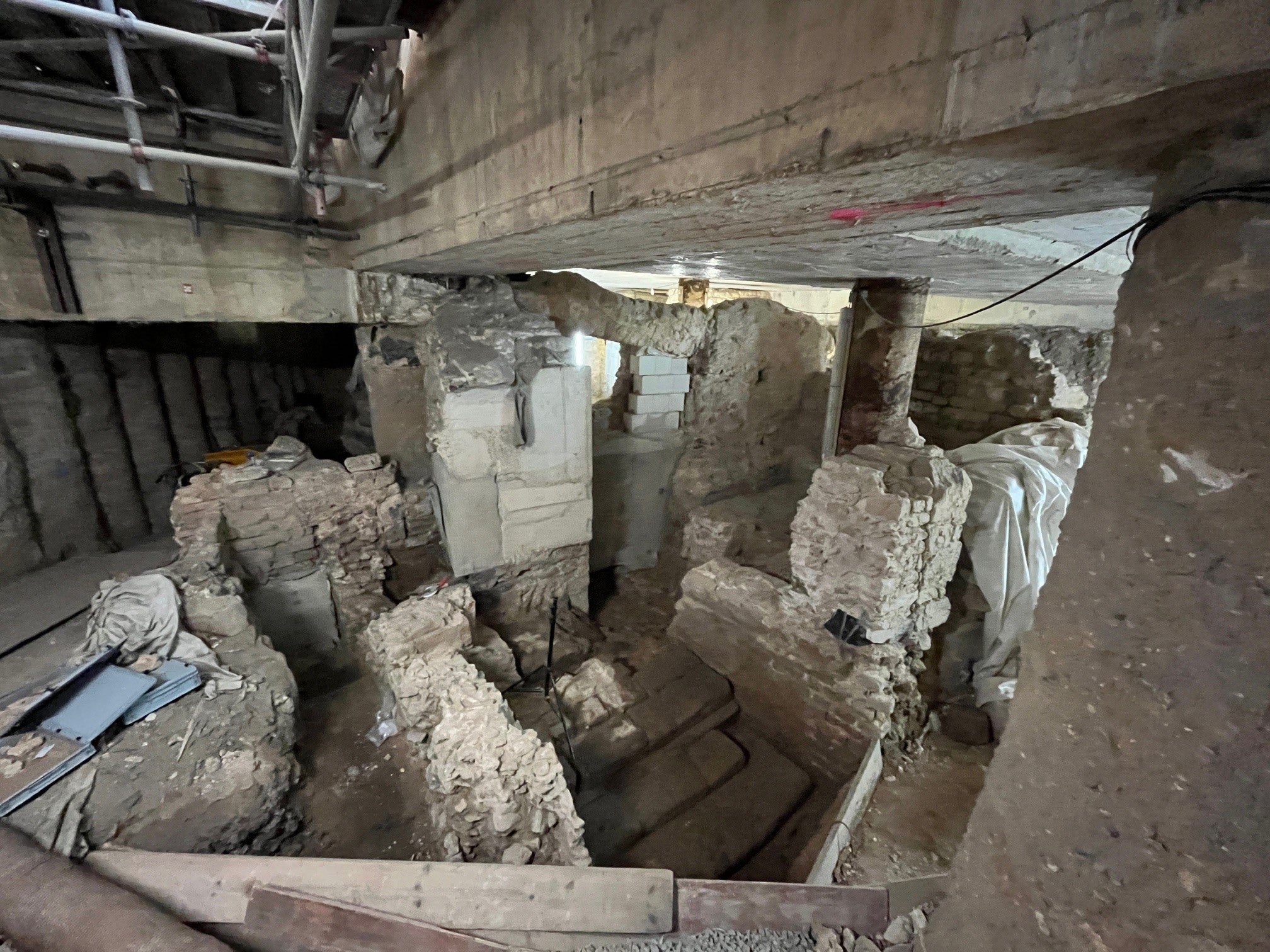
A later Roman expansion of the praetorium filled in parts of the stairs to make room for additional buildings, unintentionally preserving this portion.
Roman staircases are rarely found intact.
Excavators also discovered a second-century private household altar, or lararium, within the praetorium.
A lararium is typically built as a niche in a wall where offerings of food were made to the Lares, the household’s patron gods.
The niche was carefully constructed with molding that distinguished it from the rest of the wall and allowed it to be closed.
It would have housed small figurines.
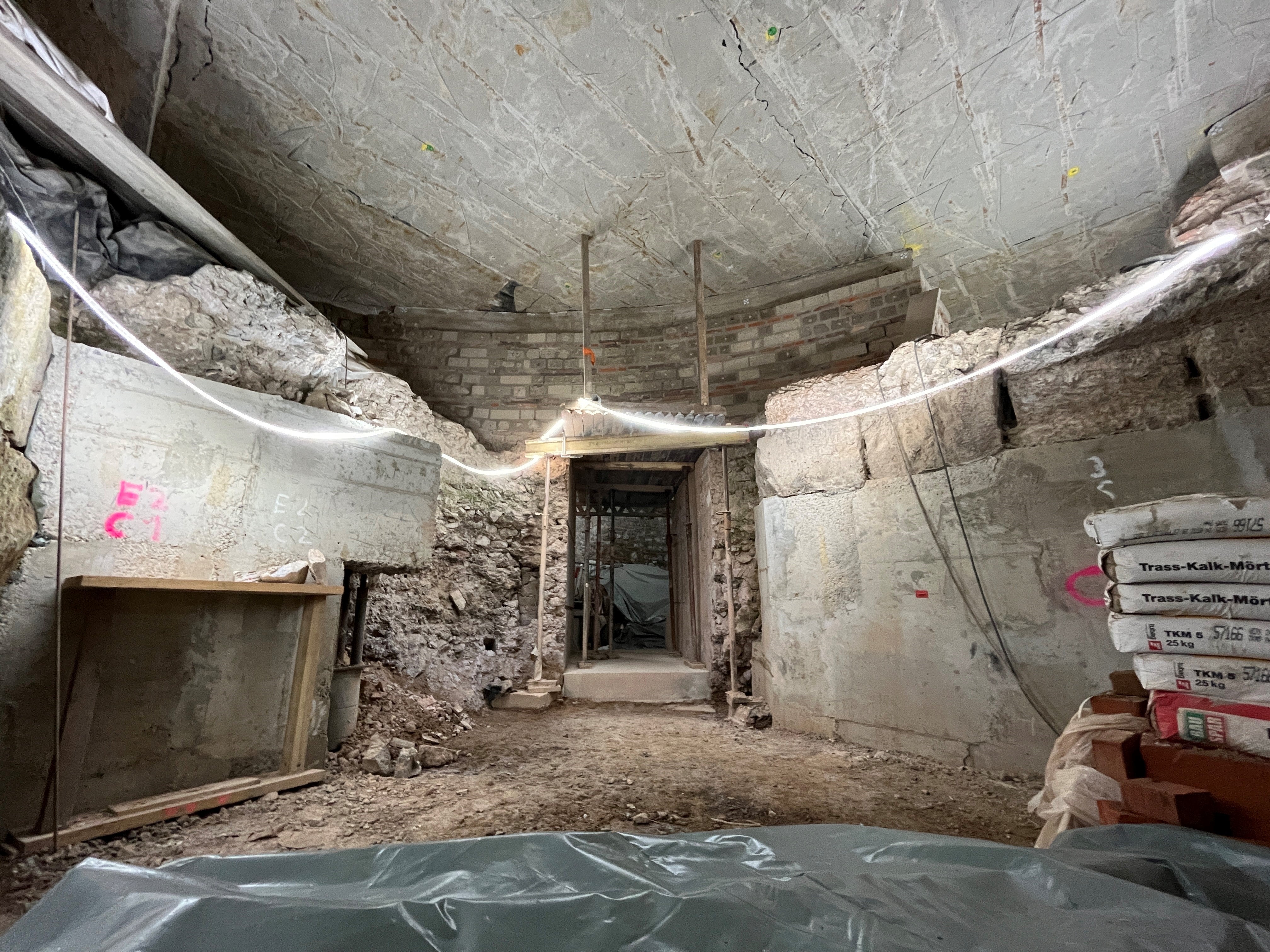
Archaeologists identified nail holes where iron nails once held garlands or ribbons as decoration, and traces of paint remain visible on the surrounding stucco.
The most recent discovery dated from the fourth century was foundations of an apse of a multi-aisled basilica.
Before excavation, the structure had only been perceptible as a shallow depression in the ground.
When the foundations were exposed, archaeologists realised the building was not made of typical Roman cast concrete.
Instead, it consisted of 13-foot-thick layers of volcanic rock, basalt and limestone, bonded with a strong mortar composed of crushed ceramic and gravel.
Its bulk and strength had allowed it to remain intact for nearly 2,000 years.
Join our commenting forum
Join thought-provoking conversations, follow other Independent readers and see their replies
Comments
Bookmark popover
Removed from bookmarks