The Independent's journalism is supported by our readers. When you purchase through links on our site, we may earn commission.
Seven of Europe’s best thermal spa destinations
In countries such as Iceland, Italy, Switzerland, you can soak in warm mineral-rich waters
Europe’s geothermal spa destinations are hotspots come rain, shine or blizzard conditions, thanks to a constant flow of water heated in the bowels of the Earth.
These are seven of the best — standout places where you can luxuriate in toasty, mineral-rich waters without a boiler in sight. They are destinations where restorative bathing has helped shape the location culturally, architecturally and socially.
We take you to volcanically heated lagoons in Iceland that have become social media stars (for good reason), to steaming stepped pools in Tuscany where there are no time slots or access fees, and to a village in Switzerland that’s home to one of the continent’s most striking spa complexes.
Elsewhere, there’s the elegant German town that’s taken the spa experience to ceremonial levels, and the stately French city whose geothermal offering was given a publicity boost by Napoleon III.
There’s also the historic city in the UK that’s home to the country’s only natural hot springs. Read on for your all-weather European itinerary.
1. Iceland
Iceland is dotted with hundreds of geothermal springs and pools, and toasty plunges have been woven into life on the island for centuries.
But it was only with the opening of the bathhouse at the Blue Lagoon (tickets from $72) in 1987 that Iceland began glowing on the global radar as a spa destination. And when social media arrived, this strikingly azure pool, set in a lava field near Keflavik, became synonymous with Iceland’s geothermal pedigree. It was Instagram-ready from the get-go.

.jpeg?quality=75&width=230&crop=3%3A2%2Csmart&auto=webp)
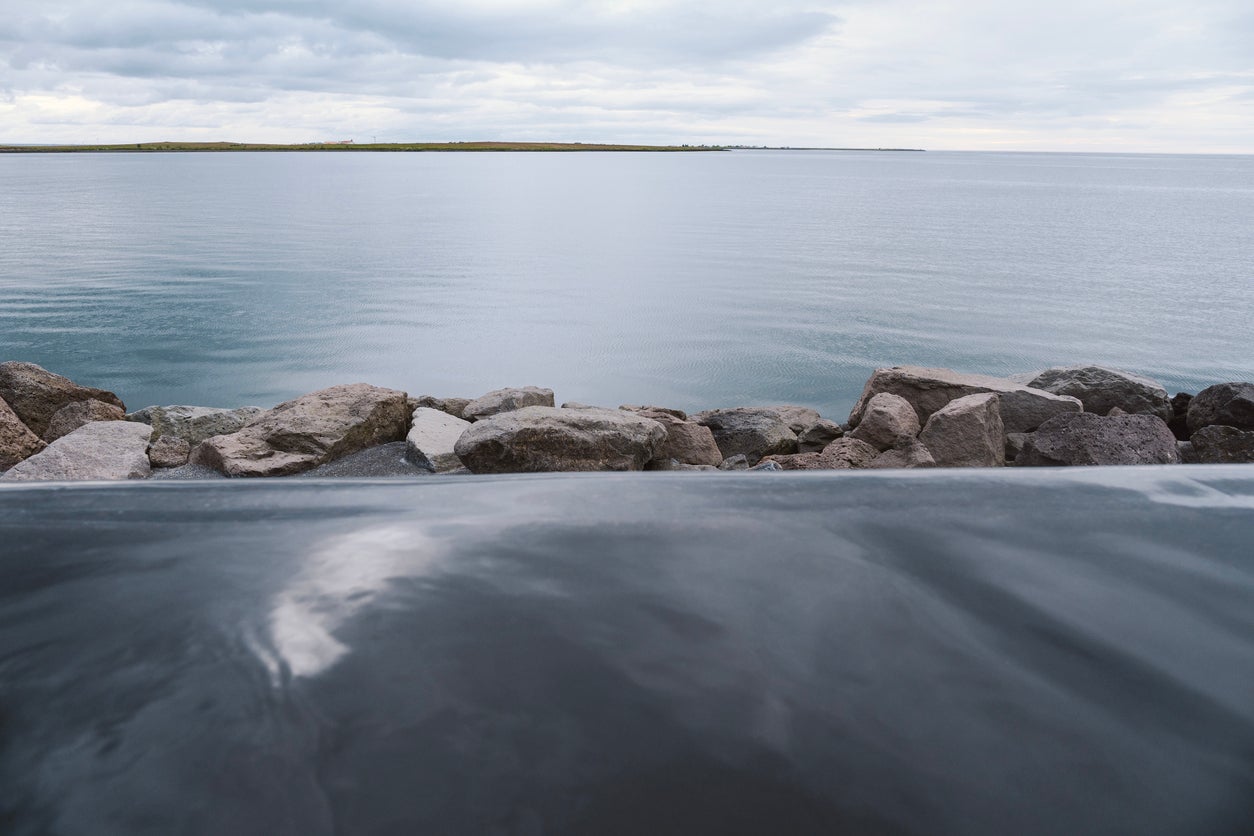
It’s a bucket-list item for any serious spa aficionado. So is Sky Lagoon, located just 13 minutes from Reykjavik. Equally restorative and dramatic, but less crowded, the headline act is a soak in a stunning 246-foot-wide infinity pool perched on the edge of the Atlantic Ocean, naturally heated by volcanic activity to between 100 and 104F.
As you decompress in the soothing water, soak in the captivating views of rolling waves and the distinctive, cone-shaped mountain Keilir in the distance. Time your visit right and you’ll catch a dazzling Northern Lights display.
Linger here for the duration of your visit (from $75), or rouse yourself to try the spa’s seven-step Nordic ritual, which invigorates the senses through hot and cold experiences, from pool plunges to steam rooms and body scrubs. At the end comes a wholesome shot of juice made from crowberries that dot the surrounding lava fields.
Where to stay: Characterful Reykjavík Konsúlat Hotel (rooms from $190) is housed in a former department store and, if you haven’t satiated your spa cravings, features a sauna and whirlpool.
Read more: How to unlock Iceland’s magical landscape on the Volcanic Way
2. Saturnia, Italy
Bathing spots don’t get much more cinematic than this.
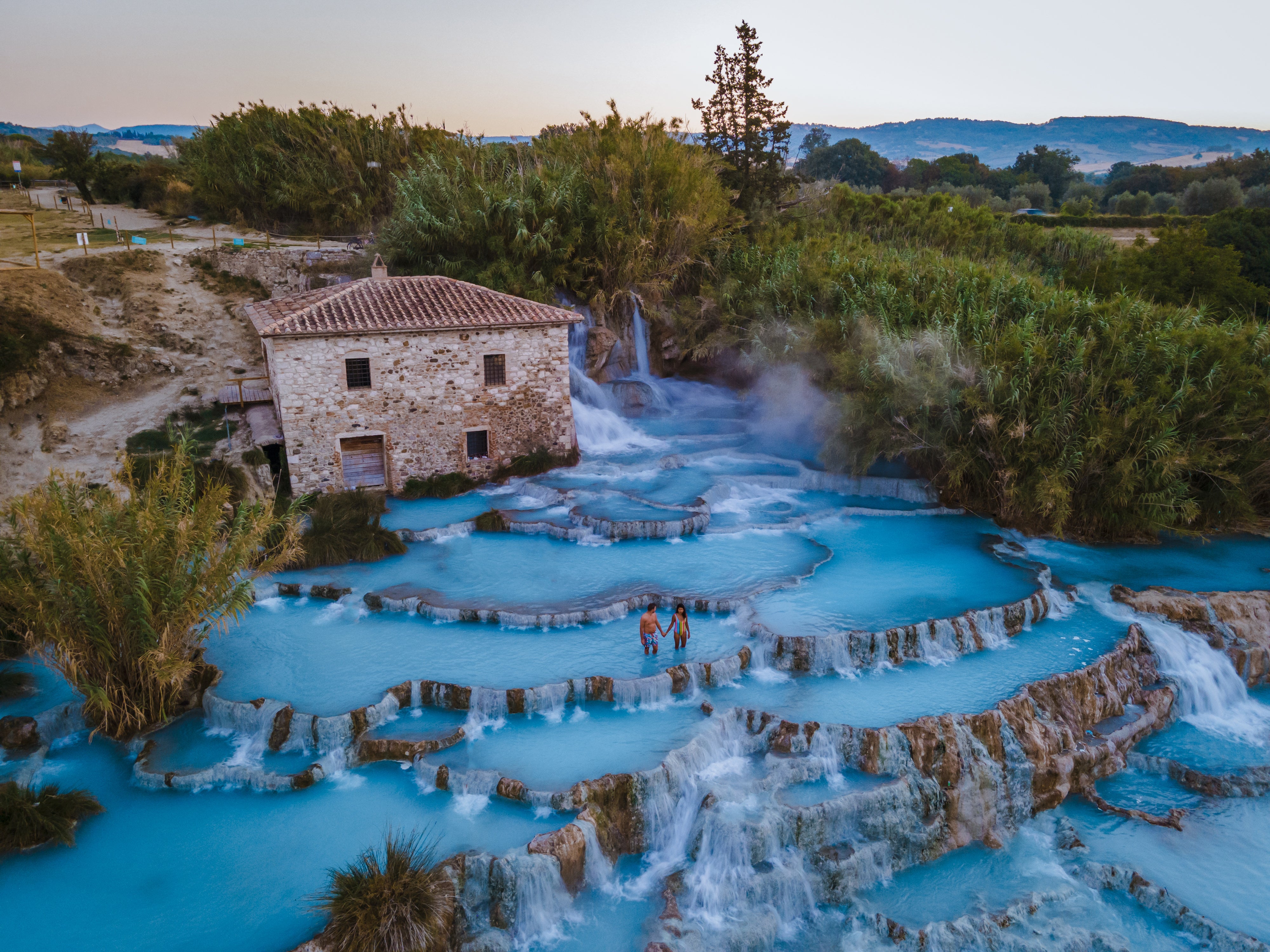
Just outside the village of Saturnia in the rolling Tuscan countryside, amid olive groves and vineyards, is the Cascate del Mulino, where hot sulphur-rich spring water spills over a staircase of milky-blue thermal pools at a rate of around 200 gallons a second.
Unlike many spa destinations, a visit here doesn't require booking, and there are no barriers. Just wade in and enjoy the dreamy experience of luxuriating in 99F water in a pastoral setting worthy of an oil painting.
The secret of the Cascate del Mulino has been out since Roman times, so it does get quite busy in peak season. To be sure of the most tranquil soak, arrive early or just before sunset, when the scene is at its most magical.
Where to stay: The nearby Terme di Saturnia Spa & Golf Resort (rooms from $380) makes full use of the never-ending supply of hot water that has been gushing from the Earth here for 3,000 years. It has a set of on-site outdoor thermal pools and a comprehensive programme of wellness treatments.
Read more: Best luxury hotels in Venice, from grand palaces to island resorts
3. Therme Vals, Switzerland

Therme Vals, in the tiny village of Vals in eastern Switzerland, is part spa, part architectural masterpiece; a monolithic quarry-like structure designed by visionary Peter Zumthor that’s constructed of 60,000 quartz slabs and hollowed into a mountainside over thermal springs.
Inside, the experience (from $95) is restorative not just because of the mineral-rich 86F water from the St. Peter Spring in the Valser Valley, but because of the calming acoustics of bubbling water in rooms of stone and the mesmerizing way light plays on the glistening surfaces.
There are six pools in total, each with its own mood and temperature, ranging from the 57F Ice Pool and the 108F Fire Pool to the impressive Outdoor Pool, whose waters are warmed to a pleasant 97F.
The building is now a protected monument. Take a long soak here and you’ll understand why.
Where to stay: The 7132 Hotel (rooms from $740) is built around the Therme Vals complex and offers guests extended access to the landmark thermal baths.
Read more: The most underrated spots to visit in Switzerland this year
4. Baden-Baden, Germany
Beneath Baden-Baden, on the edge of the Black Forest, lie 12 thermal springs that have kept a spa culture flowing since Roman times. Under German custodianship, the bathing experience is precise, ceremonial, and undertaken in magnificent surroundings.
While numerous hotels have their own private spas, the public spa experience here centers on two impressive complexes: the historic Friedrichsbad and the contemporary Caracalla Spa.
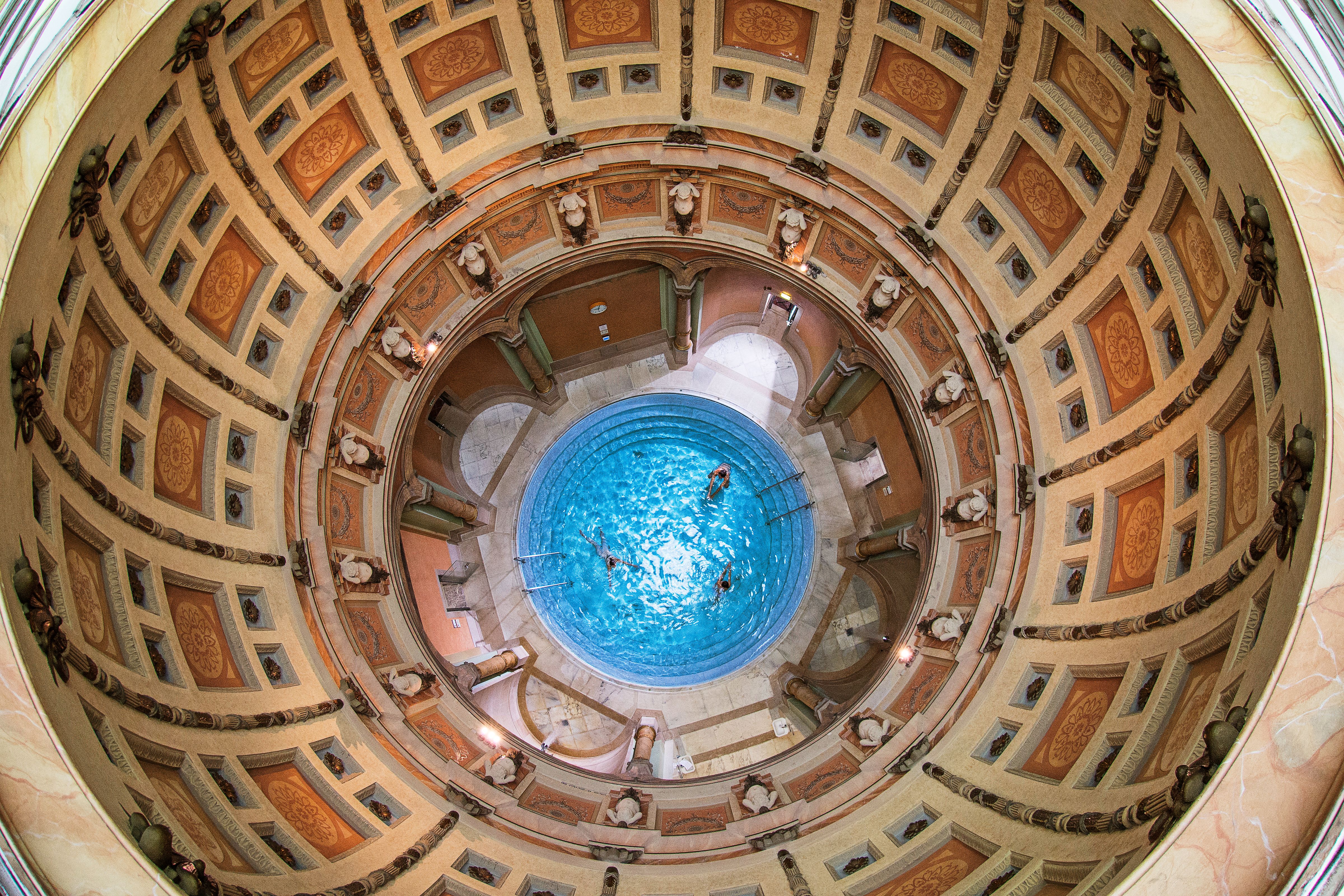
The Friedrichsbad is housed in a magnificent Renaissance-style building covered in hand-painted ceramic tiles and crowned by an elegant domed hall. Bathers move through a choreographed sequence of rituals, from steam rooms to bubble baths, and from cold plunges to a soap and brush massage.
The Caracalla Spa caters to those who prefer more contemporary surroundings, with almost 10,000 square feet of water spread across indoor and outdoor pools with fountains and massage jets, and hot and cold grottoes.
While the spa culture here is serious, the vibe is welcoming and bathing sessions can be combined with strolls through the Black Forest foothills or the town’s Belle Epoque avenues.
Where to stay: Splash out on a stay at Brenners Park-Hotel & Spa (rooms from $420), an aristocratic classic dating to the 19th century that features a beautiful indoor pool, sumptuous rooms and elevated dining experiences.
Read more: Koblenz is the cosy German city that welcomes visitors like locals
5. Vichy, France
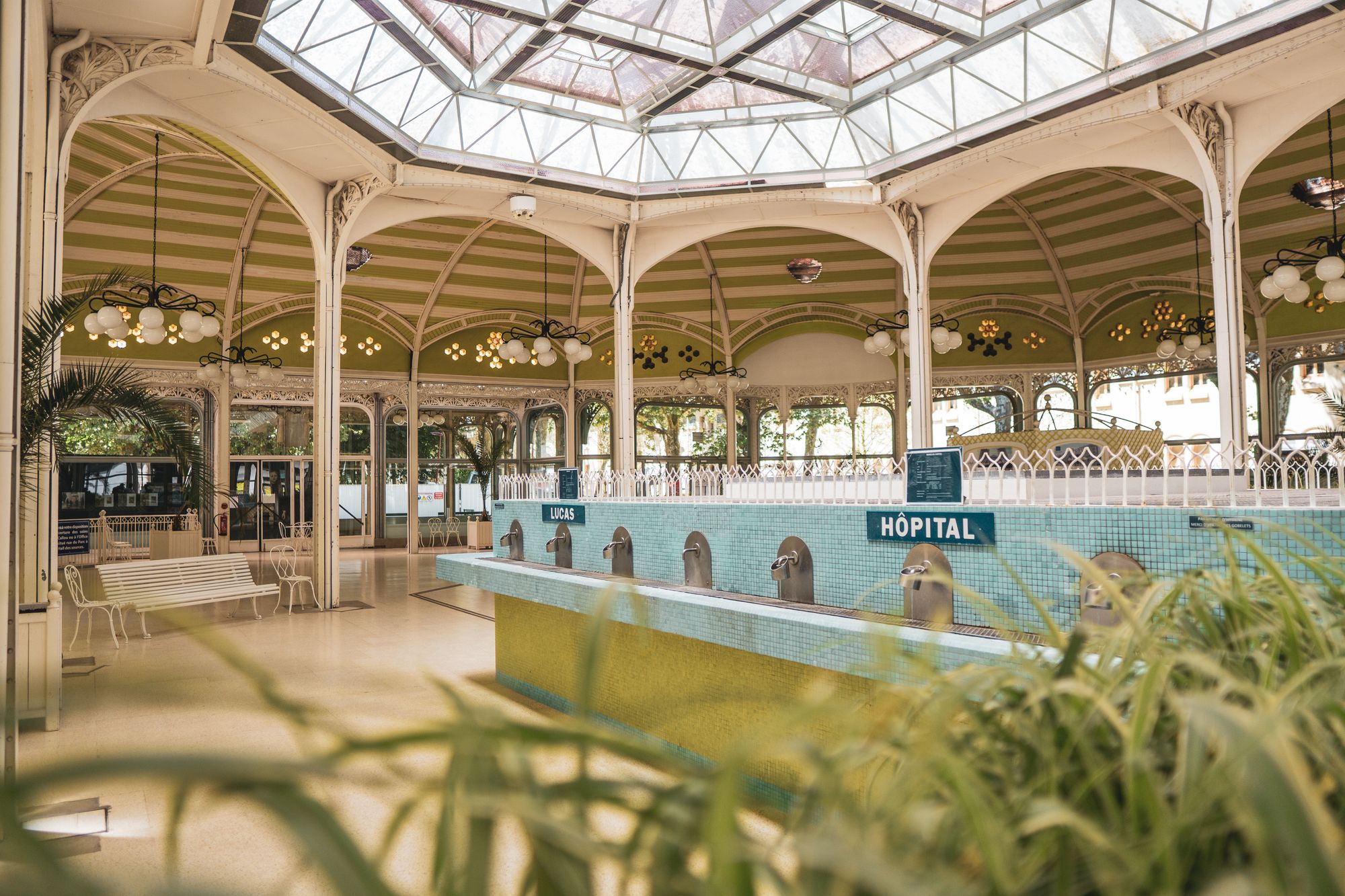
Vichy, on the banks of the Allier River, is one of the great spa towns of Europe. And while its thermal waters, heated by volcanic activity 13,000 feet below and enriched with essential minerals, have been enjoyed since Roman times, it was the Bonapartes that put the town on the map.
Napoleon I funded the building of promenades and fountains, but it was his nephew, Napoleon III, who truly shaped the Vichy you see today. He visited five times to treat his renal colic, and went on to authorise several major civic developments that helped turn the town into a fashionable spa resort, including the building of a railway station, a casino, and a landscaped park, plus new street layouts.
Public thermal baths include Thermes Les Dômes (from $25), where visitors relax in bubbling baths, saunas and hammams beneath a yellow-and-blue neo-Moorish dome; the sleek Vichy Célestins Thermal Spa (from $40), which offers pools, steam rooms and hydrotherapy treatments; and the historic Callou Thermal Spa (from $25), housed in a handsome Belle Époque building.
Elsewhere, you can drink water from five of the springs at the glass and cast iron Hall des Sources, and at the Celestine spring pavilion, whose water is the only one that’s bottled and sold.
Other attractions include the magnificent Art Nouveau opera house, the Palais des Congrès–Opéra, the 7.8 hectare Napoleon III Park, and recharging at a café or brasserie in the 4 Chemins shopping district.
Great place to stay: Le Pavillon d’Enghien (from $120) — a Belle Époque hotel in the spa district with a plant-filled terrace that wraps around a seasonal outdoor pool and free wifi.
Read more: Winter is when Brittany is at its most beautiful
6. Băile Herculane, Romania

Băile Herculane is one of Europe’s oldest and most atmospheric spa towns. It’s tucked into a forested valley by the Cerna River, where sulphur-rich thermal waters rise from over a dozen springs along the riverbank before being channelled into modern spa facilities set amid once-grand, now-abandoned buildings.
The architectural fade, largely stemming from neglect after the fall of communism in 1989, gives the town an evocative, authentic feel. Dilapidated pavilions and resorts, including the ornate 19th-century Neptune Baths, stand next to state-of-the-art, working spa hotels.

Modern options include Therme D’Olimpia & Spa, which features outdoor heated pools (day tickets from $23); Bacolux Afrodita Resort & Spa, with an indoor pool and saunas ranging from herbal to infrared (day tickets from $18.50); and Bacolux Diana Resort & Spa, which has several pools and day passes from just $13.80.
Great place to stay: All the hotels mentioned here are classy, but our pick would be Bacolux Afrodita Resort & Spa (rooms from $81), thanks to its particularly comprehensive spa offering.
Read more: 7 of the best Eastern Europe holiday destinations for an affordable city break
7. Bath, UK
Legend has it that in 863BC, Prince Bladud became the first person to have a spa experience in what is now Bath. According to the story, the hot muddy waters on the site cured his leprosy, and to mark his eternal gratitude he founded a settlement around the springs.
Over 900 years later, the Romans erected a huge bathing complex on the site that today is one of Britain's most visited historic attractions, built over the country's only natural hot springs.
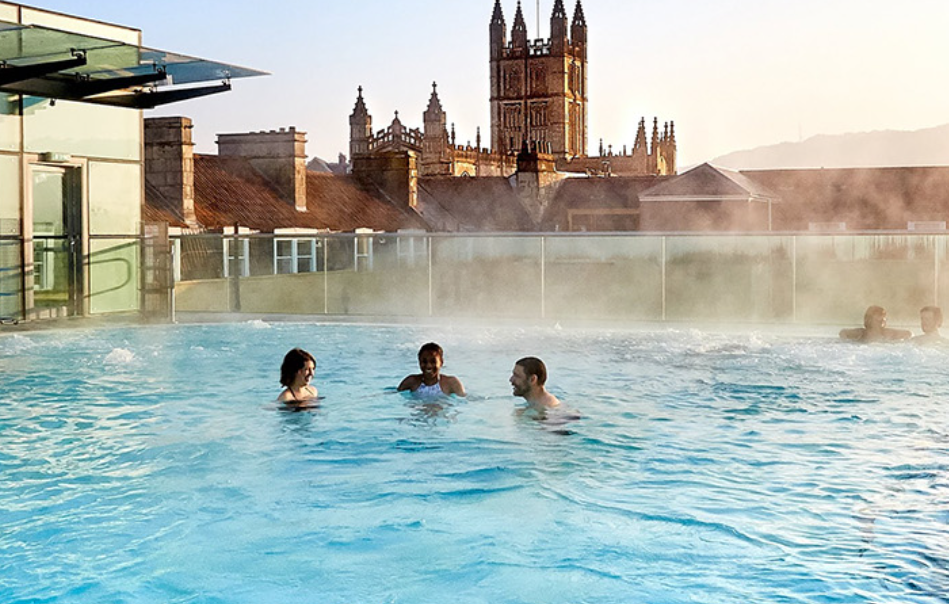
While entering the water at the Roman Baths is forbidden, visitors can enjoy a geothermal soak at the public Thermae Bath Spa (from around $55) — where mineral-rich waters are piped into rooftop and indoor pools that come with views of Bath's elegant skyline — and The Gainsborough Bath Spa hotel, where you can "take the waters" in thermal pools of varying temperatures and enjoy aromatic steam rooms and traditional saunas.
Where to stay: The Gainsborough Bath Spa (rooms from $250) is the city’s only hotel with direct access to Bath’s thermal waters, and it boasts sumptuous rooms with Elemis toiletries.
Read more: The best hotels in Bath for Georgian grandeur and luxurious spas
Join our commenting forum
Join thought-provoking conversations, follow other Independent readers and see their replies
Comments
Bookmark popover
Removed from bookmarks