Air India flights are very cheap but are they safe?
Simon Calder answers your questions on business travel, the Baltic states and airport fingerprinting

Q How do you rate Air India for business class travel? They seem very cheap compared to others. Safe?
Bryn T
A “Safe?” That’s the question some anxious flyers are asking themselves about Air India, following the tragedy at Ahmedabad on 12 June this year. A Boeing 787 departing for London Gatwick lost power and crashed seconds after take off, killing 241 passengers and crew as well as 19 people on the ground.
The investigation into Air India flight 171 is proceeding at a slower pace than many would like, both for the grieving relatives of those who died and the wider lessons for the aviation industry.
Yet I regard the risk of an accident aboard an Air India aircraft to be so unlikely as not to feature in my travel planning. The Indian carrier, like other airlines, employs many professionals who are absolutely focused on keeping passengers safe. I am flying twice on Air India in the next 10 days, and I am looking forward to both journeys. My only concern is that the journey is longer than on other airlines because of the geopolitical requirement to avoid Pakistani airspace.
After a crash – whatever the cause – some travellers shun the airline involved. Consequently, fares are typically lower than on other airlines as the carrier seeks to fill seats. Taking an economy class return between London Heathrow and Delhi, departing 1 February for a fortnight, Air India is priced at £453, which is 30 per cent cheaper than either British Airways or Virgin Atlantic.
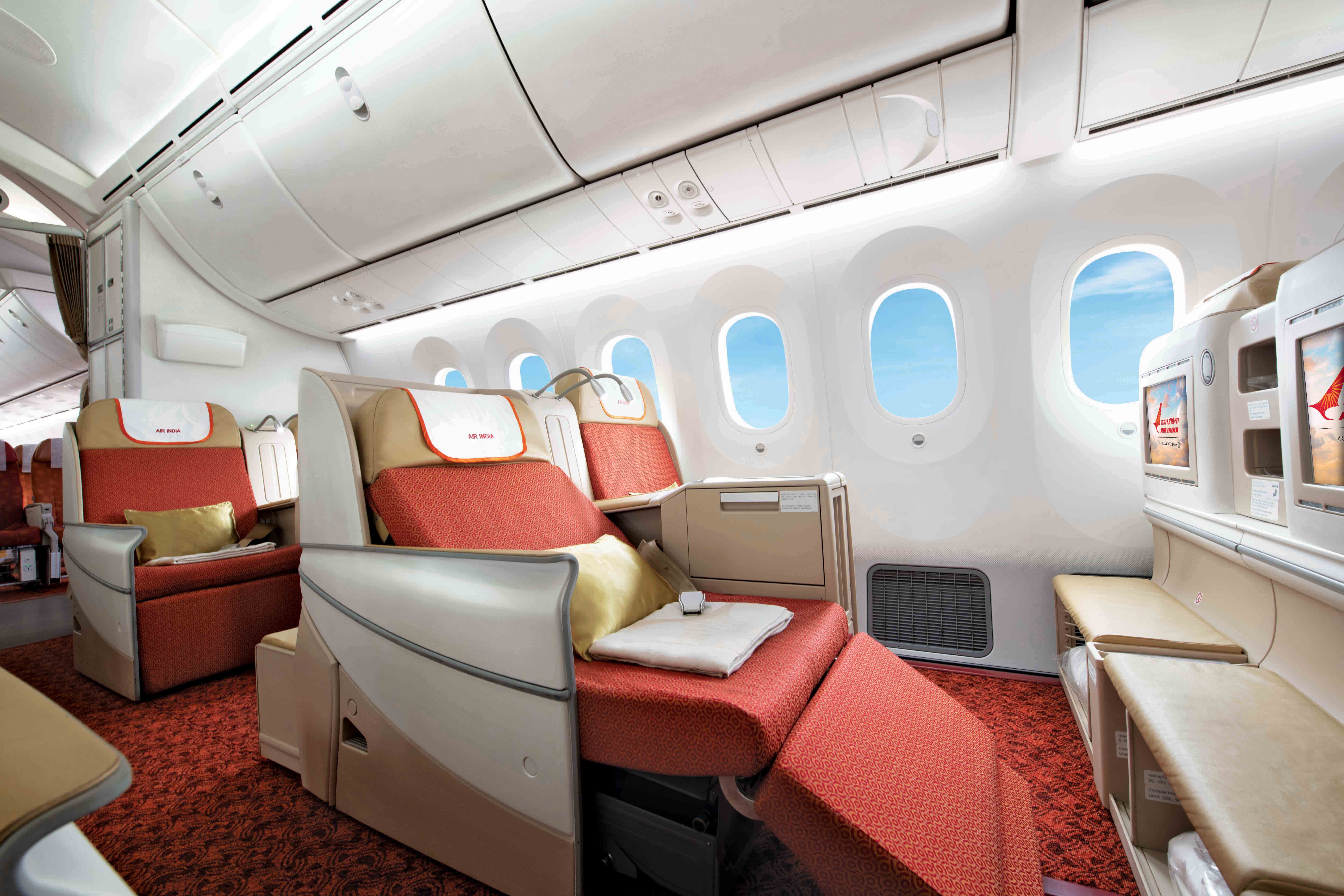
I have not yet flown in business class on Air India, though I have upgraded one of my imminent flights because of the super-low price: £340 for a flight of over five hours from Jeddah to Delhi. For longer trips – which is what I imagine you are contemplating – the type of aircraft used will be relevant. Rhys Jones of the frequent-flyer website Head for Points says the new Airbus A359 being used on some London Heathrow-Delhi flights is “a world-class experience”. Older aircraft, particularly Boeing 787-8 planes, may not be quite so outstanding. But if the price is right…
Q I’m meeting my wife at the end of an academic conference in Tampere, Finland, next August. We are planning a couple of days in Helsinki, followed by the ferry to Riga. We have a couple of weeks in total and would like your favourite recommendations for the Baltic states – ideally ending up somewhere on the coast for a few days. We plan to travel by public transport.
Martin E
A What a well-timed conference. You will be in the eastern Baltic at the time of year when the sea is at its warmest (though at least 10C lower than the Caribbean). The days will be long, too, allowing you plenty of time to see one of the most fascinating corners of Europe.
In Helsinki, besides taking in the beautiful waterside and handsome 19th-century architecture, make time for a couple of more modern wonders. The first is the Central Library (close to the railway station), which takes the concept of generous public buildings to extremes: a spectacular, curvy structure filled with far more than books. You can borrow a Fender Stratocaster in a soundproofed room, or listen to poetry: silent this library is not. And Temppeliaukio Church is a magnificent circular cut-and-cover place of worship.
Riga in Latvia is certainly worth 48 hours to enjoy the contrast of ancient, Soviet and modern – as well as time on the beach in Jurmala. From here, head north by train to Tallinn in Estonia, the most alluring of all the Baltic capitals. After this, the excellent coach services offered by Lux Express and others will allow you to get everywhere for next to nothing. Go to Narva, and look across the river into Russia. Then south to Tartu, the cultural heart of Estonia. Transport routes mean that from here you should return to Riga via the interesting border town of Valga.
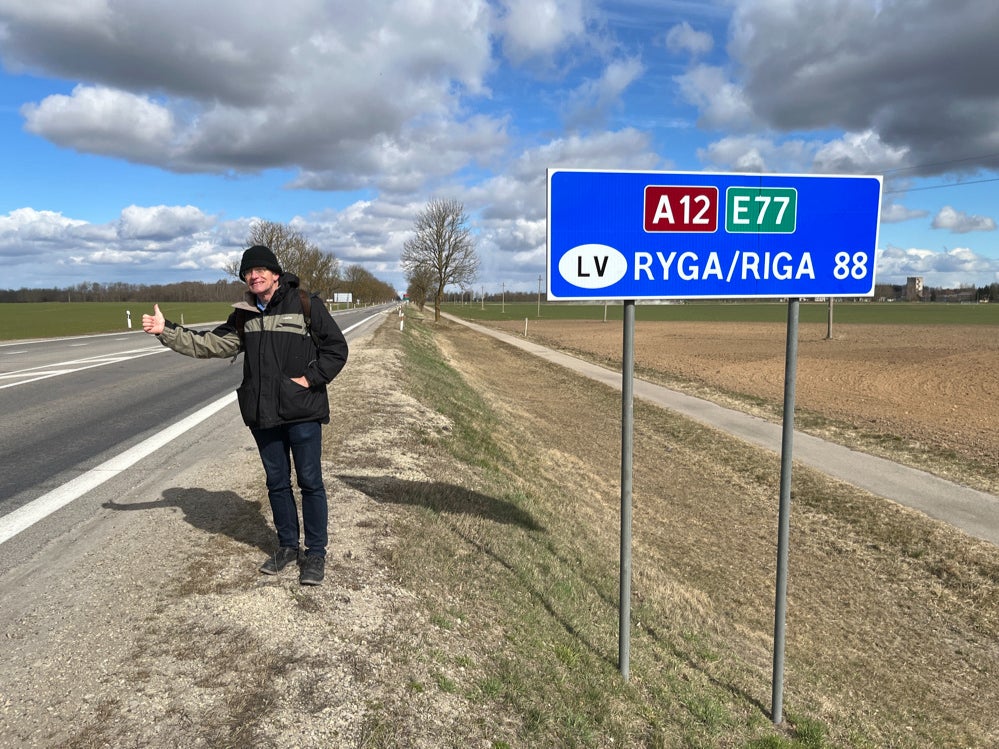
Now, for Lithuania, which I find is probably the most compelling and diverse Baltic nation. See the Hill of Crosses near Siauliai (I reached it by hitchhiking; you may prefer to get a taxi). Then, depending on how your time is looking, either go due west to the beach resort of Palanga, just north of the interesting city of Klaipeda, or squeeze in a visit to the capital, Vilnius, and the second city, Kaunas.
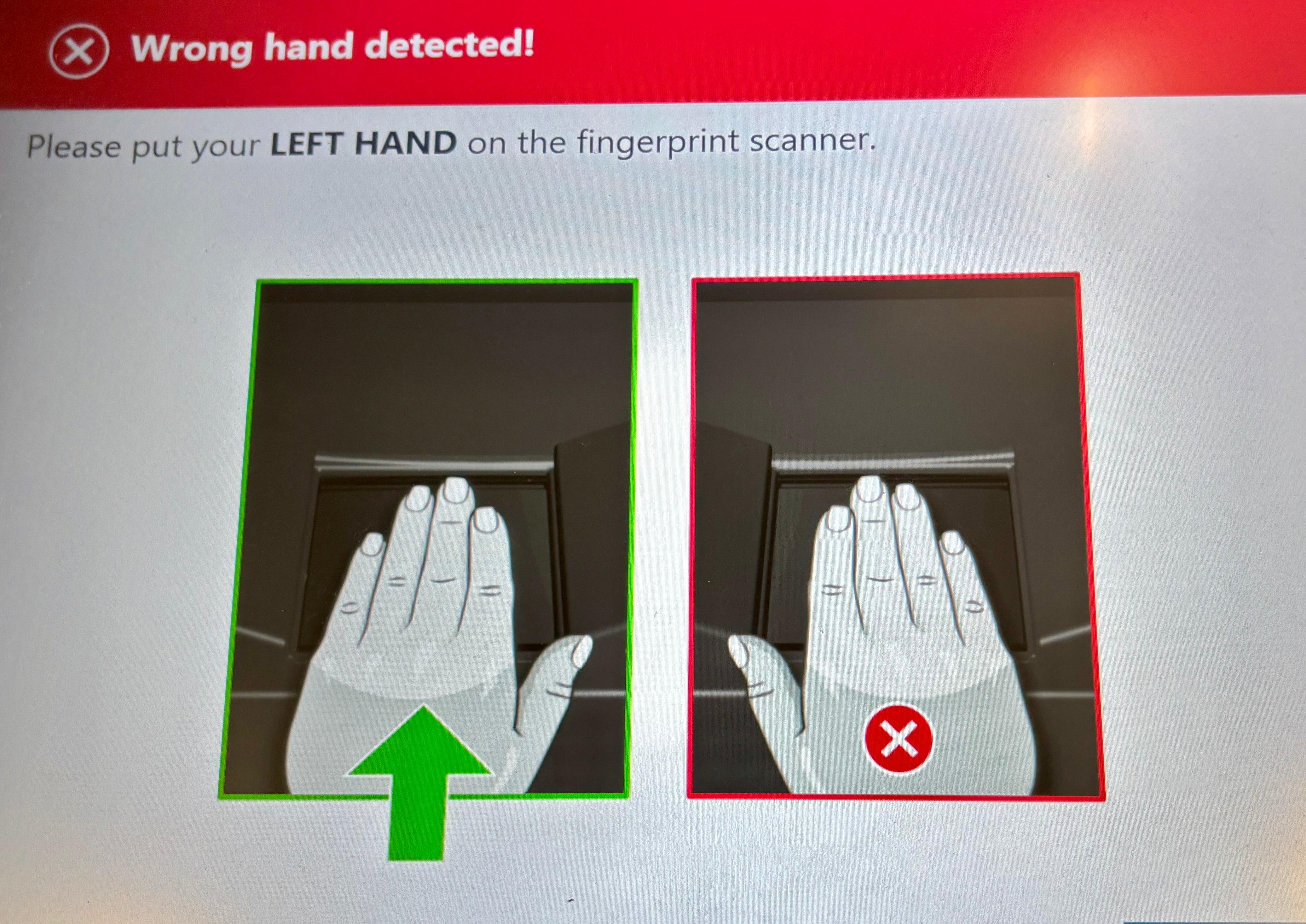
Q On a number of journeys in Asia recently I have had my fingerprints taken on arrival and departure by passport staff. On each occasion it has been a faff, partly because the glass plate on the scanners themselves are smeared with grease from the last passenger’s attempt. Surely this is extremely unhygienic? Are fingerprints absolutely necessary these days?
Charlotte E
A To answer your second question first: one vast organisation that believes fingerprinting of visitors is an essential component of making borders more secure is the European Union. By early April, every Schengen area frontier will be fingerprinting third-country nationals such as the British, the Americans and the Australians. Registering your digits for the digital entry-exit system (EES) is supposed to take place only on first contact with Schengen frontier. After that, a facial biometric (ie a simple photograph) is deemed adequate for further crossings. Some travellers, though, report that they have been asked for fingerprints on both entry and exit on a single trip.
Fingerprinting is regarded as an extremely robust technique for identification – ensuring the traveller presenting themselves at a frontier port is the person they say they are. That raises the question: are there other lower-friction biometric identifiers that are as effective as fingerprints? I have in the past been admitted into the US on my hand geometry alone, and back into the UK with an iris scan. But the area in which recent progress has been fastest is facial biometrics.
The travel tech giant, Amadeus, has done plenty on the subject. Rudy Daniello, who is the organisation’s executive vice-president of airport and airline operations, told me: “Some countries still use fingerprints or iris scans, but we believe facial recognition is the future. It’s now just as accurate and far less intrusive.”
Experiments at Manchester airport – where returning British travellers have been processed through the eGates on a facial biometric alone, with no reference to their passports – have gone well. My sense is that the face will soon become accepted as the best marker the world over. Which, to tackle your first question, can’t come soon enough: fingerprinting presents an obvious route for infection transmission. When I am fingerprinted, I wash my hands immediately afterwards.
Email your question to s@hols.tv or tweet @SimonCalder
Join our commenting forum
Join thought-provoking conversations, follow other Independent readers and see their replies
Comments
Bookmark popover
Removed from bookmarks