Why is it more expensive to buy a ticket direct from an airline than a broker?
Simon Calder answers your questions on fare-comparison websites and fingerprint scanners


Q Why is it more expensive to buy a ticket direct from an airline than from a broker? Surely the airline must pay commission to these third-party sellers, reducing profits? In my experience, hotels would much prefer you book directly rather than through a third party. Call them up, tell them the third party's rate, and they match it. What am I missing here?
Malcolm L
A Fare-comparison websites such as Skyscanner show sharply varying fares for the same flight sold through different channels. For long-haul flights particularly, the cheapest tickets are sold through online travel agents (OTAs) rather than direct from the airline. I have just checked a London Heathrow-New York JFK flight on 27 September, returning a week later. The fare direct from Virgin Atlantic is an appealingly low £356. But through an online travel agent named TravelUp, the flights are even cheaper at £330. So what’s going on?
Selling some seats at deep discounts through an intermediary has some merit from the airlines’ point of view. Virgin Atlantic and other airlines use OTAs to provide additional sales power. They want to be relevant in the intensely fare-sensitive part of the market – such as people who search on Skyscanner. If an airline knows that a particular flight will never fill through “normal” sales channels, they will offer online travel agents some seats at, say, a 15 per cent discount. That will allow the OTA to offer fares 10 per cent cheaper than the airline, and at the same time pocket 5 per cent commission.


To turn the question around: why would you ever book direct? In my case, it is to minimise problems when things go wrong. Last week, Vueling cancelled my flight from Gatwick to Barcelona. It was tough enough dealing with the airline, even having booked direct through the airline’s website; I suspect going through an OTA would have made it much trickier.
So why not call the airline and ask the reservations team to price-match the intermediary, as hotels will often do? Because the accommodation and aviation industries are different. The hotel market is dominated by Booking.com, which can extract commission of 15 per cent or more from properties. There is no such entity in air travel, so airlines are content to sell through a range of channels, including some that are deeply discounted.
Q At airports in Europe, are the “entry-exit kiosks” only for taking fingerprints and photographs for registration? Or are they where you’ll have to scan your fingerprints on subsequent arrivals?
Rebecca H
A The Schengen area – comprising the EU minus Ireland and Cyprus, plus Iceland, Norway and Switzerland – starts using the entry-exit system (EES) on 12 October. “Third-country nationals”, including the British, must register their fingerprints and facial biometrics the first time they cross a Schengen frontier with the EES in place.
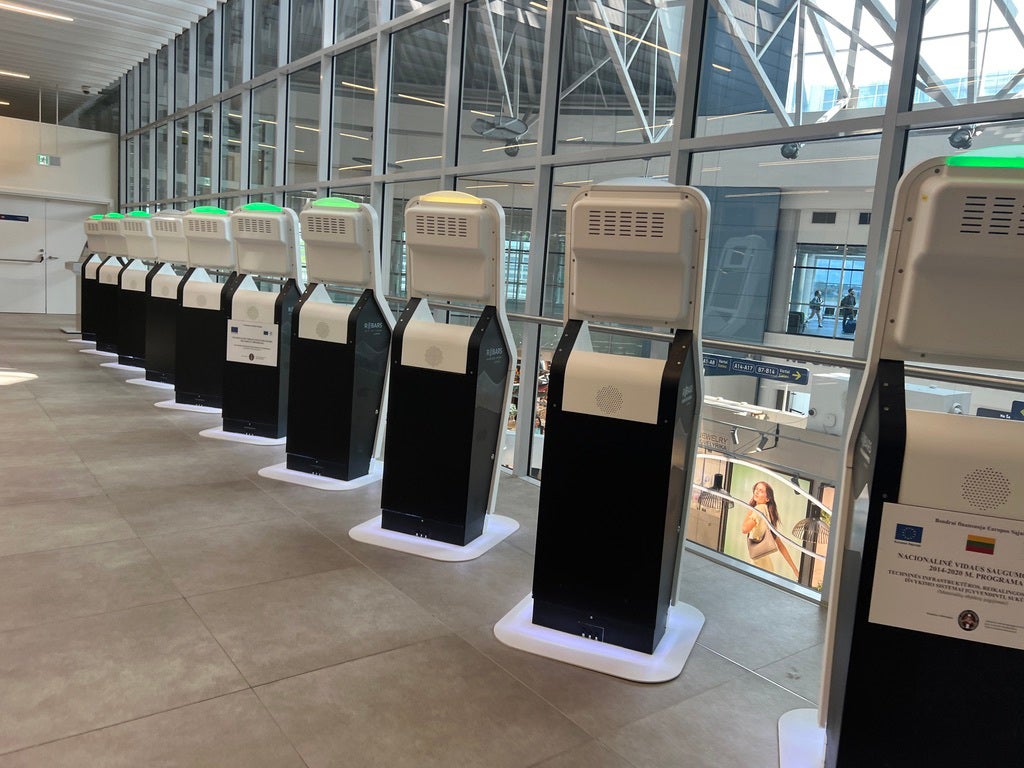
Not every border post will be equipped for the new digital border system initially, and even at locations that have the right equipment, some travellers may be told to swerve the process.
But by 9 April next year, every British passport holder who arrives at, or departs from, a Schengen area border post will need to be registered. During the six-month rollout, this will be in addition to the existing red tape: having your passport inspected and stamped by an officer.
The main means for capturing the biometrics will be those tall kiosks that now populate the arrivals area for airports across Europe. From 12 October, they will start to be unwrapped and pressed into service. While there is still much we do not know about how exactly the procedure will work, the basic plan for “first contact” seems to be as follows.
On arrival at a European airport, you place your passport as indicated at the kiosk. The facial biometric and fingerprints are taken and a message transmitted to the actual border control, whether eGates or passport officials, signalling you have been registered. The current formalities – passport checking and stamping – then take place. On subsequent encounters, for example when flying out from a Schengen area airport, you will be asked to insert your passport again. The kiosk will “know” you are registered, and therefore only one biometric – the face – needs to be checked. Your face is your passport through the EES for all future visits, though if you go three years or more without crossing a Schengen area frontier, you will need to re-register your face and fingerprints.
Email your question to s@hols.tv or tweet @SimonCalder
Join our commenting forum
Join thought-provoking conversations, follow other Independent readers and see their replies
Comments
Bookmark popover
Removed from bookmarks