That was the week Angela Rayner nearly became prime minister
What would it be like, asks John Rentoul, and might it still happen?


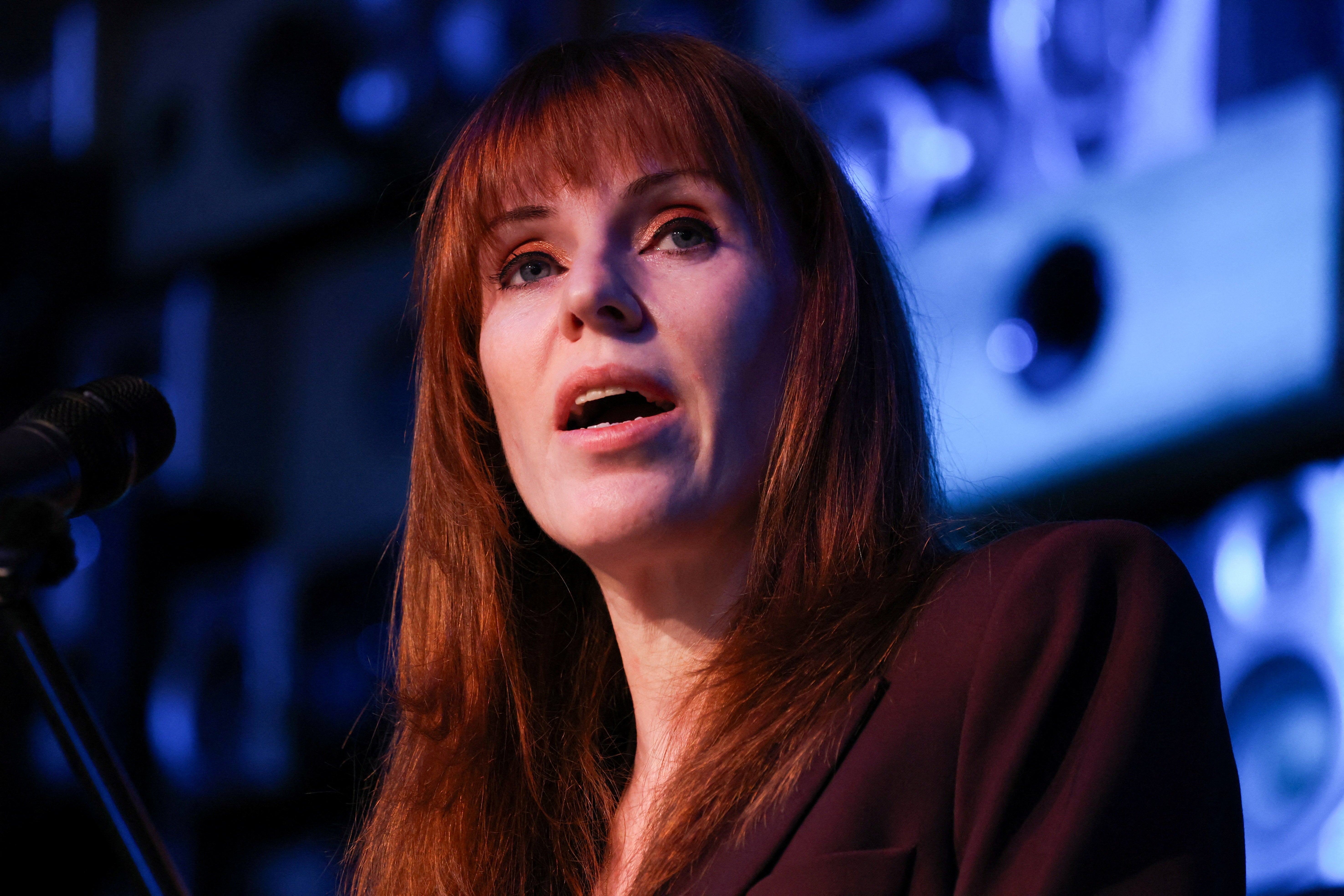
Keir Starmer told the Munich Security Conference: “I ended the week much stronger than I started it and that’s a good place to be.” What he meant was that those observing British politics from the outside may not have realised how close Angela Rayner came to becoming prime minister.
That is because it is hard to understand how the principles of parliamentary democracy have been corrupted by the folly of the two main parties in handing over the choice of leader to their members outside parliament.
It means that Starmer’s position is unusually vulnerable. If just one fifth of Labour MPs want Rayner as prime minister instead, that is what is likely to happen. The trigger for a leadership election is that one in five of the party’s MPs must nominate a rival candidate. If that happens, the choice of candidates is put to the party membership.
How would the members vote? On this, I have some exclusive information from a Survation poll of Labour members carried out two weeks ago. One finding was reported by Labour List, the party members’ website that commissioned the poll: that if Rayner and Starmer went head to head, Rayner would be preferred by 56 per cent to 44 per cent (excluding don’t knows).
On those numbers, it must be in the balance as to whether Starmer would stay and fight. Would he try to overturn Rayner’s lead in the election campaign, or would he stand aside? And the next question is what would happen if Wes Streeting, the health secretary, entered the contest.
Survation asked Labour members who they would most like to see as leader if Starmer resigned, but included Andy Burnham, the mayor of Greater Manchester, in the list. He came top, but he cannot stand as he is not an MP. Fortunately, the poll also asked who would be members’ second and third choices.
I asked Survation to rerun the answers excluding Burnham, and I am grateful to Damian Lyons Lowe and Vasil Lazarov for providing me with the figures. Without Burnham, Rayner came top, with Streeting second and Ed Miliband third. If Miliband and the remaining candidates were eliminated and their votes transferred, as they would be under Labour’s preferential voting system, Rayner would end up with 60 per cent to Streeting on 40 per cent.
These numbers are in striking contrast to Survation’s cabinet league table poll, in which Miliband, the energy secretary, comes top. But that survey merely asks members if they have a “favourable or unfavourable” opinion of cabinet ministers. Labour members love a loser and feel strongly about climate change, but that does not mean that most of them think Miliband should be leader again.
On the question of who they want as leader and prime minister, Rayner is clearly ahead, despite people in Westminster solemnly shaking their heads and muttering about unresolved HMRC decisions about her tax affairs. Opinion might shift during a leadership election campaign, and there is the complication that many trade unionists who are not party members are also entitled to vote. But the assumption must be that Rayner would win.
What is really surprising about the events of the past week, therefore, is that the former deputy prime minister judged that she would be unable to persuade 80 of her parliamentary colleagues to nominate her. Considering that about 50 Labour MPs, including the 23-strong Socialist Campaign Group, would want Starmer out even if he were doing well, this suggests that she is not as popular with her parliamentary colleagues as is often imagined.
And yet, because Starmer’s position is so fragile, the tripwire of 81 nominations could be tripped at any time. Which means it is worth thinking about what Rayner would be like as prime minister.
It is widely assumed that she would be more “left wing” than Starmer – meaning that she would raise taxes and public spending even further. But this does not make much sense, in that Starmer is already a prisoner of his parliamentary party, the centre of gravity of which leans in that direction.
The big question is who Rayner would have as her chancellor. I assume she would replace Rachel Reeves – “the only person in the cabinet with worse political antennae than Keir”, according to one “insider” quoted by Tim Shipman in his collection of greatest hits by Labour voices on their own side in The Spectator.
It would not be Miliband. I think Rayner’s political antennae are better than that – she knows that her reputation as a left-winger would both allow and require a balancing, fiscally conservative appointment. I guess it would be either Streeting or John Healey, the defence secretary, who would be a second chancellor with that surname.
It is possible that, as someone from the left and with better judgement than Starmer, she might be able to lead the party towards the centre. She would have a credibility on curbing welfare spending that Starmer lacks. She and Shabana Mahmood would make a formidable combination in delivering a socially conservative message, and would possibly have less patience with legalistic obstacles to stopping the boats.
Rayner’s big drawback is that she is unpopular with the general public – which is why she would be unlikely to become prime minister if the decision were made, as it should be, by MPs alone.
But the bottom line for many Labour people is whether a Rayner premiership would make a Nigel Farage government more or less likely. That, I think, is an open question.
Join our commenting forum
Join thought-provoking conversations, follow other Independent readers and see their replies
Comments
Bookmark popover
Removed from bookmarks