I won’t be intimidated by the Bondi attacks into hiding my Jewishness
‘Gavin & Stacey’ producer Leo Pearlman says that, after a year of antisemitic atrocities in cities from Sydney to Manchester, Amsterdam to Washington DC, Jews have been reminded that silence is not safety. We must refuse to hand our children a smaller identity than the one we inherited


I was with my children when the news about the Bondi Beach massacre broke. Minutes earlier, we'd been discussing what time we’d light candles that night, who would get which present… the kind of excited chatter that fills Jewish homes on the first night of Hanukkah. And then my phone lit up.
Within seconds, the room felt like it belonged to another world. My screen filled with messages: a shooting, Bondi Beach, a Hanukkah celebration, Jews targeted – again.
The images were horrifying, but the sensation was worse because I already knew this feeling. It was October 7th all over again. And Manchester. And Amsterdam. And Washington DC. That same spike of panic, that same grim recognition, that same thought I wish I could unlearn.
Not again. Please, not again. But of course – again.
And then the distance vanished entirely. Because my daughter’s oldest school friend, aged just 12, had been at the Hanukkah event on the Sydney beach. A child who has grown up in my home, around my table, who we share so many happy memories with.
She had to run for her life when the shooting began, barricading herself in an ice-cream shop with other terrified children as the gunfire echoed across the beach. I was texting with her parents even as they drove towards Bondi, praying the next message they received would not be the one every parent fears most.
And then came the next punch. Rabbi Eli Schlanger, the rabbi murdered at the scene, wasn’t some distant figure. He was London-born, the cousin of the rabbi who married my wife and me, a dear family friend. A man who believed doggedly in Jewish-Muslim dialogue, even when it was hard, especially when it was hard. He was murdered for one reason: he was Jewish.
As I held my children, trying to reassure them while the messages kept coming, one furious question burned through me. What did people think was going to happen? What did they think would follow after two years of Western cities turning into open-air theatres of unfiltered, unapologetic antisemitism? After “From the river to the sea” became the weekend anthem of London, New York, Paris, Berlin, Melbourne? After marches where tens of thousands demand to “globalise the intifada”, a slogan whose meaning has never been benign, never been misunderstood, never been anything other than what it is, a call to violence now realised multiple times?
What did they think extremists would conclude when even the BBC treated Hamas propaganda as “context”, and refused to even call the terrorists what they are? What did they think would happen when our own government rewarded murderers with diplomatic recognition, signalling that violence against Jews pays political dividends?
What do we expect will follow when entire political factions have built their very identities on the destruction of the only Jewish state? When anti-Zionism isn’t a fringe slogan but a brand, a rallying cry, a recruitment tool, a badge of moral superiority?
Relentless, performative anti-Zionism is not a principled stand for human rights. It is not nuance and it is not moral clarity. It is a permission structure, a complicit approval for the very attacks against Jews that we are now forced to witness in this country and beyond.
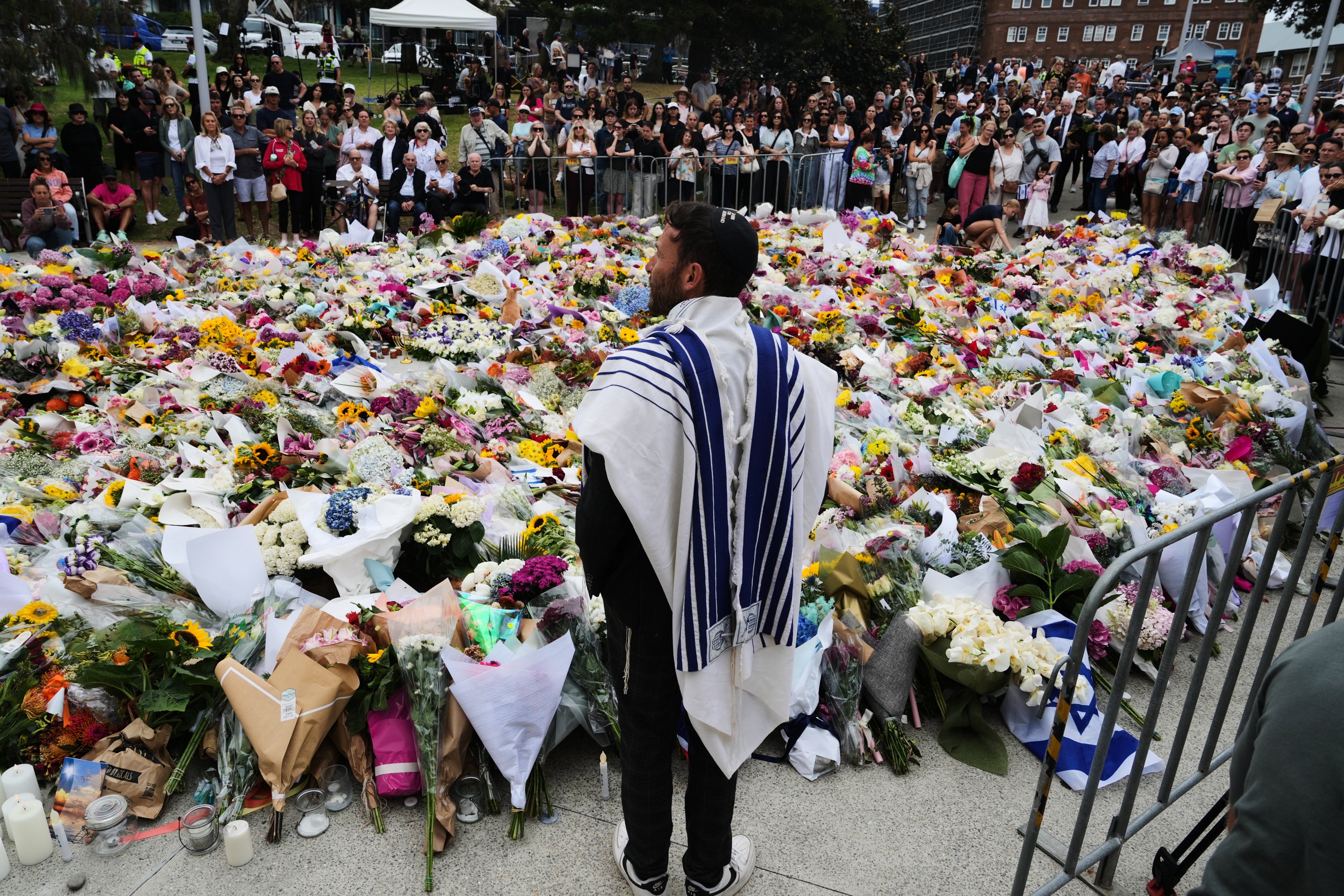
Bondi was not an aberration. It was the downstream consequence of a culture that has allowed, even rewarded, political movements whose moral compass is broken, whose obsession with Israel has metastasised into something darker, something far less deniable. And the truly unforgivable part? They still insist their hands are clean.
Later that night, once the calls slowed and my children were asleep, grief hit me in a way I recognised, but fury came with it. Because I know what happens next.
The world watches Jewish grief and imagines fragility. It watches our mourning and imagines retreat. It sees our pain and assumes, arrogantly, maybe hopefully, that we might finally dim our light.
They misunderstand us completely, because Jewish grief is not a breaking point, it is ignition. Our grief sharpens us, our mourning clarifies us, our pain becomes purpose.
This is the real meaning of Hanukkah, not the children’s version about oil, but the adult truth about defiance. A people who stood amid destruction and lit a flame anyway. A people who rebuilt when the world expected them to vanish. A people whose smallest light has survived the darkest intentions.
After Bondi, as I tried to explain to my children what had happened to children their age on the other side of the world, they asked me what Hanukkah really means. And I realised the answer was brutally simple: it means we do not let anyone tell us to shrink – not now, not ever.
After the Manchester attack, people told me they’d removed their Magen Davids, hidden their Jewishness online, instructed their children to keep their heads down. After Bondi, I heard it again. The instinct to retreat, to disappear, to make oneself small, is understandable. But if the events of this year have taught us anything, it is that silence is not safety, appeasement is not peace, and hiding is not survival.
In 2026, we must refuse to hand our children a smaller identity than the one we inherited. We are still here, we will not be intimidated into silence, our identity is not negotiable and our survival is not conditional. We will not apologise for existing, for surviving, or for shining.
If the world finds that uncomfortable, well, then, let the world adjust. Hanukkah sameach.
Leo Pearlman is an Emmy award-winning producer and co-partner at Fulwell 73. His most recent film, ‘We Will Dance Again’ – about the October 7th attack on the Nova music festival – is available to watch on the BBC iPlayer
Join our commenting forum
Join thought-provoking conversations, follow other Independent readers and see their replies
Comments
Bookmark popover
Removed from bookmarks