The shocking brutality behind Gaza’s crumbling ceasefire
Editorial: The purported cessation in hostilities on 10 October has not stopped the slaughter in the war-torn region, where 400 Palestinians have been killed since – but the promise of peace, however flawed, must not be allowed to fail
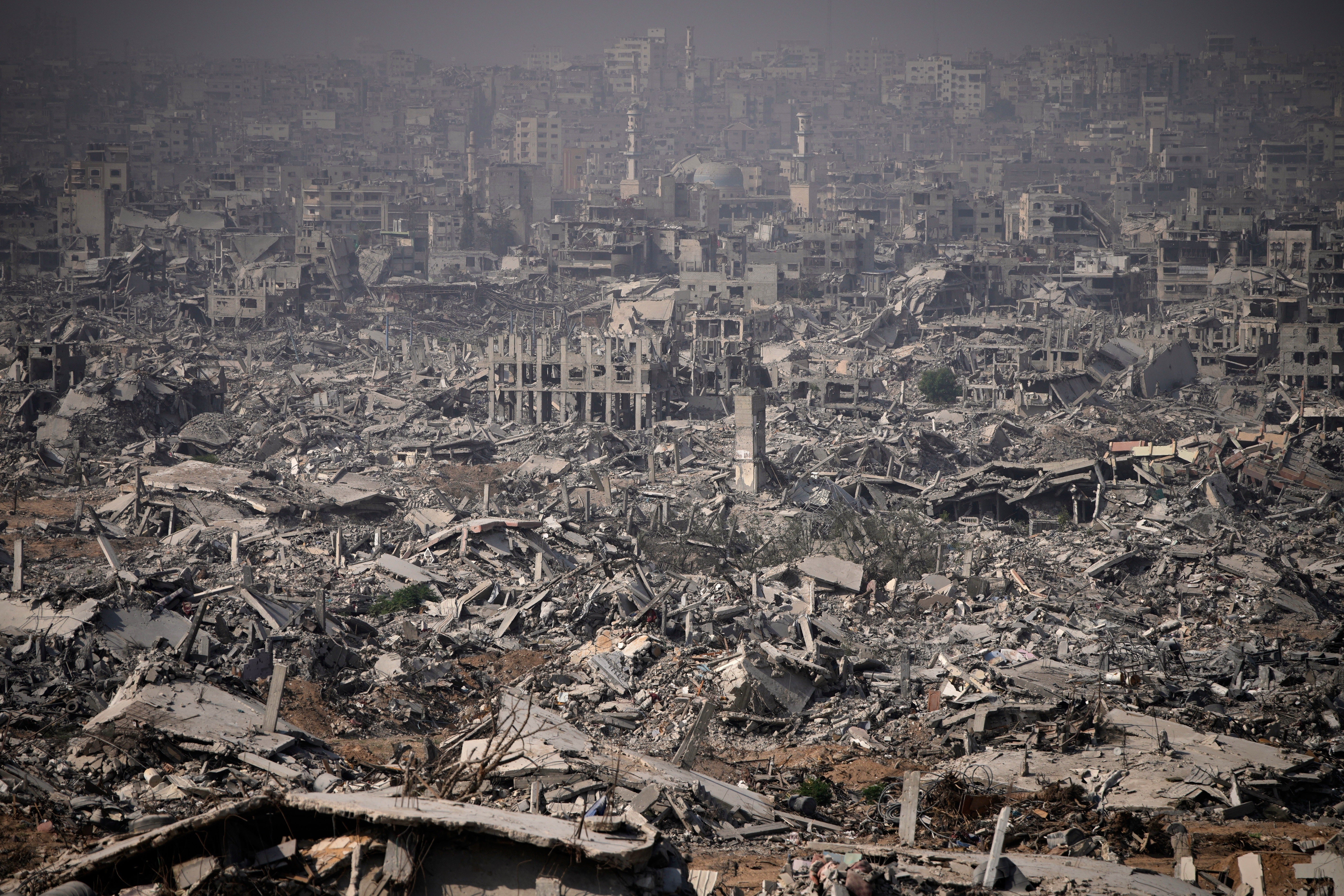
It has been nearly three months since an agreed ceasefire came into effect in Gaza. Over that time, the devastation of this narrow strip of land and the desperate plight of the Gaza Palestinians have receded further and further from public view – and from the scrutiny of the outside world.
Recent days have brought heartening television reports from Bethlehem, with Christmas services being held in the Church of the Nativity and the brightly lit tree back up in Manger Square after a gap of two years. Scenes of horror that dominated the news from one day to the next for the best part of two years have seemingly become scarce.
As we report today, however, the absence of news – or the brief seasonal displacement of bad news with a few flashes of comparatively good news – is by no means the whole, or even the real story. That a ceasefire was agreed and formally came into effect has not stopped either the slaughter or the suffering of those hundreds of thousands of people remaining in Gaza, even if it has diminished them.
Since the ceasefire officially came into force on 10 October, more than 400 Palestinians have been killed in Gaza, with over a thousand more injured by Israeli shelling and gunfire, according to the Palestinian health ministry. On one night alone in late October, more than 100 were killed. Among many tragic deaths were those of two children, killed in a drone strike while scavenging for firewood to take back for their disabled father.
Israel says that it is countering what it calls direct threats from terrorist organisations in Gaza, and accuses Hamas of continuing its operations, including laying IEDs that have killed and injured Israeli troops. It also says that at least some of the Palestinian casualties have been killed after crossing its so-called yellow line, intended to demarcate military no-go zones from areas safe for the local population; the locals, for their part, say that the position of the line keeps changing.
Continuing violence may be the most acute difficulty, but it is by no means the only one. More than 90 per cent of Gaza’s 2.3 million population remain displaced. The ceasefire declaration encouraged hopeful Palestinians to return home, although many had no homes to return to and now find themselves living in tents, exposed to extreme cold and winter rain. And while it is recognised that Gaza no longer faces famine, aid organisations say there are still obstacles to supplies getting in and that the amount of food and medical aid is not nearly enough.
It is not unusual, of course, for ceasefires to require time to become fully effective. But the pace of the progress in the early weeks of the ceasefire, with the return of all Israeli hostages who remained alive and the return of large numbers of Palestinian prisoners, has not been sustained. And in some areas – in the occupied West Bank in particular – the situation has deteriorated, with attacks and harassment of Palestinians by Israeli settlers reaching a level not seen since Israel occupied the territory in 1967, according to human rights groups.
None of this means that the ceasefire has not brought benefits, in terms of a reduction in violence and improved aid supplies. What it does mean, however, is that blind eyes must not be turned to the defects, either in the now glacial pace of progress or in the continuing breaches. These defects must be addressed before there can be any prospect of passing to the second stage of Donald Trump’s 20-point peace plan.
That next phase, which includes establishing a structure for the future administration of Gaza and deployment of an international security force, as well as the further withdrawal of Israeli forces and the disarmament of Hamas militants, also appears to be lagging far behind what had been hoped when phase one – the ceasefire – began. Yet there can be no question of any advance to phase two while the killing continues at its present level and some of the most basic requirements of the Gaza population remain unmet.
To help remedy this, the priorities must be to increase international scrutiny of the ceasefire and accelerate the provision of supplies to Gaza, including more suitable winter shelter than canvas. Without such basics, there can be little prospect of any move forward, let alone the full Palestinian self-determination that must be part of any comprehensive solution.
Donald Trump described his peace plan, with typical overstatement, as denoting the dawn of a new era for peace in the Middle East. It is very early days yet, and the plus side is that, nearly three months in and despite widespread scepticism, the plan itself has not collapsed. It is, though, teetering on the brink and in urgent need of attention to ensure that the original trajectory is maintained.
Join our commenting forum
Join thought-provoking conversations, follow other Independent readers and see their replies
Comments
Bookmark popover
Removed from bookmarks