Refurbishing the Palace of Westminster would revive ‘can-do’ Britain
Parliament’s buildings are falling down, but our MPs are too timid to commit to a monumental restoration that could cost £39bn and take more than 60 years to complete… and it’s a national shame, says John Rentoul


When a mouse runs across the office of the leader of the opposition during a live TV interview, you might think it was time to get serious about refurbishing the collapsing pile of Perpendicular Gothic Revival in which our laws are made.
You would be right – and, indeed, MPs got serious about the Palace of Westminster restoration project in 2012. They were asked to make a decision in principle in 2016, for work to begin in 2020.
This week, they got serious again, and the board in charge of the project presented MPs with two options. One is for MPs and peers to move out of their respective homes for somewhere between 19 and 24 years, while the works are carried out – at a cost of £16bn. The other is for the work to be done in stages over 38 to 61 years – at a cost of £39bn.
This time, they intend to ask MPs to vote to approve one or other option in 2030 – that is, after the next election, because they know MPs do not want to be seen as spending such vast sums on themselves.
This is ridiculous, because they will not be spending the money on themselves – they will be spending it on a historic building, so famous it appears in Peter Pan and almost every other British film ever made. The Houses of Parliament are the lodestar of the British tourist industry. A few years ago, I had to explain to a Japanese tourist who had travelled one-third of the way around the world to ask, “Where Big Ben?” that she was standing in front of it, but that it was covered in scaffolding and plastic sheeting.
And MPs are not the only people who work in the building. We journalists do not like to complain, because we know what a privilege it is to work there, and because the engineers who try to fix our heating, or restore our electricity supply, or catch the mice, are all doing their best.
It is a bit surprising, though, in the second quarter of the 21st century, to see journalists working on laptops (because the fuses have blown on the power supply to the desktop computers) in hats, coats and scarves (because the heating is not working again).
Occasionally, when the medieval-style doors are open, we catch a glimpse of the inside of what looks like the boiler room – a steampunk Heath Robinson, all riveted pressure vessels and elaborate pipework.
Equally, I am not very squeamish, but it is unsettling to see mice scuttling under the tables in the Terrace cafeteria. It is unsettling enough to realise that the cardboard boxes on the picture rail are mousetraps, but when you see a mouse that has avoided a poison box dashing across the floor, even more so.
We know the building is decrepit. Some parts have to be fenced off for weeks because of falling masonry – although the supreme irony is that the modern Portcullis House annexe has had more fencings-off than even the 14th-century Westminster Hall, because of its cracking and leaking atrium roof.
It is tempting to imagine that the restoration of the Palace of Westminster is like the third runway at Heathrow: a hugely expensive civil engineering project hemmed in by vested interests that will never happen. But it is not like adding an extra runway that we do not need; this is about preserving a Unesco heritage site that already exists, and which might not do so if it continues to be neglected.
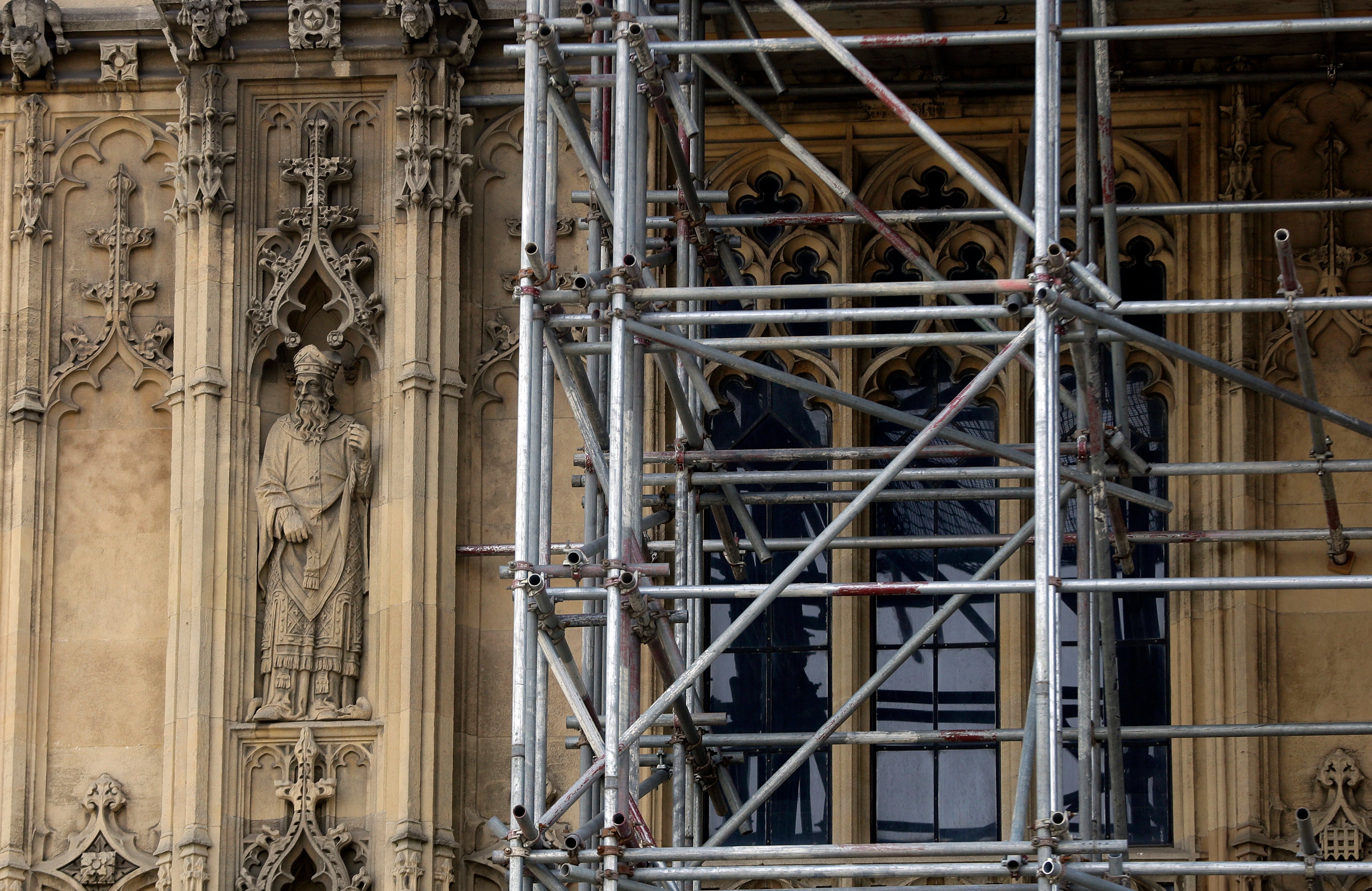
The most compelling argument made by the board for getting on with it boils down to two words: Notre Dame. The place is a fire risk, exempt from workplace safety laws.
But there ought to be a positive argument for getting on with it, too. Perhaps it would need a figure like Robert Moses, who built much of modern New York’s infrastructure, to drive the project forward, but we ought to be a country that believes it can build things and rebuild existing things. And we ought to be proud of our heritage and our monuments, especially the living ones.
Besides, the project is ready to go. There is a site adjacent to the existing parliamentary estate that could house a temporary Commons chamber. Richmond House next door has been vacant since 2017, when the department of health moved to Victoria Street – to a former commercial office building fitted with security cameras that ministers did not know about until Matt Hancock found out.
And the Queen Elizabeth conference centre across Parliament Square could accommodate the House of Lords, if we haven’t abolished it by then.
The mouse in Kemi Badenoch’s office poses a question: are we mighty or are we mice? Let us get on with it.
Join our commenting forum
Join thought-provoking conversations, follow other Independent readers and see their replies
Comments
Bookmark popover
Removed from bookmarks