Inside the inch-perfect royal choreography for Trump’s state visit – and why a wink from Camilla could save the day
The banquets and processions may be all pomp and tiaras, but in these tense times they will carry a sharper edge, too. Royal author Robert Jobson looks at how ‘eco’ King Charles is preparing for the president’s visit, and the palace tricks that turn pageantry into power – even when things go wrong
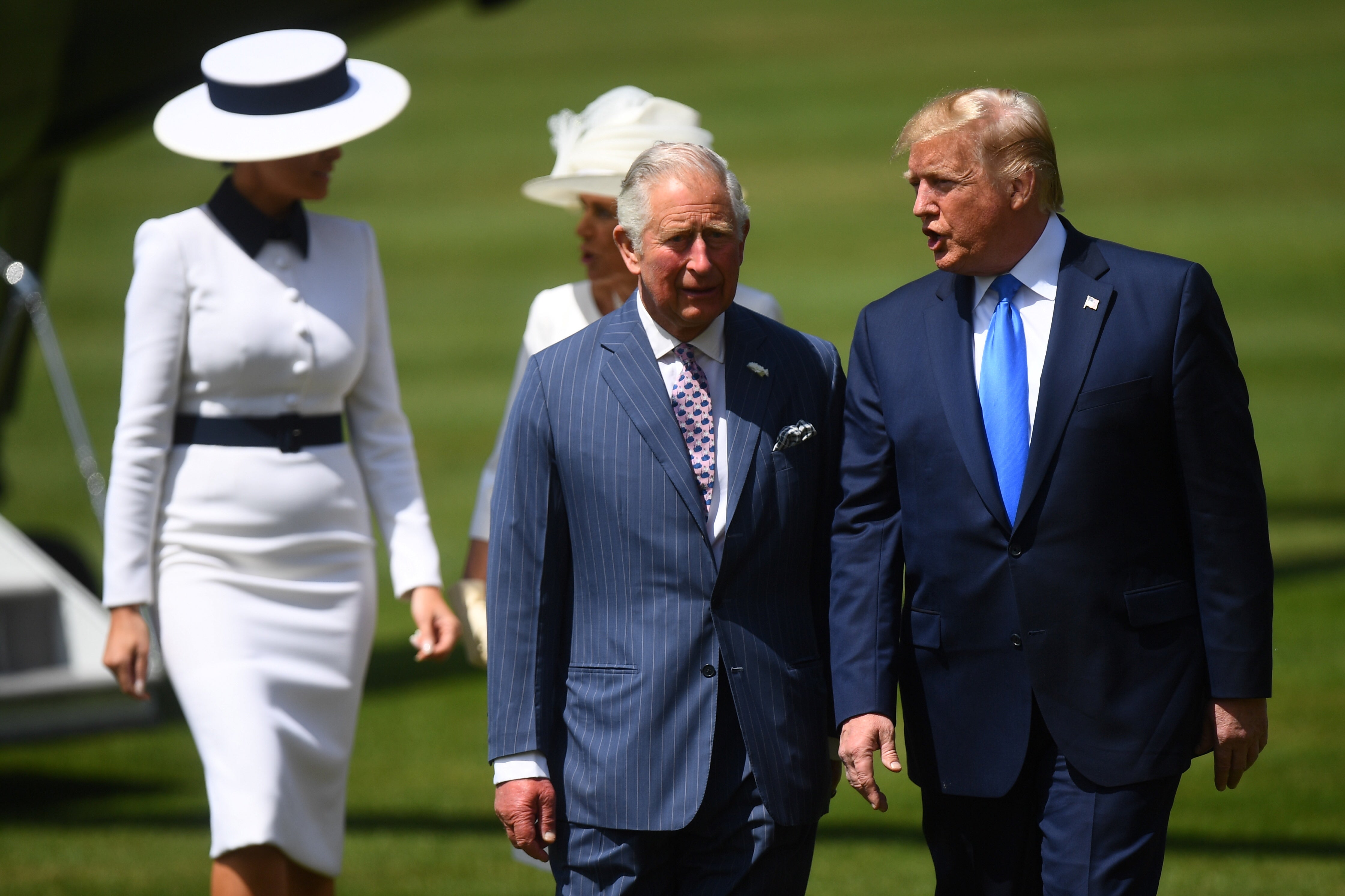
When US president Donald J Trump and first lady Melania land in the UK on Air Force One this evening, they step not just into a country, but into a theatre. From Windsor Castle’s battlements to the scarlet tunics of the Household Cavalry, Britain turns pageantry into power.
For centuries, monarchs have used ceremony to project influence, reassure allies, and signal stability. With King Charles III at the helm, the palace will this week do it again – but this is no ordinary stopover. Trump will be the first American president to have been granted two state visits to the United Kingdom. George W Bush had one. Barack Obama had one. Ronald Reagan, despite his closeness to Margaret Thatcher, never had one at all. His 1982 trip to Windsor Castle was classed as an “official” visit, not a state visit, despite the ceremonial trappings. John F Kennedy’s “dinner party” with the Queen in 1961 was a private visit without the full panoply.
These distinctions matter. A state visit, with all its pomp, declares to the world that the bond between Britain and its guest is of the highest order. Official visits signal cooperation, but not necessarily intimacy. Working visits are even more stripped down. State visits endure. They are diplomacy staged in scarlet and gold. Trump’s encore makes the point plain: Downing Street and the palace want the “special relationship” to shine.
Security will be fierce this time, especially after the Charlie Kirk assassination. Armed officers will patrol Windsor. Armed response units, Scotland Yard specialists, and Thames Valley Police teams will reinforce them. Even this blends into the choreography. Donald and Melania will spend their first night inside Windsor’s walls. On Wednesday, the theatre begins.
An open carriage procession, Guards of Honour from the Grenadiers, Coldstream and Scots, a flypast by F-35s and the Red Arrows, a Beating Retreat to close the day. To American eyes, dazzling. To British officials, deliberate: a display of continuity and soft power.


But the King brings substance. On recent visits to Germany and France, he spoke of Ukraine, and of climate change – his lifelong cause. These are not small-talk topics. They are policy markers. Ukraine, and perhaps Gaza, will come up in the speeches, along with common threads that unite our two nations.
Before Trump’s 2019 visit, whispers in London predicted confrontation. Charles was said to be ready to “thump the table” on climate. Trump’s team bristled, branding the King a member of the “urban elite”. The reality was very different.
Over tea at Clarence House, Charles raised the issue calmly. A meeting scheduled to last 15 minutes stretched to 90. Trump later said, “He [Charles] is a very good person who wants to have a world that’s good for future generations. That’s what impressed me the most, his love for this world ... He is really into climate change, and I think that’s great. I want that. I totally listened to him.” Trump, who had pulled the US out of the Paris Agreement, stopped short of conversion. He preferred “extreme weather” to “climate change”. But he left struck by Charles’s passion. It was a quiet triumph.

Nothing in this itinerary is accidental. Trump and Melania will lay a wreath at Queen Elizabeth II’s tomb in the King George VI Memorial Chapel at Windsor, a gesture of respect for the late Queen, who met 13 American presidents. Exhibits from the Royal Collection will highlight shared history.
That evening, the state banquet in St George’s Hall will be the pinnacle of the visit. Preparations, overseen since 2013 by the Master of the Household, Vice Admiral Sir Anthony Johnstone-Burt, have been meticulous and began months in advance. Under the glow of candlelight, more than 4,000 pieces of silver-gilt from the Grand Service will glisten, laid out with mathematical precision.
In the royal kitchens, chefs have toiled for five days to craft a menu that balances British provenance with a nod to American taste. Trump’s favoured McDonald’s “Filet-O-Fish” – which he famously calls his “Fish Delight” – will not be on the menu, nor will hot dogs make a reappearance.
Outside, the choreography has been equally demanding. Foot Guards have drilled sword routines until perfect. The Household Cavalry schooled their mounts to pace with unerring rhythm. Officials bent over seating plans, weighing not just protocol but personality, aware that one misplaced name could sour the tone of the night. In the end, the final chart was signed off by the King himself, in consultation with the Foreign and Commonwealth Office.

A single misstep can undo months of planning. Florists test colour palettes against candlelight. Even the music is curated to strike the right note. What the world sees as a seamless spectacle is the product of invisible labour. Why such effort? Because it works. President Obama once said: “The United States has no closer ally than the United Kingdom.” President Reagan called it “a special relationship built on shared values”. State visits provide the stage on which such alliances are renewed.
On Thursday, Trump will head to Chequers to meet Keir Starmer. They will view Churchill’s archives before holding talks. Britain, post-Brexit, wants to prove its relevance. America wants a reliable European partner. Melania will join the Princess of Wales at Frogmore Gardens for the Scouts’ “Go Wild” programme – a tableau of nurture and service, pairing America’s first lady with Britain’s future queen. The symbolism is deliberate. The monarchy supplies continuity; the government delivers policy. Together, they magnify Britain’s voice.
But even in a theatre of precision, human moments slip through. President Obama laughed off a musical blunder during his toast to the Queen in 2011 when, at the palace state banquet, the Scots Guards’ orchestra struck up God Save the Queen before he had finished. Undeterred, the president pressed on, speaking over the anthem and raising his glass, before the music stopped. He quipped that the timing had given his words a cinematic crescendo. The Queen, unruffled, thanked him for his “very kind” remarks. Michelle Obama hugged Her Majesty, a breach of protocol that was warmly received.
In 2019, Trump gestured Charles into place for a photograph, prompting Camilla to give a conspiratorial wink to the media. Such moments remind us that diplomacy is conducted by people, not statues. The grandeur of Windsor, the precision of the cavalry, the shine of silver gilt, are all designed to inspire awe. The quirks make it human.
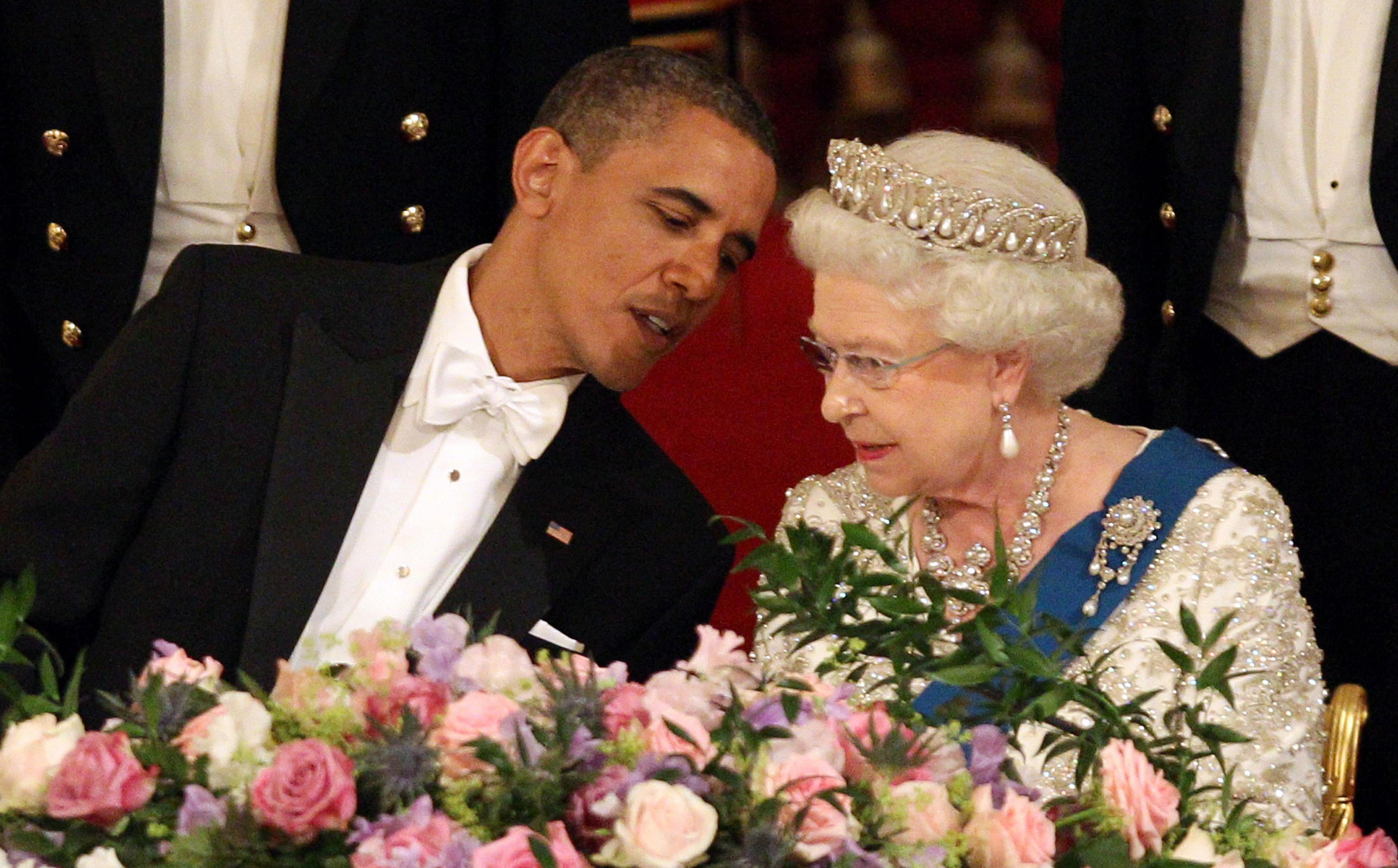
For Charles, these visits are tests of kingship. As the heir, he once allowed personal conviction to override duty, refusing to attend a state banquet with delegates from China after meeting the Dalai Lama. As King, he has shown more restraint. He must. Facing presidents whose policies clash with his own, he has engaged without lecturing.
The 2019 meeting with Trump proved he could adapt. At the banquet that night, Charles escorted Melania while his mother toasted D-Day’s 75th anniversary. The heir once seen as prone to interference had performed his role with discipline. Now, as monarch, he carries the full weight of that responsibility.
This is why state visits matter. Ceremony becomes a strategy. Tradition becomes leverage. History becomes an influence. From the “hot dog summit” of 1939 to Windsor’s Quadrangle today, these encounters have shaped alliances, bolstered trust, and sometimes altered the course of history.


When King George VI and Queen Elizabeth, Charles’s grandparents, picnicked with the Roosevelts at Hyde Park in New York State, the monarch was baffled to be offered a hot dog for the first time. Looking bemused, he hesitated until President Roosevelt grinned and quipped: “Push it in your mouth.”
Eighty-six years later, the theatre is different, but the stakes are just as high. The table is set against an equally chilling backdrop: Ukraine under fire after Putin’s invasion. Threats to Nato. Russia sabre-rattling like Hitler’s Nazis before the Second World War.
The banquets and processions may be all pomp and tiaras, but they carry a sharper edge, too. Big decisions. Big alliances. Britain may no longer rule an empire, but in the subtle art of diplomacy, the monarchy still packs a powerful punch.
Robert Jobson is the author of the No 1 Sunday Times bestseller ‘Catherine, the Princess of Wales: The Biography’ and has been a royal correspondent for 35 years
Join our commenting forum
Join thought-provoking conversations, follow other Independent readers and see their replies
Comments
Bookmark popover
Removed from bookmarks