What’s the lei of the land when it comes to spending money in Romania?
Simon Calder answers your questions on cash vs card in Eastern Europe, Ryanair’s policy on tickets and passports, and a family feeling like they’ve been shanghaied by their airline


Q Could you advise on currencies and cash versus cards for a trip incorporating Romania (staying in Bucharest, Brasov, Sighisoara and Sibiu) and Budapest in Hungary? We have had a Halifax Clarity card for many years, thanks to your advice.
Marianne and Martin Talbot
A The cash vs contactless financial terrain varies widely across the parts of Eastern Europe that were formerly under the control of the Kremlin. In Estonia, for example, I find that my Halifax Clarity card (chosen because it has no foreign transaction fees) is widely accepted. But in the southern Balkans as well as Hungary, cash is still king. This particularly applies in the provincial Romanian locations you mention. You will be able to use your Halifax card (either actual plastic or loaded onto your phone) to pay in more upmarket locations. But for local bars, restaurants and shops, national notes and coins are what you need.
Romania and Hungary are among the EU nations where national currencies still prevail. Some prices – for example, hotel rates or walking tours organised for foreign visitors – are quoted in euros. If you happen to have any euros left over from recent trips, certainly take them along. But for the main part of your spending, just make sure you have clean sterling notes (£10 and £20) and change as you go along.


At the Romanian airport on arrival, change perhaps £20 into lei (the local currency) to have enough for the journey from the airport and any incidentals. Once in the city, shop around for the best rates. For the move westward from Romania, moneychangers even in small towns will offer keen rates from lei to forints, the Hungarian currency. You may as well exchange all your leftover Romanian funds. For top-ups, change sterling as you go along through Budapest; just be warned that some bureaux de change in the Hungarian capital express their rates confusingly and/or conceal commission, so always ask: “How many forints will I get for £50?” That will enable you to compare like with like.
Finally, as I have written before: if you are in the former Eastern bloc and you have unspent local currency, convert it to euros ready for your next trip to Spain, Italy or France.
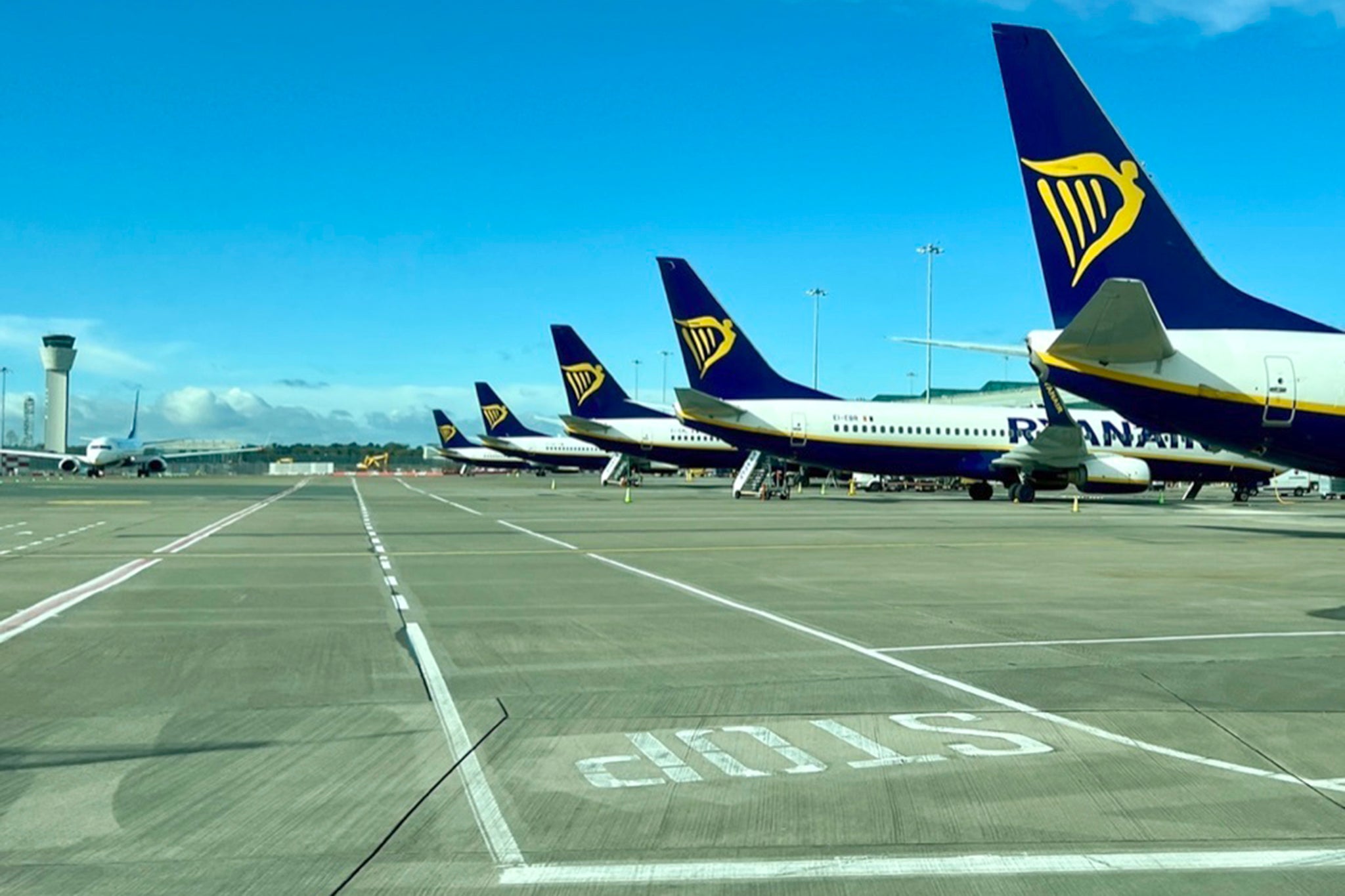
Q Please, Mr Calder, could you explain why I am forced to show my passport when flying from Liverpool to Dublin with Ryanair?
Wally B
A Thank you for your polite question. Ireland, the UK, the Isle of Man and the Channel Islands comprise the Common Travel Area (CTA) – where freedom of movement continues despite Brexit. You could think of the arrangement as a “Schengen area for the British Isles”. The UK government says the CTA “underpinned the Belfast/Good Friday Agreement”. If you are a British citizen living in either the UK or Ireland, you can travel freely within the CTA without a passport – unless the company transporting you makes a rule requiring you to show one.
The Irish government says: “Carriers in many instances require all passengers to have a passport in their possession before allowing them to board aircraft. This is not an immigration requirement.” The only airline I know of that makes this stipulation is Ryanair. The carrier says: “A valid passport is required for travel with Ryanair between Ireland and the UK. No exceptions will be made. Driving licences are not acceptable for travel with Ryanair between the UK and Ireland.”
For comparison, Aer Lingus is happy with documents such as a bus pass or a work ID, so long as it has your photo on it. Ferry firms largely follow this policy too. British Airways says it wants “some form of photographic identification, such as a driving licence”.
So why is Ryanair different? One reason appears to be that all the airline’s passengers arriving in Dublin from abroad, including Great Britain, are required to pass through Irish passport control – just because of the layout of the airport. Secondly, while a British passenger could presumably talk their way across the Irish border by demonstrating their entitlement to travel freely within the CTA, from Ryanair’s perspective, it is much better to impose a simple policy: if you are on any kind of international flight, you need a passport.
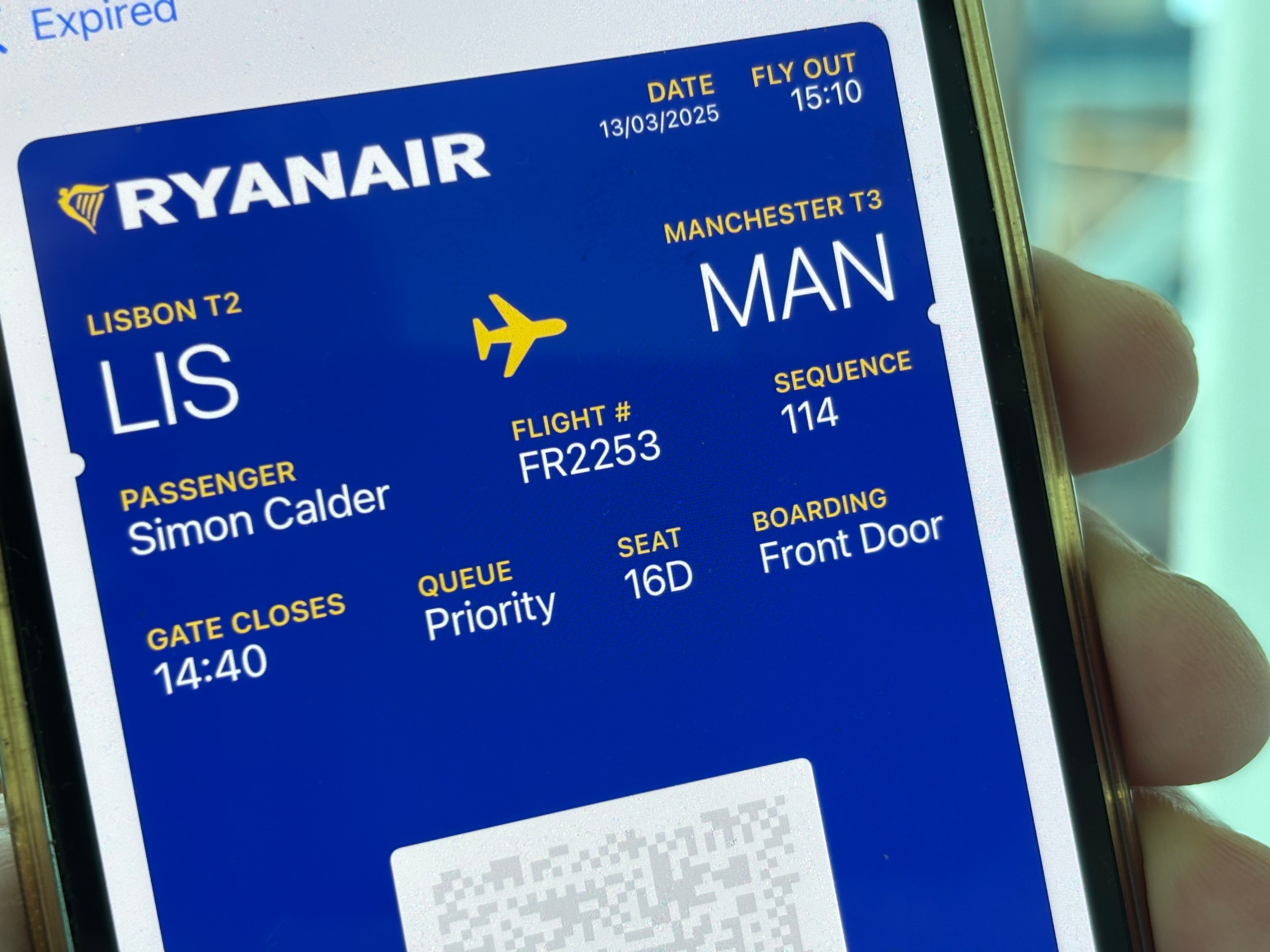
Q You reported that Ryanair is demanding all passengers show their boarding pass on smartphones, not paper. What if you don’t have a smartphone?
Audrey Marks
A Two Ryanair questions in a row – and both on issues where Ryanair makes stipulations that are stricter than other airlines.
Since I revealed the details of the “smartphone only” policy, a number of readers have assumed the same principle would apply: that people who choose not to have a smartphone will not be able to travel on Ryanair from 3 November 2025, when the policy takes effect.


In fact, there is no such disenfranchisement. The airline wants the 200 million-plus annual passengers to check in using the airline’s app, myRyanair. The hope is that this will make it easier to notify travellers about, for example, the boarding gate – and provide instant details of rearrangements in the event of disruption. It may be that Ryanair also sees some marketing potential. Yet I was pleasantly surprised to learn that passengers who don’t have a smartphone will still be accommodated, so long as a friend, family member or perhaps travel agent has checked in on their behalf. A spokesperson told me: “Once a passenger is checked in, they will be provided with assistance at the airport, where staff can see they have checked in.”
The other problematic scenario: a smartphone with a flat battery, or one that gets lost between checking in and reaching the departure gate. Ryanair’s chief executive, Michael O’Leary, tells me this will not be a problem: “As long as you’ve checked in before you get to the airport, we’ll reissue a paper boarding pass at the airport free of charge. Just make sure you check in online before you get to the airport, and then all will be fine.”
Q Last weekend, three members of my family were on a delayed flight from London Heathrow to Shanghai because the original aircraft was unserviceable and a new one had to be found. Flightradar24 says there was a delay of four hours – but the airline claims it was actually three hours 59 minutes. It appears to me that the airline was trying to avoid its obligation to feed and water delayed passengers. Do you agree? Incidentally, to make matters worse, the plane was only half catered, so they only got one meal on the flight.
Peter Dallaway
A How frustrating – but I don’t believe there is any subterfuge going on here. Air passengers’ rights rules state that refreshments are due “when an operating air carrier reasonably expects a flight to be delayed” in departure by a certain length of time. For short flights, that is two hours; 1,500-3,500km, three hours; and for anything longer, four hours. It has always puzzled me why passengers on delayed short flights should get hungrier and thirstier than those waiting for long trips, but that’s European legislation for you.
If your family paid for food and non-alcoholic drinks during the wait, by all means send in the receipts. There is a chance that the carrier will refund the meals. Yet were I representing the airline, I might cheerfully riposte: “We certainly expected the replacement flight to depart less than four hours late, but due to this or that happening, we were unfortunately wrong.” Alternatively, I might argue that departure is measured as the time the parking brake is released, not when the pushback actually begins (which is what Flightradar24 measures).


Your family might have a bit more luck with a polite complaint about the catering shortage on board; it is the sort of misfortune that might be compensated with a few thousand Avios.
Anyway, despite the efforts of the flight crew to make up time, the flight arrived in Shanghai three hours and nine minutes behind schedule, which means that all passengers are entitled to £260 in cash compensation. To further illustrate the strangeness of the rights rules, were it 10 minutes earlier, the compensation would be zero; 51 minutes later, the compensation would double to £520.
I hope their Chinese adventure goes well.
Email your question to s@hols.tv or tweet @SimonCalder
Join our commenting forum
Join thought-provoking conversations, follow other Independent readers and see their replies
Comments
Bookmark popover
Removed from bookmarks