The Independent's journalism is supported by our readers. When you purchase through links on our site, we may earn commission. Why trust us?
What is the difference between whey protein isolate and whey protein concentrate?

The best protein powders can be great for conveniently boosting our protein intake, but with an overwhelming number of options on the market it can be really difficult knowing which one to choose. On top of this, it doesn’t exactly help when their packaging displays a myriad of marketing claims around everything from muscle growth and repair to joint health and focus.
What can help is getting to grips with the terminology. Any time browsing protein powders will invariably bring you to two terms: “whey protein concentrate” and “whey protein isolate”. If you’re not sure what these mean, don’t let this put you off.
To clarify exactly what the language means in terms of actual, real-world use, and to find out the pros and the downsides of these types of supplement, I consulted the experts. Below, Professor Javier Gonzalez, a professor of nutrition and metabolism at the University of Bath’s Centre for Nutrition, Exercise and Metabolism, unpacks the nutritional need-to-knows of whey protein concentrate and whey protein isolate, and how these should impact your decision-making.
And, as The Independent’s fitness writer, as I’ve tried and tested my fair share of protein powders, I’ve also included the protein powders I’ve been most impressed with. If you’re looking for more guidance and top tried and tested recommendations from me, you can also read my full review of the best protein powders, where I cover vegan, flavoured and organic recipes.
What is the difference between whey protein isolate and whey protein concentrate?

Whey is the watery portion of milk that splits from curds during the cheese-making process. This is then processed to create the whey protein powder we see on shelves.
The terms “whey protein concentrate” and “whey protein isolate” refer to the level of processing the whey is subjected to. Whey protein isolate is more filtered than whey protein concentrate, delivering greater “purity”, according to Professor Javier Gonzalez, a professor of nutrition and metabolism at the University of Bath’s Centre for Nutrition, Exercise and Metabolism.
“Whey protein isolate is approximately 90 per cent protein and whey protein concentrate is approximately 80 per cent protein,” he adds.
As a result, whey protein concentrate contains slightly more carbohydrates and fat per serving, while whey protein isolate tends to be the pricier option.
“It makes essentially no functional difference as long as the total amount of protein is met,” says Professor Gonzalez. “However, to meet the same amount of protein, concentrate does provide a few more calories.”
To use products from one of the UK’s leading protein brands, Myprotein, as an example, the whey protein concentrate contains 1.8g of fat, 2.7g of carbohydrates, 22g of protein and 114 calories per 30g serving. The whey protein isolate contains zero fat, 1.3g of carbohydrates, 25g of protein and 108 calories. At the time of writing, the former cost £21.99 per kilogramme, while the latter cost £28.49 per kilogramme.
Beyond elite athletes or those looking to dial in their diet, the nutritional differences will be negligible enough to overlook for the sake of saving a few pounds.
However, a bonus perk of whey protein isolate is that it contains less lactose courtesy of the filtration process, making it a solid option for people who are lactose intolerant.
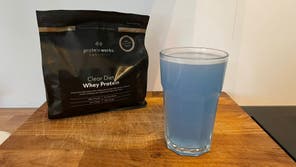
Protein works clear diet whey protein
Most clear protein powders are made with whey protein isolate. This is my pick of the bunch, delivering 20g of protein per serving alongside just 85 calories and negligible amounts of carbs, fats and sugars. It takes a bit more shaking than standard protein powders to get a smooth consistency, but what you’re left with is a refreshing juice-like drink that sits a lot lighter in the stomach.
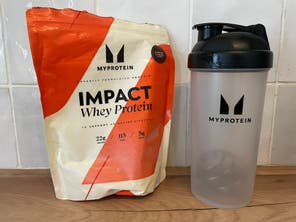
Myprotein impact whey
In our roundup of the best protein powders, this Myprotein option is our top-rated whey protein concentrate. I enjoyed the wealth of flavour options on offer, as well as how well the shake mixed. It is also more affordable than most other protein powders on the market, making it an attractive option for those looking to build muscle on a budget.
Do you need protein powder?
Before you choose whether to buy whey protein concentrate or whey protein isolate, it’s first important to establish whether you need high protein products at all.
Protein powders are supplements, and should be treated as such – supplementing shortcomings in a balanced, nutritious diet, rather than replacing food.
“The recommended nutrient intake for protein in the UK is 0.75 grams per kilogram of body weight,” says Professor Gonzalez.
“There are some good arguments that a little higher than this – up to 1.2g/kg – may have additional benefits for muscle health and weight control. The requirements of athletes can be even higher than this – up to around 1.8g/kg.”
If you are already hitting these figures through your diet, chances are you do not need to use protein powder.
Older generations tend to require slightly more protein per day to support muscle maintenance and tissue repair. Fitness fans will also need higher intakes to fuel their exercise efforts – this is particularly true if you do strength training, with protein providing amino acids, which provide the building blocks to maintain and grow muscle, among other bodily tissues.
Read more: This is how much protein you need each day, according to a nutritionist
Bookmark popover
Removed from bookmarks